
Cleaning rubber floor mats regularly prevents grit from grinding into the material and stops moisture from trapping odors under your feet. While these mats are built for heavy-duty protection, they eventually lose their grip and appearance if you allow dirt or chemicals to build up over months of use. You can restore them to a like-new condition in under thirty minutes using common household supplies found in most garages or kitchen cabinets.
Rubber floor mats require a simple wash cycle using a firm-bristle brush, mild dish soap, and complete air-drying to prevent mold or slick surfaces. You should avoid harsh solvents like bleach or petroleum-based cleaners, which can cause the rubber to crack, fade, or become dangerously slippery. A thorough cleaning regimen maintains the structural integrity of the rubber and keeps your vehicle or workspace safe.
Key Takeaways
- Avoid harsh chemicals. Never use bleach or heavy-duty degreasers, as these substances degrade rubber compounds and lead to premature cracking.
- Use mild soap. A simple mixture of water and dishwashing liquid effectively breaks down road grime without damaging the mat surface.
- Scrub with intent. Work in a circular motion with a stiff-bristle brush to lift dirt trapped deep within the textured grooves.
- Dry completely. Trapped moisture beneath a damp mat creates a breeding ground for mold and can cause unpleasant interior smells.
- Maintain a schedule. Cleaning your mats every four to six weeks prevents stubborn buildup and keeps the rubber flexible and durable.
How to Wash Rubber Floor Mats
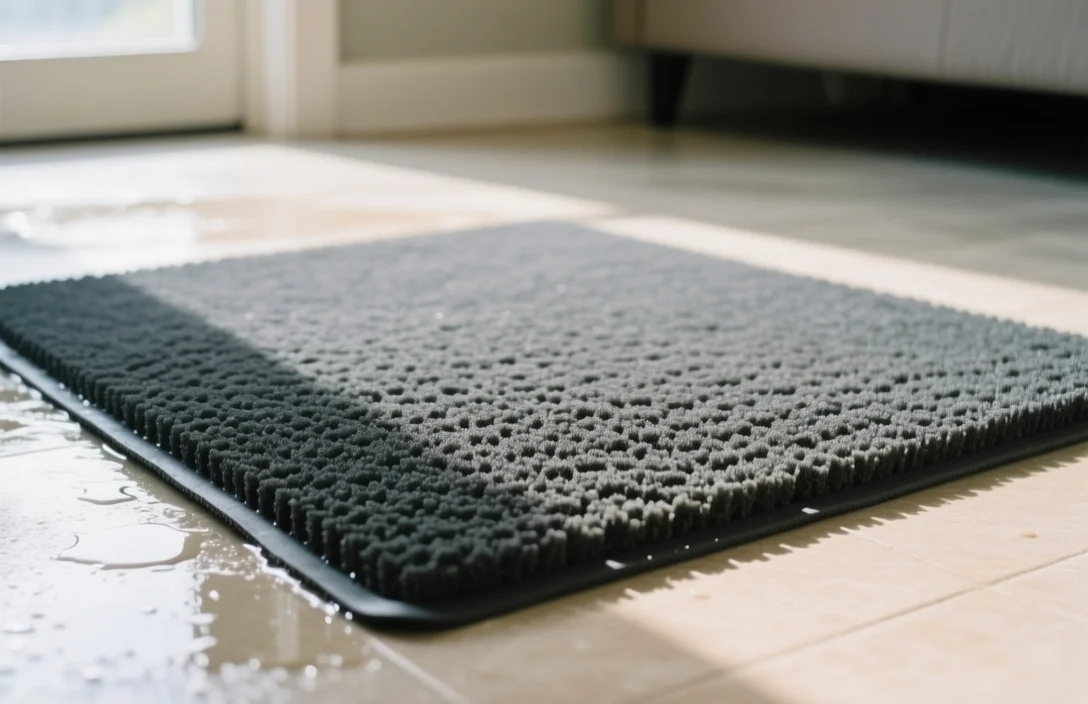
Rubber floor mats act as a shield for your vehicle or home entryways, but they serve their purpose best when they are clean. When you neglect them, the surface becomes slick and loses its ability to trap debris effectively. A consistent washing routine preserves the original texture of the rubber and keeps the surrounding area free of tracked-in grime.
The process is straightforward and does not require expensive equipment. You need a source of water, a stiff-bristle brush, a bucket, and a standard dish detergent. If you have high-pressure water available, like a garden hose with a spray nozzle, the process becomes significantly faster. Always work in a well-ventilated area, preferably on a driveway or concrete pad, to ensure you have enough space to maneuver the mats.
Removing Loose Debris Before Washing
The first step in any effective cleaning process is to remove the loose dirt and stones that sit on the surface. If you skip this, you will simply turn the dry debris into a muddy paste that gets pushed deeper into the crevices of the rubber. Take the mats outside and give them a firm shake or a sharp tap against a wall to dislodge surface-level particles.
For stubborn debris trapped in corners or deep tread patterns, use a stiff brush to sweep the surface before applying any water. If you have access to a shop vacuum, use the brush attachment to suck up dry sand and grit. This dry-prep stage makes the wet-washing phase much more effective because your soap and water can focus on the grime that is actually bonded to the rubber.
Scrubbing Away Ground-in Dirt
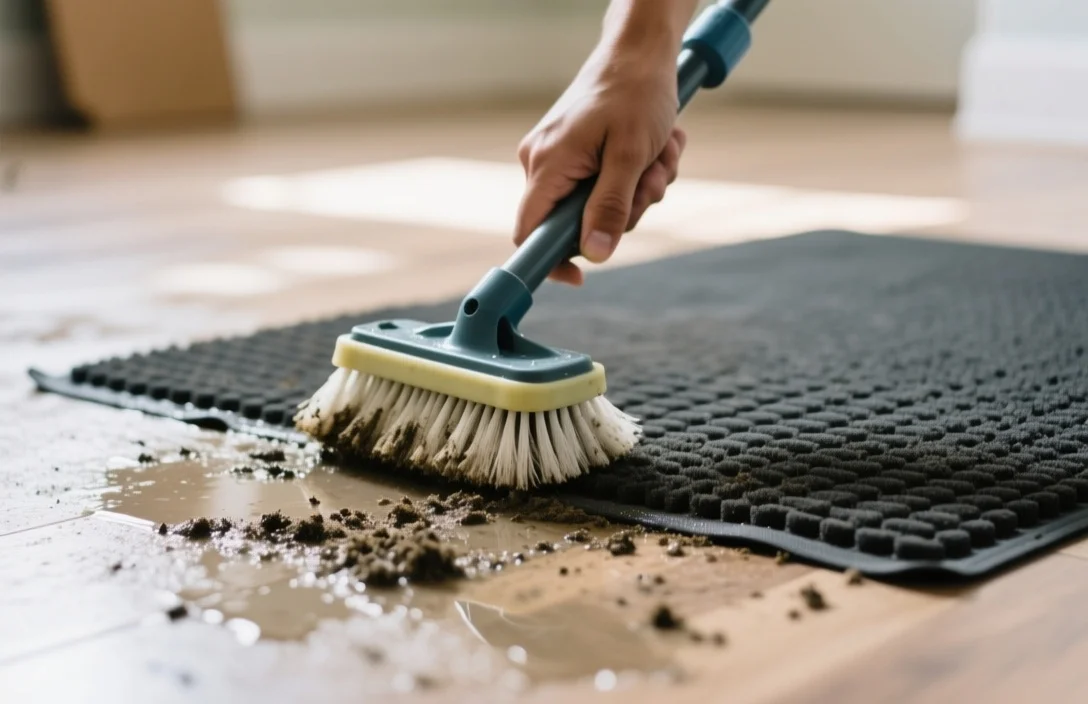
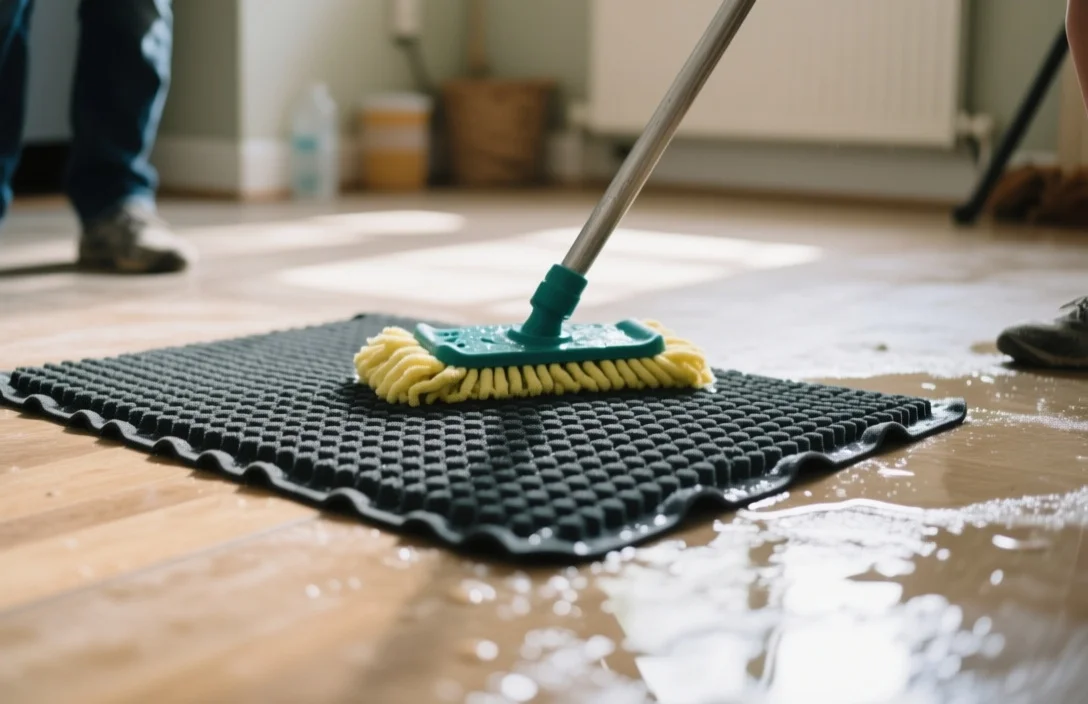
Once the loose debris is gone, apply a cleaning solution to the entire surface of the mat. Mix two tablespoons of mild dish soap into a gallon of warm water in your bucket. Pour a small amount of this solution onto the mat and use a stiff-bristle scrub brush to work the soap into the textured areas.
Focus your scrubbing effort on the areas where your heels usually rest, as these spots often accumulate the most friction-bonded dirt. Move your brush in a circular motion to ensure you reach the bottom of every groove and pattern. If the mat has deep channels, spend extra time working the bristles back and forth to lift out the dark, compacted dirt that typically hides in those low points.
Removing Grease and Oil Stains
Grease and oil require more than just standard soap to break down. If you notice dark, slick spots that remain after a general scrub, apply a small amount of concentrated dish soap directly to the stain. Let the soap sit on the rubber for five to ten minutes to penetrate the oil molecules before you begin scrubbing again.
If the grease is particularly stubborn, you can use a small amount of baking soda mixed with water to create a mild abrasive paste. Apply this paste to the affected area and scrub firmly with your brush. The baking soda provides the necessary friction to lift the oil without damaging the rubber surface. Rinse the area thoroughly with fresh water to ensure no residue remains, as leftover soap or paste can make the mat slippery when it dries.
Deodorizing Rubber Mats to Remove Smells
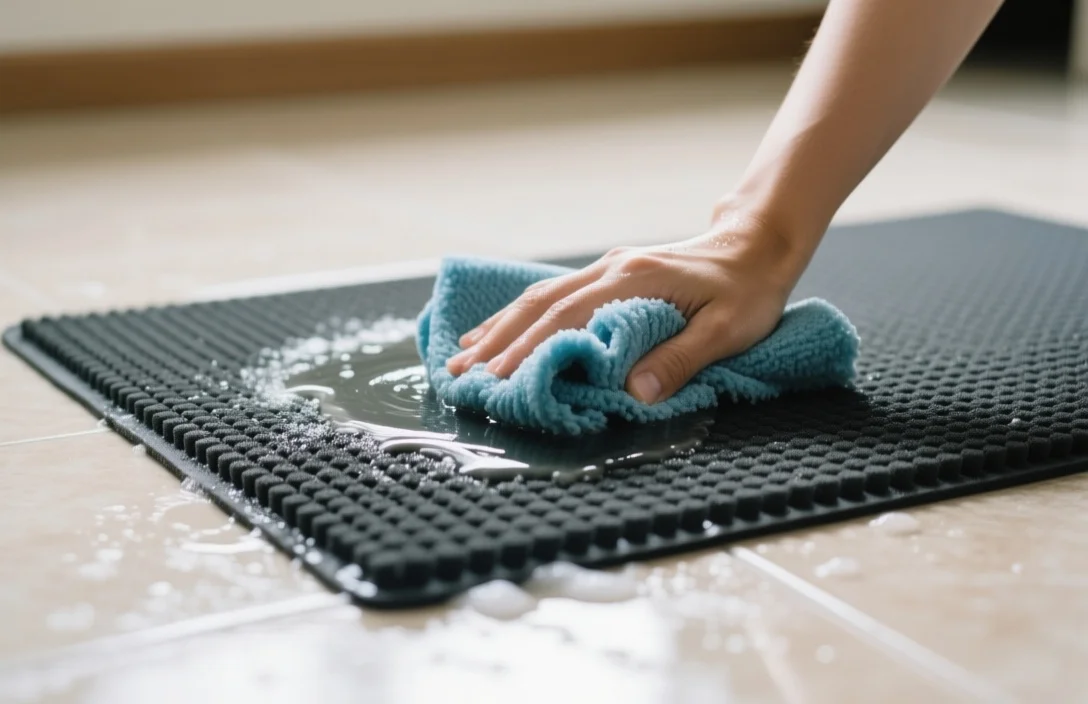
Rubber can sometimes hold onto odors from spilled drinks, damp shoes, or general environmental exposure. If your mats have a stale smell, a baking soda wash is the most effective way to neutralize the scent. Sprinkle a generous layer of baking soda over the damp, scrubbed mat and let it sit for fifteen minutes before rinsing.
The chemical properties of baking soda absorb odors rather than just masking them with a fragrance. If the smell persists, you can repeat the process or use a mixture of equal parts white vinegar and water. Spray the vinegar solution onto the mats, let it sit for five minutes, and then rinse them thoroughly. The sharp smell of vinegar will dissipate completely once the rubber dries, leaving the mats clean and neutral.
Drying Rubber Mats Completely
Never place rubber mats back into a vehicle or onto a finished floor while they are still wet. Water trapped underneath the rubber will lead to musty odors and can potentially damage the floor material underneath, especially if it is carpeted. Hang the mats vertically over a railing or lean them against a wall in a sunny, well-ventilated area to facilitate airflow.
If you are in a rush, use a microfiber towel to wipe away the excess standing water before letting them air dry. Flip the mats over after twenty minutes to ensure the bottom side dries as quickly as the top. Do not leave the mats in direct, scorching sunlight for hours at a time, as extreme UV exposure can cause the rubber to become brittle or fade over time.
Cleaning Frequency for Rubber Floor Mats
The ideal cleaning frequency depends on the climate and how often you use the space where the mats are located. In areas with significant rainfall or snow, you should rinse your mats every two weeks to prevent salt and mud buildup. Salt is particularly damaging to rubber over long periods, so prompt removal is essential to maintain the mat’s lifespan.
For drier, milder environments, a thorough cleaning once every six weeks is sufficient to keep the material in good condition. If you notice the mats look dull or feel slippery under your feet, it is a sign that dirt has accumulated beyond what a quick shake can fix. Staying ahead of this buildup preserves the traction and keeps the rubber flexible for years of daily use.
FAQ
Can I put rubber floor mats in the washing machine?
No, you should avoid putting rubber mats in a washing machine. The agitation and heat can cause the rubber to warp, crack, or lose its shape, and the rubber backing can damage the drum of your appliance. Always stick to hand-scrubbing with a brush and a hose to ensure the longevity of the material.
Will dish soap damage my rubber mats?
Mild dish soap is perfectly safe for rubber mats. It is designed to cut through grease and dirt without using harsh chemicals that degrade rubber compounds. Always ensure you rinse the soap off completely, as dried soap residue can create a slippery surface that is dangerous when you step on the mat.
How do I stop my mats from sliding after I wash them?
Mats slide when there is soap residue or a film of oil left on the bottom surface. Ensure you rinse the underside of the mat thoroughly during your cleaning process and dry it completely before placing it back down. If the floor itself is still wet, wait until it is fully dry to prevent the mat from hydroplaning.
Can I use a pressure washer to clean these mats?
You can use a pressure washer, but keep the nozzle at least 12 inches away from the surface. High-pressure water directed too closely can tear or gouge the rubber, especially if the mat has intricate patterns or thin edges. Use a wide-angle spray tip rather than a concentrated pencil jet to avoid damaging the material.
What should I do if my mats still smell like rubber?
New rubber mats often have a distinct odor that fades over time with exposure to air. If the smell is overwhelming, wash the mats with a mixture of water and a small amount of white vinegar to neutralize the surface compounds. Placing them in a well-ventilated garage for 24 hours will also help the initial manufacturing scent dissipate.
Cleaning your mats is a simple habit that extends the life of your vehicle interior or entryway. Start by rinsing them after a rainy week to prevent long-term damage, and you will find they stay in excellent condition for years.