
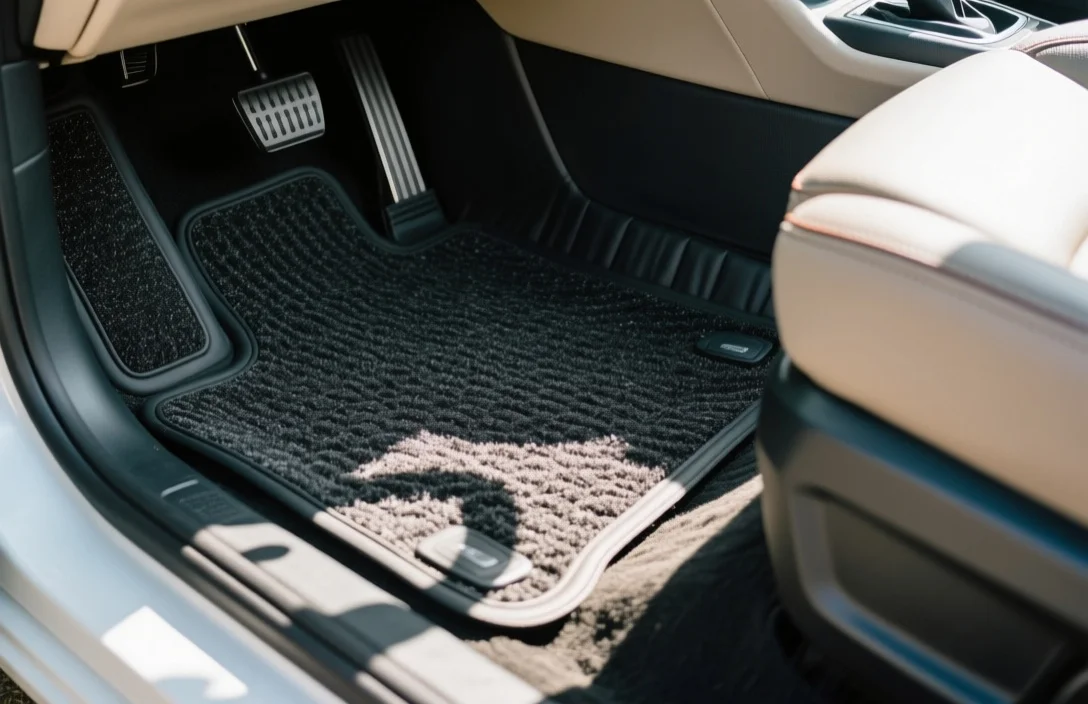
Car floor mats that slide under your feet turn every stop into a safety hazard and every drive into a fidgety chore. The right fix depends on your mat type, budget, and how much DIY you’re willing to do. Below are the seven most effective methods, ranked by how well they hold mats in place without damaging your car’s carpet.
The single most reliable way to stop car floor mats from sliding is to use retention clips designed for your vehicle’s factory anchor posts. These clips snap into existing holes in the floor, lock the mat’s grommets in place, and cost under $10 for a full set. For mats without grommets, heavy-duty hook-and-loop fasteners or industrial adhesive tape work best, holding mats steady with minimal installation effort.
Key Takeaways
- Retention clips win. Factory-style clips are the strongest, cheapest ($8-$15), and easiest to remove for cleaning.
- Hook-and-loop fasteners grip carpet well but wear out after 1-2 years of daily use.
- Double-sided tape is permanent – peeling it off may damage carpet fibers.
- Rubber underlay pads add traction but can bunch up under thin mats.
- Silicone beads work on vinyl mats but melt under heat or heavy foot traffic.
- Worn anchor posts can be replaced for $5-$10 with a simple plastic repair kit.
How to Stop Car Floor Mats From Sliding Using Retention Clips
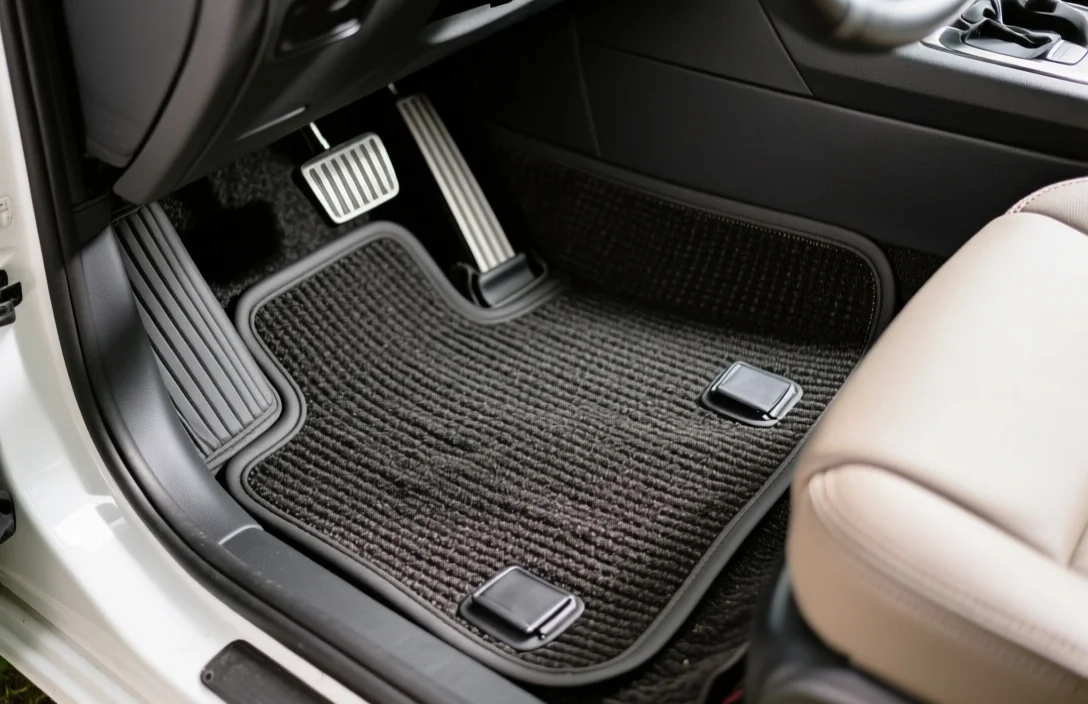
Retention clips are small plastic or metal brackets that snap into your car’s factory anchor posts. Most vehicles built after 2000 have two or four pre-drilled holes in the floor – one for each mat corner. The clips cost $8-$15 for a universal set or $20-$30 for OEM parts from your dealership.
Installation takes less than five minutes. Press the clip’s prongs into the anchor post until it clicks, then slide the mat’s grommet over the clip’s post. If your mats don’t have grommets, use a hole punch to add them or switch to a set that includes pre-punched mats. Clips hold mats so securely that they won’t budge even during hard braking, and they’re easy to remove for cleaning or seasonal swaps.
The only downside is compatibility. Some aftermarket mats have grommets in the wrong places, and older cars may lack anchor posts entirely. In those cases, you’ll need to drill new holes (not recommended for leased vehicles) or try one of the other methods below.
Selecting Heavy-Duty Hook-and-Loop Fasteners for Carpet Grip
Hook-and-loop fasteners (like Velcro) are a no-drill solution for mats without grommets. Heavy-duty versions use thick nylon loops and aggressive hooks that dig into carpet fibers, holding mats in place without slipping. A 10-foot roll costs $10-$20 and covers both front and rear mats.
Cut the fastener into 2-inch squares and stick one side to the mat’s underside and the other to the car’s carpet. Press firmly for 30 seconds to set the adhesive. The grip lasts 1-2 years before the hooks wear out, but replacement strips are cheap and easy to apply. Avoid generic fasteners – they lose stickiness after a few months and leave residue on your carpet.
Hook-and-loop works best on thick, plush carpets. On low-pile or rubberized floors, the hooks can’t grip well, and the mats may still shift. It’s also not ideal for mats with deep grooves, as the fastener can peel up over time.
Applying Double-Sided Industrial Adhesive Tape for Mat Stability
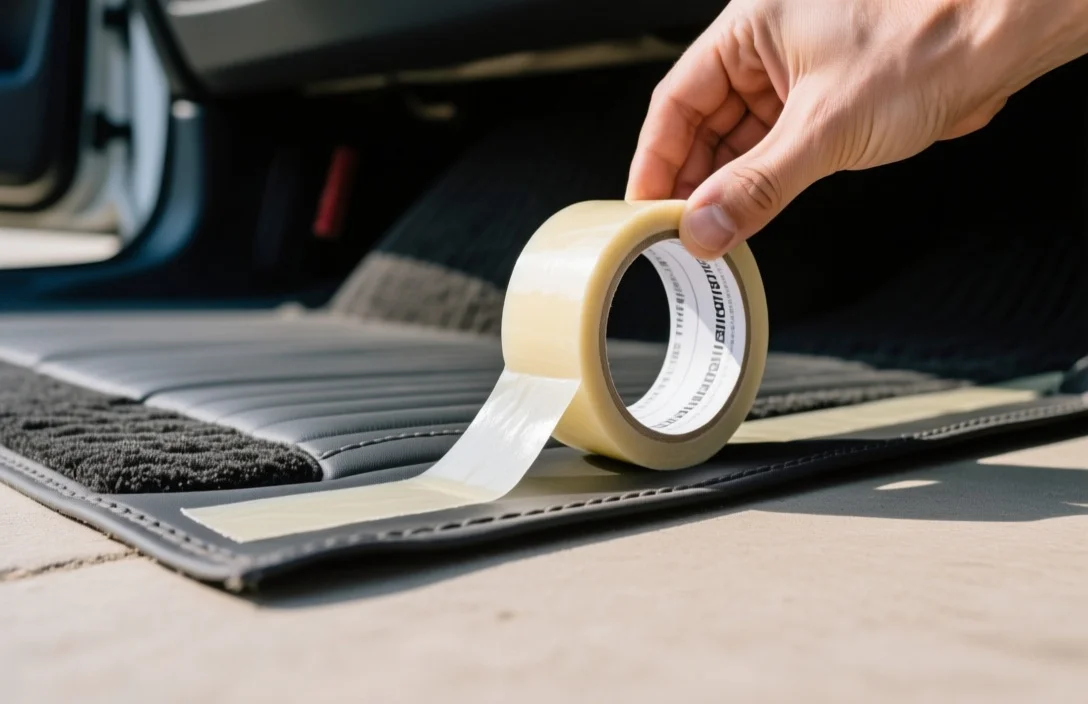
Industrial adhesive tape (like 3M VHB or Gorilla Tape) creates a permanent bond between the mat and the car’s floor. It’s the strongest hold you can get without hardware, but it’s also the hardest to remove. A 30-foot roll costs $15-$25 and covers all four mats.
Clean the floor and mat underside with rubbing alcohol, then apply 3-4 strips of tape to each corner. Press down for 60 seconds to set the bond. The tape holds through heat, cold, and heavy foot traffic, but peeling it off later may pull up carpet fibers or leave sticky residue. Use a heat gun or adhesive remover to soften the tape before removal.
This method works best for all-weather rubber mats or custom-fit carpet mats you plan to keep long-term. Avoid it for leased cars or if you swap mats seasonally.
Installing Non-Slip Rubber Underlay Pads for Extra Traction
Non-slip rubber underlay pads add grip by increasing friction between the mat and the floor. They’re thin (1/8 inch), cut-to-fit sheets that slide under your existing mats. A set costs $20-$40 and works with any mat type, including carpet, rubber, or vinyl.
The pads have a textured surface that grips both the mat and the car’s carpet, preventing slippage even on smooth floors. They’re easy to install – just trim to size with scissors and lay them down. The downside is bulk: underlay pads can make mats feel thicker underfoot, and they may bunch up if the mat isn’t heavy enough to hold them flat.
They’re a good choice for older cars with worn carpet or aftermarket mats that don’t fit well. Avoid them if your mats are already thick, as the extra layer can make them harder to clean.
Modifying Mat Backing with Silicone Sealant Beads
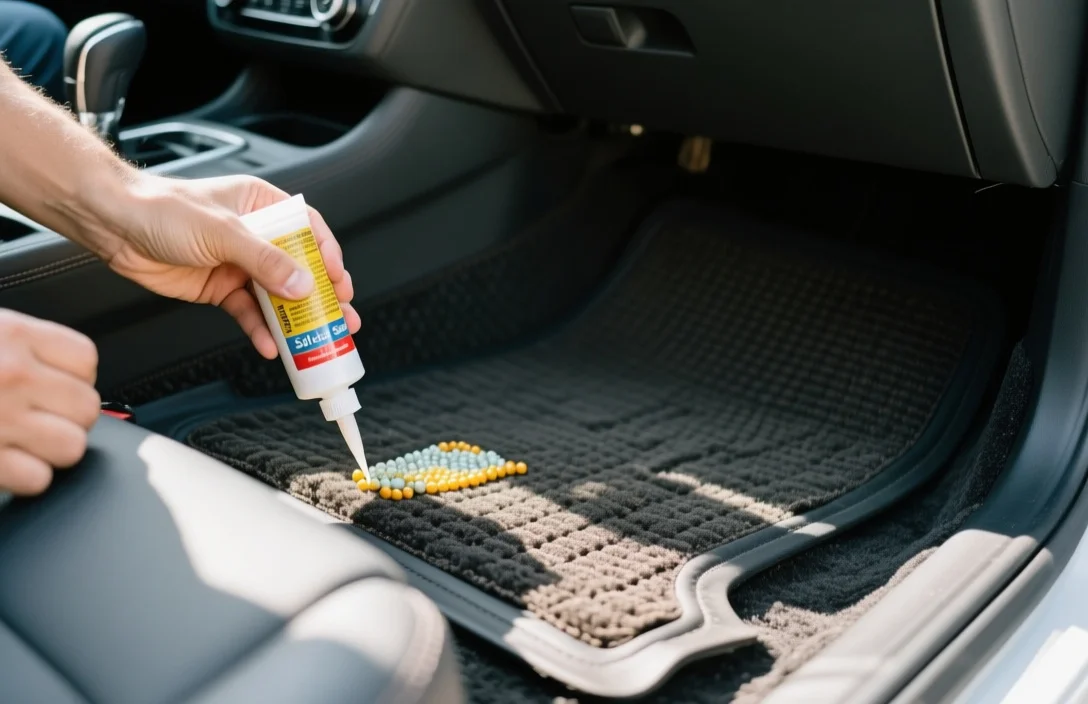
Silicone sealant beads create a grippy, flexible barrier between the mat and the floor. You apply small dots or lines of silicone to the mat’s underside, let them cure, and press the mat into place. A tube of clear silicone costs $5-$10 and covers multiple mats.
Apply the silicone in a grid pattern, spacing beads 2-3 inches apart. Let it cure for 24 hours before driving. The beads grip carpet fibers without damaging them, and they’re easy to remove if you change mats later. The downside is durability – silicone can melt under extreme heat or wear down after a year of heavy use.
This method works best on vinyl or rubber mats. Avoid it on carpet mats, as the silicone can soak into the fibers and leave stains.
Replacing Worn Anchor Posts to Restore Factory Security
Factory anchor posts are small plastic or metal pegs that secure mats to the floor. Over time, they can crack, break, or wear down, leaving mats loose. Replacement posts cost $5-$10 each and take 10 minutes to install.
Use a flathead screwdriver to pry out the old post, then press the new one into the hole until it clicks. Some kits include adhesive for extra hold. Once installed, the posts work with retention clips or factory grommets to lock mats in place.
This is the best fix if your car originally had anchor posts but they’ve worn out. It’s not an option for cars without pre-drilled holes, though.
Best Fixes by Use Case
| Scenario | Best Method | Cost | Longevity | Ease of Removal |
|---|---|---|---|---|
| Leased car | Hook-and-loop fasteners | $10-$20 | 1-2 years | Easy |
| Daily driver (all-weather) | Retention clips | $8-$15 | 3-5 years | Easy |
| Custom-fit carpet mats | Double-sided tape | $15-$25 | Permanent | Hard |
| Older car with worn carpet | Rubber underlay pads | $20-$40 | 2-3 years | Easy |
| Temporary fix (vinyl mats) | Silicone sealant beads | $5-$10 | 6-12 months | Easy |
| Broken factory anchor posts | Replacement posts + clips | $5-$10 | 3-5 years | Easy |
Final Recommendation
Start with retention clips if your car has factory anchor posts – they’re cheap, strong, and reversible. If your mats lack grommets or your car doesn’t have anchor posts, use heavy-duty hook-and-loop fasteners for a balance of grip and flexibility. Avoid double-sided tape unless you’re committed to keeping the same mats long-term, as removal can damage your carpet.
For a quick test, try the hook-and-loop method first. If the mats still slide, upgrade to clips or underlay pads. Whatever you choose, check the mats every few months to make sure they’re still secure.
FAQ
Why do my car floor mats keep sliding even after I adjust them?
Mats slide because the car’s carpet is smooth, the mat’s backing is worn, or there’s no retention system in place. Factory mats usually have grommets or clips, while aftermarket mats often rely on friction alone. Without a mechanical or adhesive anchor, mats will shift underfoot, especially during braking or sharp turns.
Can I use household items like rug grippers or shelf liner to stop mats from sliding?
Yes, but they’re not ideal. Rug grippers (like those for home use) can bunch up under thin mats, and shelf liner lacks the grip needed for heavy foot traffic. They’re a temporary fix at best – expect to replace them every few months as they wear out or lose stickiness.
How do I know if my car has factory anchor posts for floor mats?
Look for small plastic or metal pegs in the floor near the front and rear footwells. Most cars built after 2000 have them, but some economy models skip them. If you don’t see posts, check your owner’s manual or search for your car’s make, model, and year along with “floor mat anchor posts.”
Will retention clips damage my car’s carpet if I remove them later?
No. Retention clips snap into existing holes and don’t touch the carpet. The only risk is if you force a clip into a misaligned grommet, which could tear the mat. Always match the clip size to your mat’s grommet diameter (usually 3/8 inch or 1/2 inch).
What’s the easiest way to stop mats from sliding without tools or adhesives?
Fold a small towel or rubber shelf liner under each mat corner. The extra weight and texture add enough grip to keep mats in place for short drives. For a longer-term fix, switch to mats with built-in rubberized backing or non-slip undersides – brands like WeatherTech and Husky Liners include these features standard.