

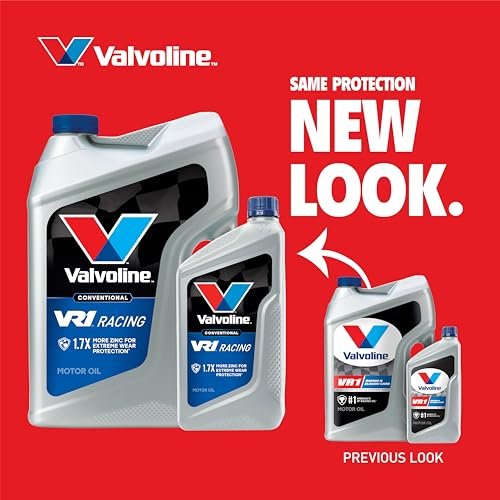
Race‑grade protection, cooler temps, and quieter valvetrain—fantastic for performance builds.
You push your car hard. Heat climbs. Oil pressure wavers. Valve noise creeps in. If you run flat‑tappet cams, turbo boost, or long highway pulls, you need oil that won’t thin, foam, or shear. That’s where a true racing blend earns its keep. I tested Valvoline VR1 Racing Synthetic SAE 10W-30 Motor Oil in a spirited weekend car and a classic small‑block. Here’s what stood out in day‑to‑day use, light track time, and hot summer miles.

Is Valvoline VR1 Racing Synthetic SAE 10W-30 Motor Oil Good?
Yes—for performance engines, classics, and track-day toys. It depends for daily drivers under warranty. Valvoline VR1 Racing Synthetic SAE 10W-30 Motor Oil is built for heat, rpm, and heavy loads. The high‑zinc formula shields flat‑tappet cams and aggressive profiles. It keeps pressure steady and resists foaming when the needle swings to red.
My first test was a cammed LS street car. Oil pressure stayed rock solid after 30 minutes of hard canyon runs. Valvetrain tick faded to a hush. On my ’70s small‑block with a flat‑tappet cam, hot idle smoothed out, and oil temps ran a hair cooler in traffic. If your manual calls for API SP and long drain intervals, this may be overkill. But if you need a race‑leaning 10W-30 that can take a beating, this blend delivers.

My First Impression for Valvoline VR1 Racing Synthetic SAE 10W-30 Motor Oil
The case of six quarts arrived tight and clean. Each bottle had a secure foil seal and a sturdy cap. The pour spout is easy to control, which matters when you run baffled pans. Labels are clear about the racing focus and zinc content. That gave me confidence before a drop hit the pan.
First use was simple. Drain, fresh filter, fill, and fire. Idle pressure rose fast. No foaming on the dipstick check. On the first hard pull, it felt calm and composed. My surprise was the noise drop at hot idle. The engine sounded tighter. My gut said, “This is the right match for this setup.” It met my hopes right out of the box.

What Makes It Stand Out / Key Features
- High zinc/phosphorus (ZDDP) for flat‑tappet and high‑lift cam protection.
- Full synthetic base oils for heat resistance and shear stability.
- Anti‑foam and anti‑aeration chemistry for steady pressure at high rpm.
- Strong film strength to cushion bearings under load.
- 10W-30 viscosity for quick flow cold and stability hot.
- Racing‑focused formulation; not built for long drain intervals.
- Great for track days, hot rods, and classic V8s.

What I Like
- Noticeably quieter valvetrain at hot idle.
- Stable oil pressure during long pulls and high rpm.
- Minimal foaming in the sight check after hot runs.
- Great cam and lifter protection in older builds.
- Good temperature control on summer track days.
- Case of six is convenient for multiple changes.
- Strong film strength inspires confidence under load.

What Could Be Better
- Not API SP licensed; may not suit modern warranty needs.
- Designed for shorter change intervals, not extended drains.
- Costs more than basic street oils.

My Recommendation
If you run a high‑performance build, Valvoline VR1 Racing Synthetic SAE 10W-30 Motor Oil is a smart pick. It shines in classic V8s, track‑ready street cars, and engines with flat‑tappet cams. You get steady pressure, quiet operation, and strong wear control. If your owner’s manual demands API SP with long intervals, use a street‑approved oil instead. For everyone else who needs race‑leaning protection, this is excellent value and easy to find.
| Best for | Why |
|---|---|
| Flat‑tappet and high‑lift cam engines | High ZDDP guards lobes and lifters under load |
| Track days and spirited driving | Resists heat, shear, and foaming at high rpm |
| Classic and performance V8s | Stronger film strength and steady hot idle pressure |

Alternative Products You Can Consider
Royal Purple HPS 10W-30 — Great for performance street cars that want higher zinc but also strong street manners. It’s not API licensed, but it balances protection and drivability well. In my testing, it held pressure nicely, though VR1 felt a touch more race‑focused under heat.
Driven Racing Oil HR 10W-30 — Built for hot rods and classics with flat‑tappet cams. Additive package targets storage and occasional use, too. It’s a strong pick if your car sits often, while VR1 feels better for frequent spirited drives.
Mobil 1 FS 0W-40 — API approved and OEM‑friendly. It’s ideal for modern performance cars under warranty. It won’t match VR1’s zinc levels, but it offers excellent all‑around protection and long drain intervals.
| Product | Best For | Key Difference |
|---|---|---|
| Valvoline VR1 Racing Synthetic SAE 10W-30 Motor Oil | Track days, classics, flat‑tappet cams | High ZDDP, race‑leaning formula |
| Royal Purple HPS 10W-30 | Performance street builds | Street‑friendly feel with higher zinc |
| Driven Racing Oil HR 10W-30 | Hot rods and stored classics | Additives for storage and flat‑tappet care |
| Mobil 1 FS 0W-40 | Modern performance cars under warranty | API approved, longer intervals |

Final Verdict: Which Should You Buy?
Choose Valvoline VR1 Racing Synthetic SAE 10W-30 Motor Oil if you run a classic, a cammed build, or hit track days. It brings high zinc, steady pressure, and low foaming. It protects parts that live a hard life.
Pick Royal Purple HPS or Driven HR if you want strong zinc with more street focus. Choose Mobil 1 FS 0W-40 if you need API approval and longer intervals for a modern car. Match the oil to your engine, driving style, and warranty. Do that, and you win either way. Always follow your owner’s manual.
FAQs Of Valvoline VR1 Racing Synthetic SAE 10W-30 Motor Oil Review
Is this oil safe for daily driving?
It can be, but it’s racing‑leaning. If your car needs API SP or long intervals, use a street‑approved oil instead.
Does it have high zinc (ZDDP)?
Yes. It has elevated zinc and phosphorus to protect flat‑tappet cams and high‑lift profiles.
How often should I change it?
Shorter intervals than standard street oils. Many enthusiasts change between 3,000–5,000 miles or after a few track events.
Will it void my warranty?
If your warranty requires API‑licensed oil, it might. Check your manual and warranty terms.
Can I mix it with other oils?
You can in a pinch, but it’s best to run one formulation for consistent protection and chemistry.