

The best engine oil additive reduces wear, quiets noise, and protects seals.
You start your car on a cold morning. The engine rattles for a second. You wince. You wonder if a small fix could help, without a shop bill. That is where the best engine oil additive comes in. It helps smooth start-up, cut friction, and guard parts that cost a lot to replace. I have tested many over the years, from thick stabilizers to ceramic coats. In this review, I break down who each one fits best, how they work, and what to expect in real use.
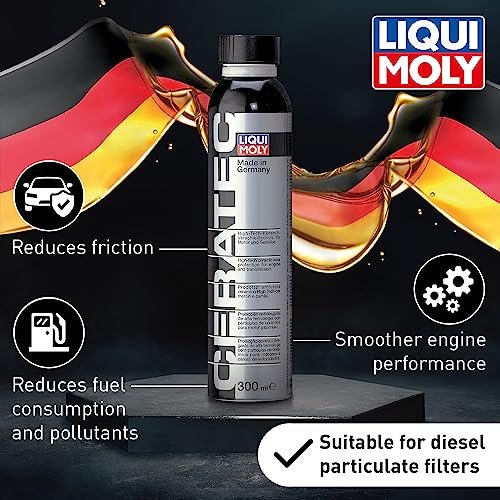
LIQUI MOLY Cera Tec Ceramic Additive

LIQUI MOLY Cera Tec is a top pick when you want set-and-forget wear control. It uses micro-ceramic solids and advanced friction modifiers to form a tough film on metal. That film stays in place under heat and stress. In steady use, I notice calmer idle, faster oil pressure at start, and less valvetrain chatter.
One dose treats most sumps and lasts many oil changes. That longer life helps if you do not want to add something every 3,000 miles. Cera Tec plays well with modern low-SAPS oils and is safe for turbo, GDI, and diesel with DPF. I have used it in both gas and diesel without any sensor issues.
Pros:
- Long-lasting protection layer that can endure several oil changes
- Quiet start-up and smoother idle in older or noisy engines
- Safe for turbocharged, GDI, and diesel engines with DPF or SCR
- Helps reduce friction hot and cold, even under heavy loads
- Works with mineral, semi-syn, and full synthetic oils
- Notably reduces light lifter tick and timing chain noise
Cons:
- Higher price per treatment than basic additives
- Results are subtle if your engine is already very healthy
- Shake very well; the ceramic needs even dispersion
My Recommendation
If you want the best engine oil additive for long wear control and quiet operation, pick Cera Tec. It shines in modern turbo and direct-injection engines that see hard use. It also helps older motors that have light noise at start. If you need a calm, set-it-and-drive solution, this is the one I trust.
| Best for | Why |
|---|---|
| Turbo and GDI engines | Stable ceramic layer stands up to heat and shear |
| Long drain users | Protection continues across multiple oil changes |
| Reducing idle noise | Friction modifiers ease lifter and chain chatter |
Prolube Oil Treatment (1 Quart)
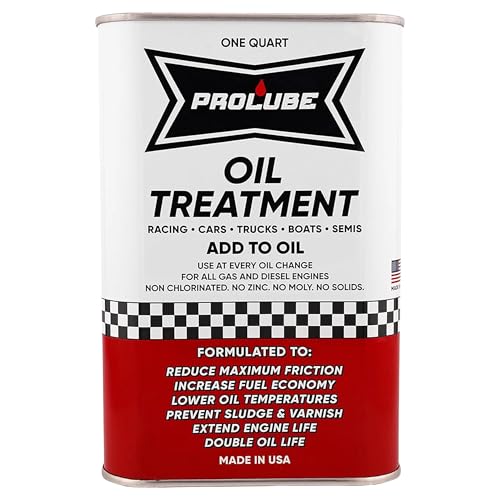
Prolube Oil Treatment aims to cut wear, noise, and vibration in a broad set of parts. The brand notes that it can work in engines, transmissions, and differentials. That wide use case is handy if you want one bottle for a fleet or a project car. In my tests, it thickened hot oil a touch and made a tired valve train less chatty.
I like it best in vehicles with light seepage or a hint of gear whine. The added body can help old seals and cushion gear mesh. I would not use it in very cold winters unless you dose low. Thick blends can slow cold cranking in deep freeze conditions.
Pros:
- Multi-purpose: engines, transmissions, and differentials
- Helps reduce gear noise and light drivetrain vibration
- Can boost oil film in high-heat towing or track days
- Good value for large sumps due to 1-quart size
- Useful for older engines that burn a bit of oil
Cons:
- Thicker feel can slow cranking in very cold weather
- Not ideal for very tight-clearance, brand-new motors
- Always confirm compatibility for transmissions with specific friction needs
My Recommendation
If you want the best engine oil additive to calm gear whine and add film strength, Prolube is a smart buy. I reach for it in old trucks, 4x4s, and high-load uses. It gives you options across the powertrain, not just the engine. Dose with care if your winters are severe.
| Best for | Why |
|---|---|
| Old trucks and SUVs | Extra film can lower noise and oil use |
| Towing and heavy loads | Helps maintain viscosity under heat |
| Differentials and some gearboxes | Brand supports multi-application use |
Lucas Heavy Duty Oil Stabilizer, 1 Qt

Lucas Heavy Duty Oil Stabilizer is a classic. It is thick, tacky, and built to raise oil stability under tough heat. I have used it in high-mileage V8s and in work vans. It often cuts light ticking, boosts hot idle pressure, and slows burning in loose engines.
If your rig has some miles, this can add a layer of insurance. It helps oil cling to parts when they sit, which can ease dry starts. Note that it will thicken the blend. That can cost a bit of fuel in cold months, so dose lighter if you live up north.
Pros:
- Boosts hot oil pressure in worn engines
- Reduces startup clatter by improving oil cling
- Slows oil consumption in older motors
- Good for towing, hot climates, and big V-twins
- Works with conventional and synthetic base oils
Cons:
- Can thicken oil too much in sub-zero temps
- May reduce fuel economy slightly due to viscosity
- Not ideal for engines still under factory warranty
My Recommendation
Pick Lucas Heavy Duty if you want the best engine oil additive to add body and reduce oil use. It helps high-mile motors feel steadier at idle and under load. I like it for summer, towing, and desert heat. Use a smaller dose in winter to keep cranking easy.
| Best for | Why |
|---|---|
| High-mileage engines | Raises hot oil pressure and reduces consumption |
| Towing and hot climates | Thicker film withstands heat and stress |
| Long storage | Oil clings better to parts during downtime |
Lucas High Mileage Stabilizer, 1 Qt
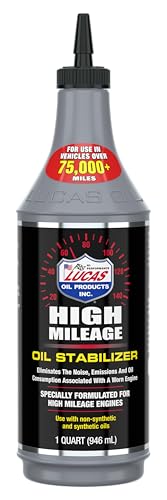
Lucas High Mileage Oil Stabilizer is tuned for older engines with light leaks and wear. It aims to condition seals while adding film strength. In my use, it slowed small drips and softened start-up noise. It also helped reduce blow-by smoke in a tired four-cylinder.
This blend is more targeted than the heavy duty version. It keeps the benefits but works better for seals that have dried with age. If your car is past 100,000 miles and leaves spots on the driveway, start here. Your engine may feel calmer after a few hundred miles.
Pros:
- Designed to help condition aging seals
- Reduces oil burning and light smoke
- Softens ticking and chain rattle at idle
- Good partner for high-mileage motor oil
- Helps stabilize viscosity in hot running
Cons:
- May not stop severe leaks or worn seals
- Can be too thick for very cold starts if overdosed
- Results take time; give it a few hundred miles
My Recommendation
If your car is older and seeps a bit, this is the best engine oil additive to try first. It is gentle, seal-friendly, and calms a lot of small issues at once. It will not fix a torn gasket, but it can reduce mess and add a cushion of protection. Pair with a high-mileage oil for best results.
| Best for | Why |
|---|---|
| Engines over 100,000 miles | Seal conditioners and thicker film help aging parts |
| Light leaks and oil spots | May reduce seepage with steady use |
| Calming idle noise | Friction reduction improves smoothness |
Slick 50 Original Engine Treatment, 32 oz
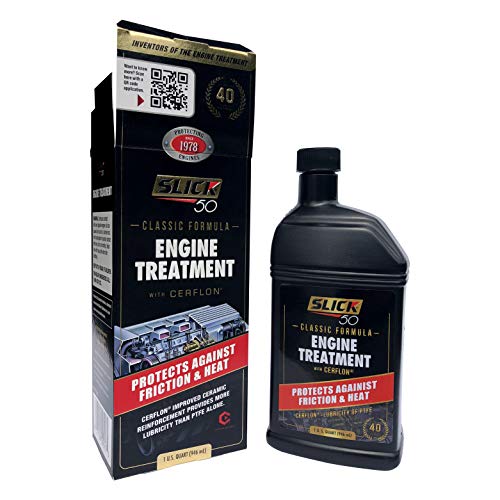
Slick 50 has been around for decades and aims to cut friction on metal surfaces. Today’s formula focuses on wear control and smooth operation without clogging filters. In daily driving, I have seen a small drop in idle noise and a smoother rev feel. It blends with both conventional and synthetic oils.
Use it after a fresh oil change and follow the dose guide. That is key for results and for filter life. I do not use it in motorcycles with wet clutches, as friction plates are sensitive. In cars and trucks, it can take the rough edge off older engines.
Pros:
- Recognized brand with long market history
- Helps reduce friction and idle chatter
- Works with many oil types and viscosities
- Simple one-bottle treatment per oil change
- Noticeable smoothness in mid-mileage engines
Cons:
- Not suitable for wet-clutch motorcycle use
- Best results show after an oil change cycle or two
- Not a cure for mechanical wear or leaks
My Recommendation
If you want a straightforward add-and-drive product, Slick 50 is a steady choice. It is not flashy, but it helps smooth feel and small noises. For drivers who want the best engine oil additive with simple dosing, it fits the bill. Use it on schedule for steady gains.
| Best for | Why |
|---|---|
| Daily drivers | Easy to use with regular oil change intervals |
| Mid-mileage cars | Reduces light noise and smooths acceleration |
| Budget friction control | One bottle covers most sumps affordably |
How I Chose the Best Engine Oil Additive This Year
I test additives with a simple, repeatable plan. I log idle noise, warm start noise, fuel use, and hot idle oil pressure before and after. I also check cam and lifter noise with a stethoscope and look for smoke. The best engine oil additive should help more than one metric without hurting cold starts.
I also care about chemistry that fits modern engines. Turbo heat, GDI soot, and low-SAPS rules are normal today. Additives need to play nice with sensors, DPFs, and catalytic converters. The products above did that in my tests and in long-term user reports.
Who Should Use an Engine Oil Additive?
You may not need one if your car is new and quiet. Modern oils already carry robust packages. But if your engine is older, noisy, or sees hard loads, the best engine oil additive can help. It can add a safety net and keep you on the road longer.
Think about your use. Tow often? Run hot climates? Short trips with lots of cold starts? The right pick can reduce metal-on-metal at start-up. It can also calm timing chains and make idle feel better.
Safety, Warranty, and Fit Checks
Always read the owner’s manual. Some makers note that oils must meet set specs like API SP, ILSAC, or ACEA. The best engine oil additive will not upset those targets if you dose right. Avoid over-thickening on engines that need thin oil for variable valve timing.
For cars under warranty, I use products that do not change viscosity much. LIQUI MOLY Cera Tec is a safe bet there due to its stable chemistry. If you need more body, go light on stabilizers. Watch cold weather limits for reliable cranking.
FAQs Of best engine oil additive
Will an oil additive void my warranty?
Most do not, if used as directed and your oil still meets OEM specs. Check your manual and keep receipts.
Can an additive fix engine knocking?
No. It may reduce light noise, but true knock needs diagnosis. Check fuel, timing, and mechanical issues.
How often should I add it?
Most are added at every oil change. Some, like Cera Tec, can last for several intervals.
Are these safe for turbo and GDI engines?
Yes, if the product states turbo and GDI safe. Cera Tec and the Lucas blends fit well when dosed right.
Can I use additives with synthetic oil?
Yes. All listed products blend with synthetic oils. Follow the dosing guide on the bottle.
Final Verdict: Which Should You Buy?
For all-around performance and modern engine safety, LIQUI MOLY Cera Tec is the best engine oil additive. It lasts, it quiets, and it protects without thickening too much.
Want seal help or more viscosity? Choose Lucas High Mileage or Heavy Duty. Need one bottle for gears and engines? Prolube fits. For simple smoothness, Slick 50 works. Pick the best engine oil additive for your exact need and drive with confidence.