

Top picks: Valvoline CVT, Nissan NS-3, and Honda HCF-2 OEM fluids.
Your CVT lives on friction. The right oil makes it grip and glide. The wrong oil makes it slip and wear. If your car whines, shudders, or hunts for ratio, fresh fluid can feel like a full reset. I have chased those symptoms in my own garage. The fix often came down to picking the best CVT transmission fluid for the car, not just a “universal” guess. In this guide, I compare the top options for 2026, share real pros and cons, and help you match the bottle to your exact CVT. Keep this simple rule in mind: OEM spec first, then quality, then cost.
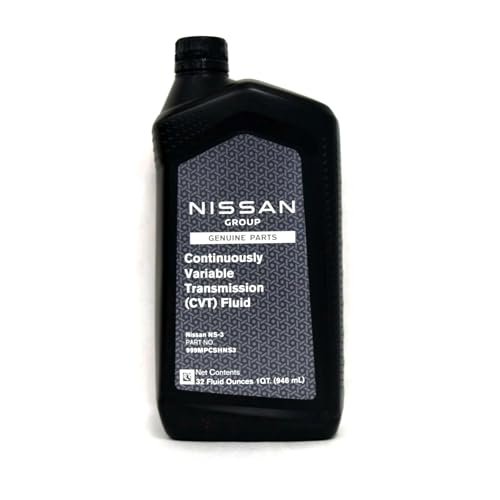
Nissan OEM NS-3 CVT Fluid, 5 Quarts

Nissan’s NS-3 CVT fluid is the factory callout for most late-model Nissan and Infiniti vehicles with belt-style CVTs. If you own a Rogue, Altima, Sentra, Murano, or similar, odds are high your manual lists NS-3. This OEM fill focuses on stable friction, strong shear resistance, and clean clutch feel under high line pressure. It helps the steel belt bite the pulleys without chatter, even as heat builds in traffic or on grades.
From a practical view, I like how predictable NS-3 feels after a drain-and-fill. Ratio changes get smooth. Low-speed creep is calmer. If your CVT has slight flare or a light whine, fresh OEM fluid is often the fastest path back to normal. This 5-quart pack is smart for a single drain-and-fill, and most owners will need one or two packs for a deeper service.
Pros:
- OEM spec match for most Nissan/Infiniti NS-3 CVTs
- Excellent thermal and shear stability for long life
- Smooth, quiet operation with less whine and shudder
- Proven anti-foam and anti-wear chemistry for belt and pulleys
- Strong track record for warranty compliance and dealer service
Cons:
- Higher price than some aftermarket options
- Not “universal”; wrong choice for non-NS-3 CVTs
- Stock varies; may sell out during peak seasons
My Recommendation
If you drive a Nissan or Infiniti that lists NS-3, this is the safe bet. It is the best CVT transmission fluid for OEM-correct feel and for protecting the steel belt under high pressure. I reach for it when a customer wants the car to drive like it did on day one. Use it for drain-and-fill maintenance every 30,000–60,000 miles based on use and heat. If the vehicle tows, idles long, or faces mountains, lean to the early side.
One tip: warm the car, shift through ranges, then check the level per the service manual. Small level errors can mimic CVT issues. NS-3 helps mute light shudder and whine after only a few miles of driving. That is why I rank it near the top when people ask for the best CVT transmission fluid in modern Nissan models.
| Best for | Why |
|---|---|
| Nissan/Infiniti with NS-3 spec | Exact OEM chemistry for belt grip and smooth ratio changes |
| Drivers chasing factory feel | Reduces whine and flare; restores calm low-speed creep |
| Warranty-sensitive owners | Dealer-approved fluid; easy service documentation |
Castrol Transmax ATF/CVT, 1 Gallon

Castrol Transmax ATF/CVT is a flexible pick for mixed garages. It’s designed to serve both many step-gear automatics and a wide range of CVTs with one jug. That makes it helpful if you maintain several cars and want to keep fewer bottles on the shelf. The friction profile targets smooth shifts in ATs and steady belt grip in CVTs.
In my use, it shines when budgets are tight and the car’s manual allows an approved multi-vehicle fluid. Start with the owner’s manual and the spec sheet. If it lists coverage for your CVT type, this can be a real money saver. It pours clean, resists foam, and gives quiet operation once at temp. It is a sensible choice for high-mile cars you plan to keep on a strict service plan.
Pros:
- One fluid for many AT and CVT applications
- Good value per gallon for regular maintenance
- Quiet, stable feel after a proper warm-up
- Easy to find and store; fewer bottles on hand
- Solid foam control for steady hydraulic pressure
Cons:
- Not a match for some OEM-only CVT specs
- Manual check needed; do not assume coverage
- Enthusiasts may still prefer OEM for feel
My Recommendation
Pick Castrol Transmax ATF/CVT if you maintain several cars and want one jug that covers both AT and CVT, and your manual lists it as acceptable. It is not the best CVT transmission fluid for strict OEM purists, but it is a strong value for steady maintenance. I like it best for commuters that see lots of miles and need fluid refreshes on a calendar, not just symptoms.
As always, confirm fit with your service manual or the brand’s application guide. When approved, this fluid can feel close to OEM in daily driving. The quieter idle creep and easy take-off are the wins most drivers notice. If you love a crisp, factory-like CVT feel, you may rank an OEM fluid higher. If you prize value and coverage, this one earns a spot.
| Best for | Why |
|---|---|
| Mixed garages and fleets | One jug serves many AT and CVT needs |
| Budget-focused maintenance | Lower cost per service; easy interval planning |
| High-mile commuters | Stable friction; smoother daily drive after warm-up |
Valvoline CVT Full Synthetic, 1 Quart

Valvoline’s CVT Full Synthetic is one of my most-used aftermarket choices. It targets many Japanese and Korean belt CVTs and offers steady friction over a wide temp range. In real use, I see quicker ratio engagement and less idle creep surge after a fluid refresh. The bottle is easy to handle for DIY drain-and-fill jobs.
Valvoline holds up well under heat, which matters for mountain driving and long commutes. It manages foam so the pump keeps a solid prime, and that helps reduce whine. If your owner’s manual lists broad compatibility, this is a prime pick. For many drivers, this is the best CVT transmission fluid outside of strict OEM bottles, due to its blend of feel, reach, and cost.
Pros:
- Broad CVT coverage among Asian makes (check manual)
- Full synthetic base for heat and oxidation resistance
- Smooth take-off and steady ratio control
- Great for DIY; easy-pour quart bottles
- Often easier to find than OEM bottles
Cons:
- Not right for Honda HCF-2–only systems
- Some CVTs still drive best on OEM spec fluids
- Quart size means more bottles for big services
My Recommendation
Choose Valvoline CVT Full Synthetic if your manual allows it and you want balanced cost and performance. It is the best CVT transmission fluid for many high-mile commuters who want quiet, consistent drive feel and a trusted brand behind the bottle. I also suggest it when a car has light shudder after long idles. A drain-and-fill with this fluid often clears that up by the next day.
Plan two to three drain-and-fills spaced a few hundred miles apart if the fluid is very dark. That refresh pattern renews most of the sump without a machine exchange. Keep the level exact and reset the CVT adaptation if the service manual calls for it. Smooth, quiet, and easy to source—that is why I keep this one on my shelf and call it a best CVT transmission fluid pick for 2026.
| Best for | Why |
|---|---|
| Daily drivers needing steady feel | Full synthetic blend; quiet, smooth operation |
| DIY maintenance | Easy-pour quarts and wide availability |
| Budget-conscious owners | Strong value without big compromises |
Honda HCF-2 CVT Fluid, 4 Quarts
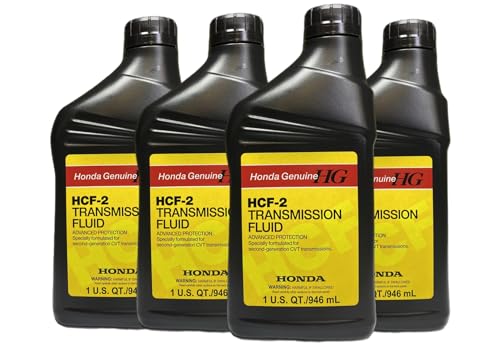
Honda’s HCF-2 is the exact fluid for many Honda CVTs from the mid-2010s onward. If you own a Civic, Accord, CR‑V, or HR‑V with a CVT, your manual likely says HCF‑2 only. This blend supports Honda’s unique calibration, which uses tight line pressure control and light-footed ratio changes. It is very picky about friction, which is why “close enough” fluids can make a Honda CVT feel off.
In the bay, I have fixed light judder and slow take-off in Honda CVTs with fresh HCF‑2 more times than I can count. The 4-quart pack lines up well with a single drain-and-fill. Many owners do two rounds if the fluid is brown or smells burnt. If you want the best CVT transmission fluid for a Honda that feels “not quite right,” start here.
Pros:
- Exact-match fluid for Honda HCF‑2 CVTs
- Restores smooth, fast ratio changes
- Helps reduce light judder on take-off
- Great for warranty and dealer records
- 4-quart pack fits most single drain-and-fills
Cons:
- Price premium over universal fluids
- Not suitable for non-HCF‑2 systems
- Stock can vary; plan service ahead
My Recommendation
Use Honda HCF‑2 if your dipstick or cap says HCF‑2, or your manual calls it out. Period. For Honda tuning and feel, this is the best CVT transmission fluid you can buy. It gives a calm launch, clean low-speed creep, and a light, natural throttle feel. That is the Honda way, and the fluid is a big part of it.
Service early if you face city heat, hills, or towing. A 30,000–45,000 mile interval keeps the friction curve tight. If the CVT feels rubbery, a fresh fill can bring it back. I trust this fluid for any Honda with HCF‑2 on the label, and I use it even when cheaper options tempt me. Peace of mind and proper feel win every time.
| Best for | Why |
|---|---|
| Honda CVTs marked HCF‑2 | Exact friction profile; OEM-correct feel and function |
| Owners chasing smooth take-off | Reduces judder and rubber-band sensation |
| Warranty compliance | Right fluid for dealer and service records |
Honda HCF-2 CVT Fluid, 5 Quarts

This 5-quart bundle of Honda HCF‑2 covers a deeper service or a second drain-and-fill. If your fluid is dark or you want a fuller refresh, the extra quart helps. Honda CVTs respond well to new fluid because it stabilizes pulley grip and calms hydraulic noise. With fresh HCF‑2, the car often feels like it drops a few years of age overnight.
If you plan to keep the car for a long time, this pack is smart. Do a warm drain-and-fill, drive a few hundred miles, then repeat. That process renews most of the fluid without a machine. For Honda owners, this is the best CVT transmission fluid package for a thorough home service plan.
Pros:
- OEM HCF‑2 fluid in a handy 5-quart bundle
- Great for two-stage drain-and-fill refresh
- Restores quiet, stable drive feel
- Protects belt, pulleys, and pump from wear
- Ideal for long-term owners and high-mile cars
Cons:
- More costly than universal fluids
- Overkill if you only need a top-off
- Must confirm HCF‑2 requirement before use
My Recommendation
Grab the 5-quart HCF‑2 pack if your Honda needs more than a single drain-and-fill. It is the best CVT transmission fluid bundle when you want to do it right at home. I recommend this to owners who plan to keep the car well past 100,000 miles. The extra quart makes the job simple, with a little left for a top-off if needed.
Do not mix with non-HCF‑2 fluids. Warm the fluid, cycle the shifter, and verify the level per the manual process. After the second refresh, most drivers notice cleaner engagement and less buzz under load. It is a small weekend job that pays off with every mile.
| Best for | Why |
|---|---|
| Two-stage refresh | Enough OEM fluid for back-to-back drain-and-fills |
| Long-term Honda owners | Protects CVT health for high-mile use |
| DIY service planners | Sized for home maintenance with a small buffer |
FAQs Of best CVT transmission fluid
How often should I change CVT fluid?
Many makers suggest 30,000–60,000 miles, sooner for severe use. Heat, hills, towing, and heavy traffic shorten life. Follow your owner’s manual first.
Can I mix different CVT fluids?
I do not advise it. CVT friction is very picky. Mixing can cause shudder, slip, or noise. Use one fluid that meets your exact spec.
What are signs I need new CVT fluid?
Whine, shudder on take-off, rough low-speed creep, dark or burnt-smelling fluid, and delayed engagement. New fluid often eases these symptoms fast.
Is “universal” CVT fluid safe?
Only if your manual and the product’s spec sheet say it is. Some CVTs need OEM-only fluids like NS‑3 or HCF‑2 for correct feel.
Do I need a full flush or just drain-and-fill?
Drain-and-fill is safer for high-mile CVTs. Do two to three rounds a few hundred miles apart for a deep refresh without a machine.
Final Verdict: Which Should You Buy?
For most Nissan owners, Nissan OEM NS‑3 is the best CVT transmission fluid. For Honda CVTs marked HCF‑2, use Honda HCF‑2 without question. If your manual allows, Valvoline CVT Full Synthetic offers strong value and smooth feel.
Pick the bottle your manual calls for, then choose service intervals that match your drive. That simple plan keeps the best CVT transmission fluid working for you, mile after mile.