
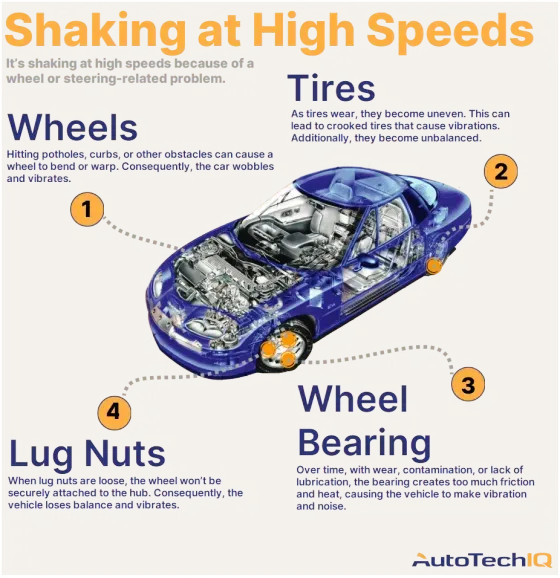
Most high-speed vibrations stem from tire imbalance, bent wheels, alignment errors, or worn suspension and driveline.
If you keep asking why does my car vibrate at high speed, you’re not alone. I’ve spent years diagnosing shakes that show up only on the freeway. In this guide, I’ll explain why does my car vibrate at high speed, how to pinpoint the cause, and how to fix it fast. You’ll learn what to check, what matters most, and what to avoid so your drive stays smooth and safe.

What Vibration Tells You: Feel, Speed, and Patterns
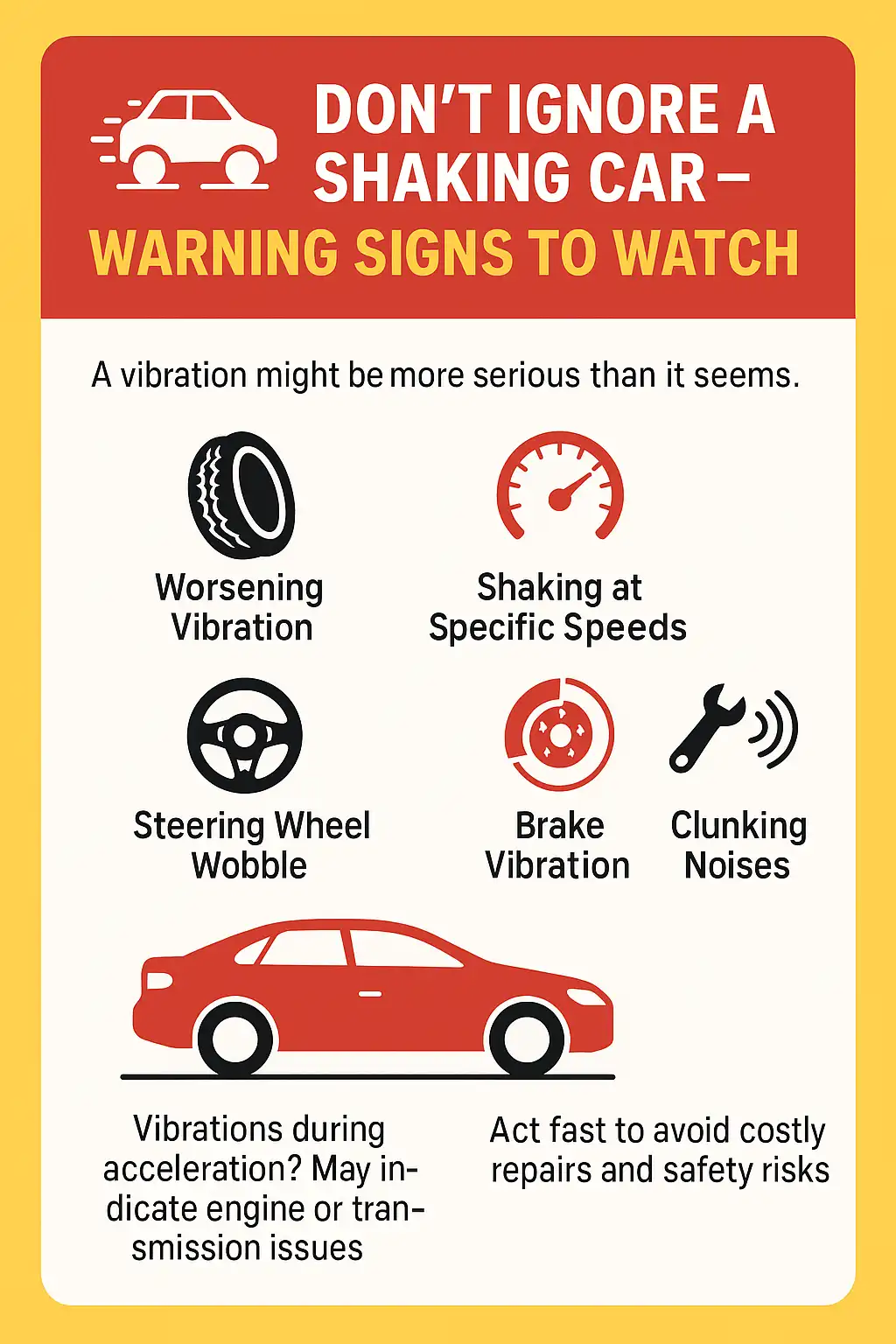
Vibration is a clue. Where you feel it helps locate the fault. Steering wheel shake often points to front tires or wheels. A seat or floor buzz leans toward rear tires, driveline, or exhaust.
Note the speed range. A shake that starts at 55–65 mph is classic tire imbalance. A pulsing that gets worse when braking often means warped rotors. A vibration that rises with engine rpm, even in neutral, can be engine related.
Ask yourself why does my car vibrate at high speed when the road looks smooth. The answer may be tire wear, bent rims, or loose parts. Small faults get louder as speed grows. That is why does my car vibrate at high speed even after a simple tire swap if the shop missed a bent wheel lip.
The Most Common Causes of High-Speed Vibration
When drivers ask why does my car vibrate at high speed, these are the usual suspects:
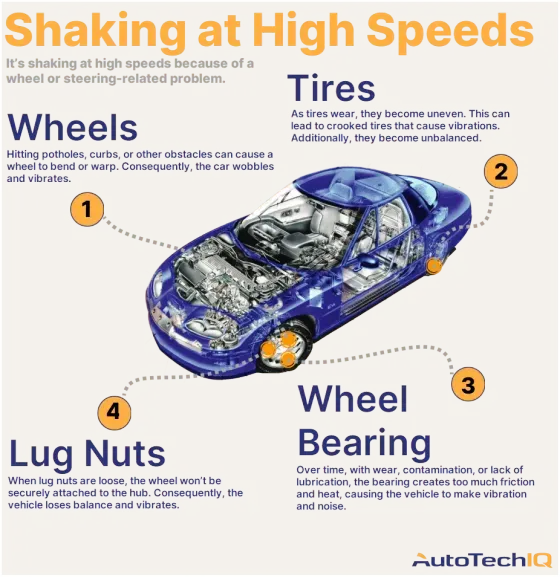
- Tire imbalance. Missing weights or uneven rubber cause a heavy spot. You feel it most at highway speed.
- Bent or out-of-round wheels. Potholes can bend rims. Even a small bend can shake the car.
- Tire defects or wear. Cupping, flat spots, broken belts, and scalloped edges all cause shimmy.
- Alignment issues. Toe or camber out of spec makes tires feather and hum. It can cause a pull and a shake.
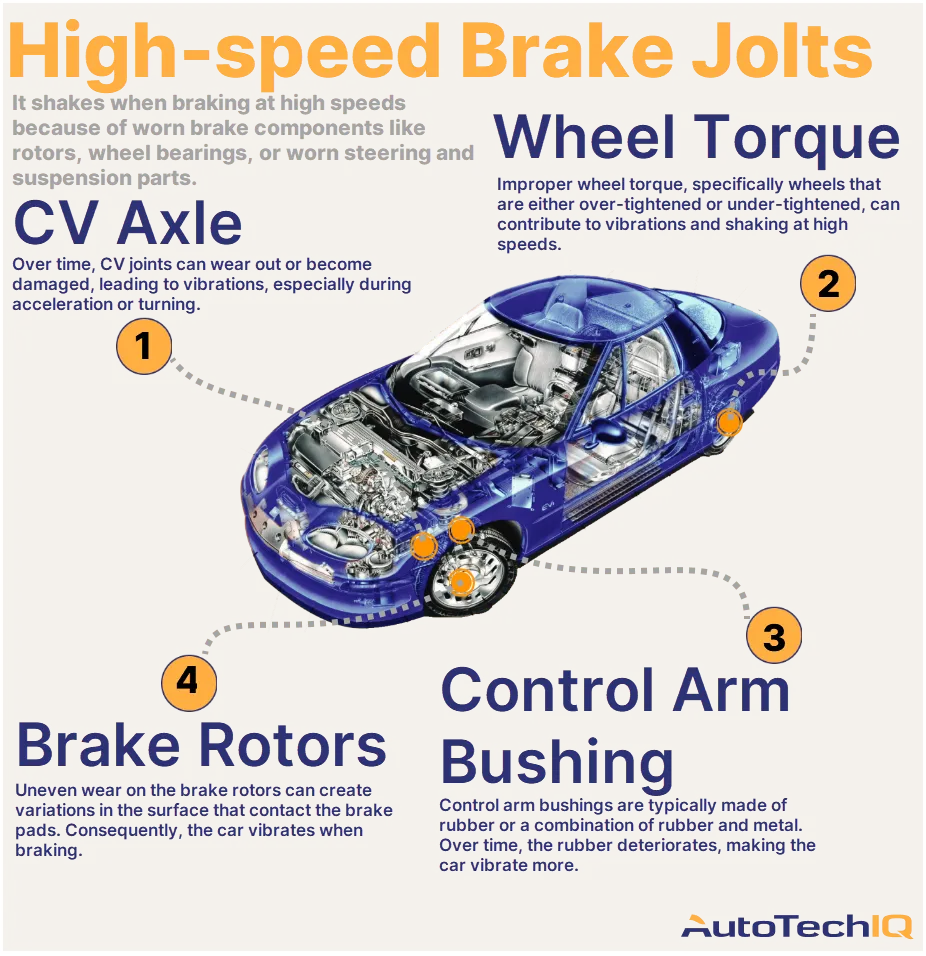
- Worn suspension parts. Bad ball joints, bushings, or tie rods let wheels move and wobble.
- Wheel bearings. A worn bearing can hum, grind, or vibrate as speed rises.
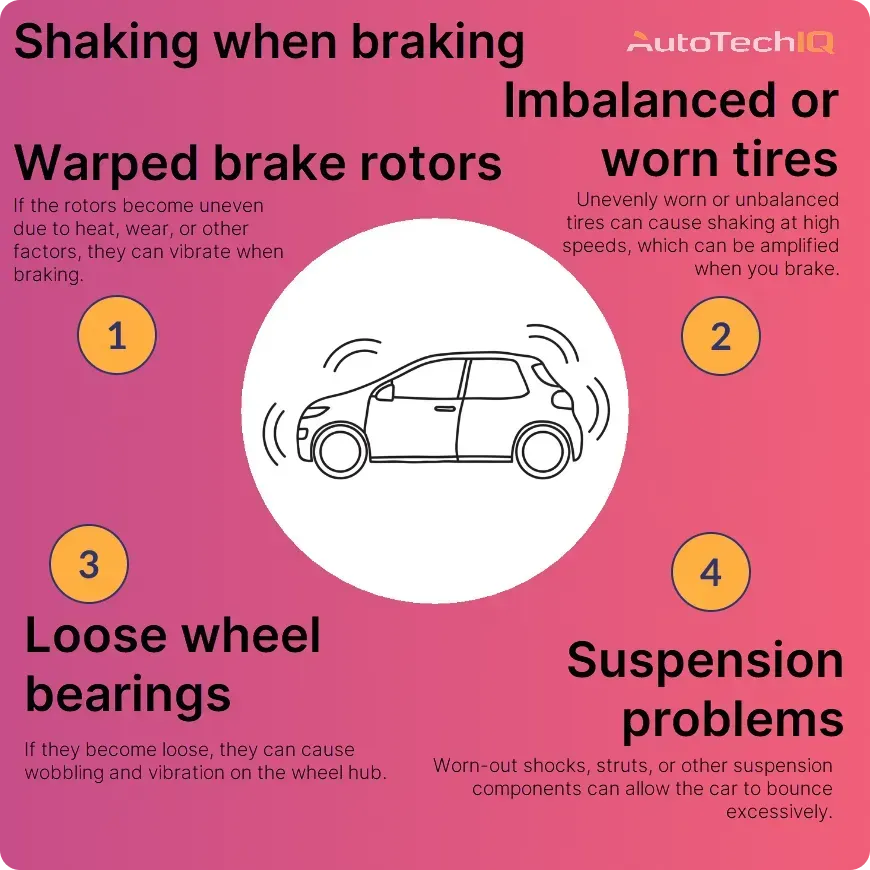
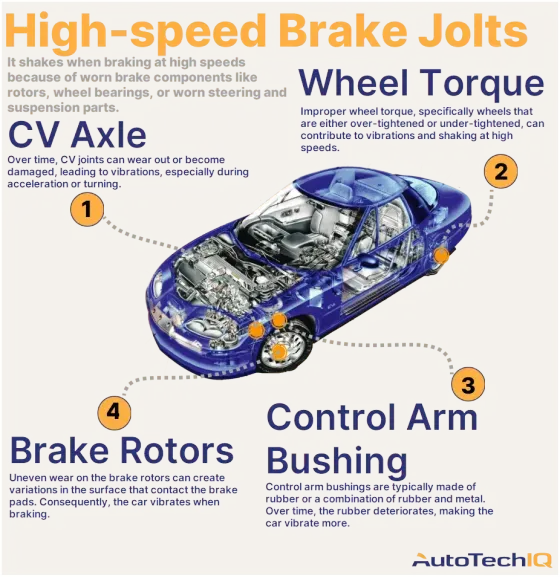
- Brake rotors. Warped rotors cause a brake-pedal pulse. At speed, they can add a steady shake.
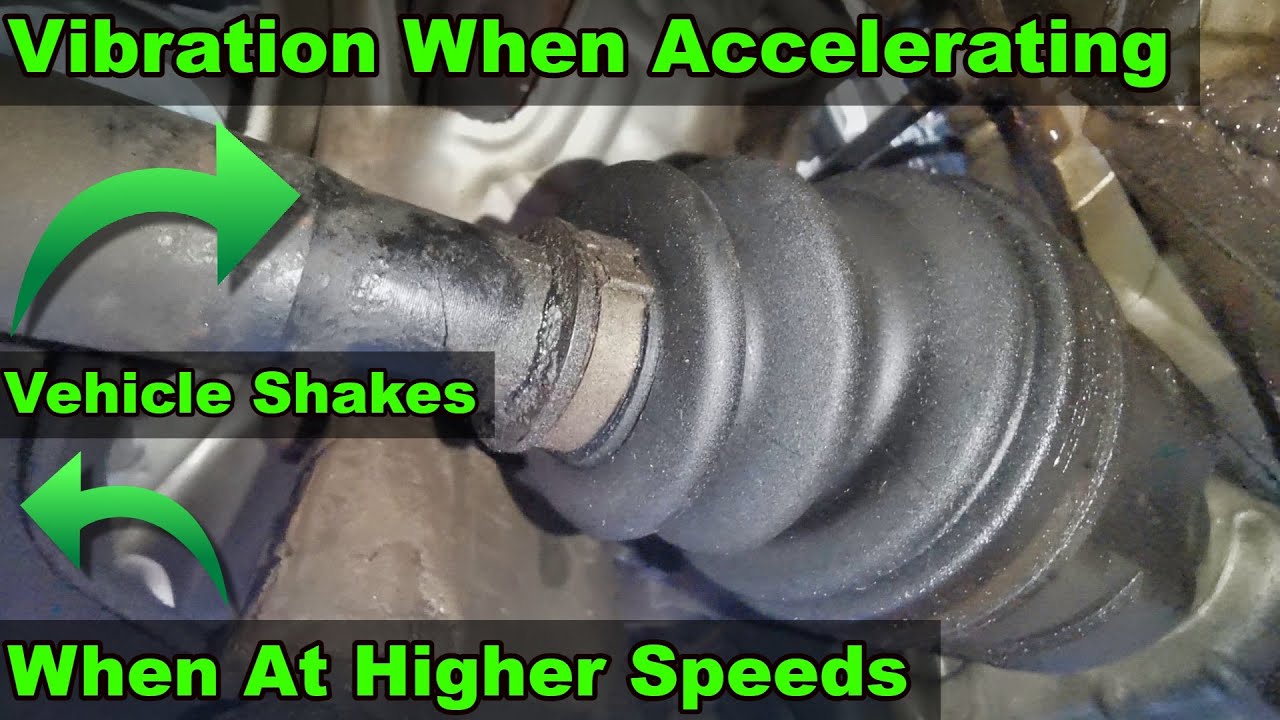
- Driveline problems. Bad CV joints, a bent driveshaft, or bad U-joints cause vibration under load.
- Engine or transmission mounts. Torn mounts pass engine shake into the cabin.
- Lug nuts and hub fit. Loose lug nuts or wrong hub-centric rings can cause wheel wobble.
- Aerodynamic or body issues. Loose undertrays, roof racks, or damaged bumpers can shake at speed.
Real talk: Nine out of ten times, if you ask why does my car vibrate at high speed, the fix starts at the tires and wheels.
Safety Risks: When a Shake Becomes Dangerous
A mild buzz is annoying. A strong shake can be risky. It can shorten tire life, fatigue suspension parts, and increase stopping distance. A bad wobble can lead to a tire failure.
Ease off the throttle if the wheel shakes hard. Move to the right lane. If the car pulls or the steering feels loose, stop to check for a flat or loose lug nuts. If you wonder why does my car vibrate at high speed after a pothole hit, inspect the wheel at once.
Step-by-Step: How to Diagnose It Yourself
Here is a simple plan I use in the shop. It works at home too.
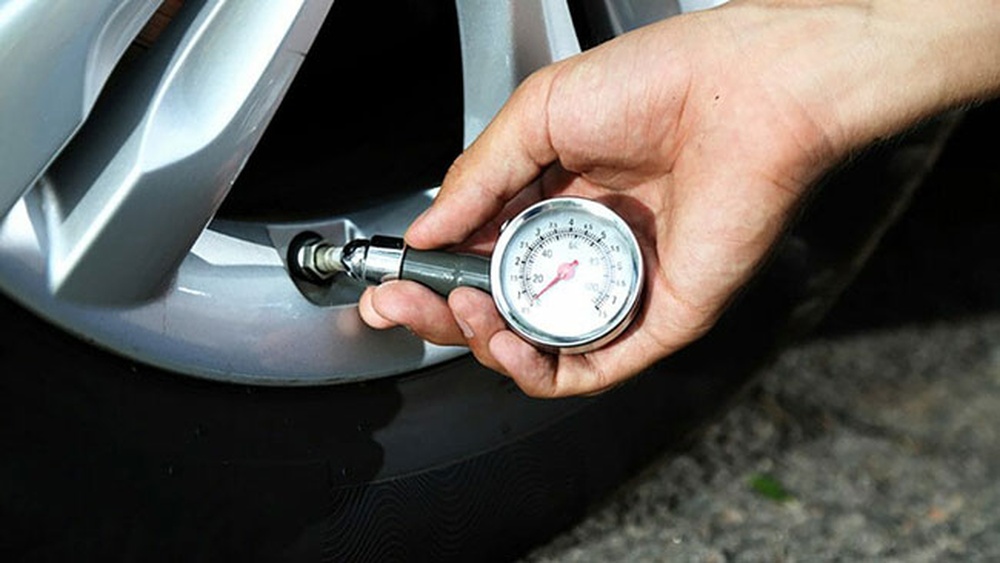
- Look over the tires. Check tread, sidewalls, and air pressure. Fix any low or high readings.
- Spin each wheel on a jack. Watch for wobbles or a bent rim. Mark any bad spots.
- Check lug nuts. Use a torque wrench if you have one. Tighten in a star pattern.
- Swap front and rear tires. If the shake moves, you found the corner with the issue.
- Road test at safe speed. Note the exact mph where the shake starts and stops.
- Brake test. If the wheel shudders when you brake from 60 mph, suspect rotors.
- Feel for load changes. If the shake grows when you accelerate, think CV joints or driveshaft.
- Inspect suspension. Grab each wheel at 12 and 6 o’clock. Wiggle it. Play means wear.
- Check for missing weights. Clean spots on the wheel lip can show a lost weight.
- Ask for a road-force balance. It finds tire stiffness issues that a normal balance can miss.
If you still ask why does my car vibrate at high speed after these checks, it is time for a pro test. They can measure runout, hub fit, and driveline angles with tools you may not have.
Fixes, Costs, and Timeframes
Here are common fixes I recommend, with rough ranges and notes. Prices vary by car and region.
- Balance tires. 15–30 minutes. Low cost per wheel. Best first step for why does my car vibrate at high speed.
- Road-force balance. 30–60 minutes. Medium cost. Great for stiff tires or hidden defects.
- Replace bent wheel. Same day if in stock. Cost depends on size and material.
- New tires. Same day. Choose quality rubber and correct load rating.
- Four-wheel alignment. 45–90 minutes. Worth it if you see uneven wear or a pull.
- Replace worn parts. Ball joints, tie rods, bushings, or bearings may take 1–4 hours each.
- Brake service. Resurface or replace rotors and pads. 1–2 hours per axle.
- Driveline repair. CV axles or U-joints often take 1–3 hours per side or shaft.
- Replace mounts. Engine or trans mounts take 1–4 hours, based on access.
If you think, why does my car vibrate at high speed after I just balanced the tires, ask for a printout and a road test with the tech. I do this often to confirm the fix.
Preventive Maintenance and Driving Habits
You can prevent the shake before it starts.
- Rotate tires every 5,000–7,500 miles. Keep wear even.
- Check pressure monthly. Set it cold to the door-jamb spec.
- Avoid potholes. Slow for rough patches and speed bumps.
- Re-torque wheels after service. Do it after 50–100 miles.
- Keep wheels clean. Dirt can throw off balance.
- Replace worn shocks and struts. They stop cupping and bounce.
When a driver asks me why does my car vibrate at high speed again, it often traces back to skipped rotations or low pressure.
Real-World Examples and Lessons I’ve Learned
A family sedan came in with a shake at 62 mph. Balancing did little. We did a road-force test and found a stiff spot in one tire. Swapped that tire to the rear, and the shake moved to the seat. New tires fixed it. That is a classic answer to why does my car vibrate at high speed.
A pickup had a strong shudder under load at 70 mph. Tires were new. We found a seized U-joint. Replaced it and the truck drove like new. If you feel it more when you step on the gas, that explains why does my car vibrate at high speed while climbing hills.
An SUV shook only when braking from 65 mph. Front rotors had high runout. New rotors and proper lug torque solved it. If your brake pedal pulses, that may be why does my car vibrate at high speed.
Related Symptoms and What They Mean
These clues help you narrow the cause faster.
- Vibration only at 55–70 mph. Likely tire imbalance or wheel runout.
- Steering wheel shimmy, no brake apply. Focus on front tires, wheels, or tie rods.
- Shake grows with speed, then fades. A resonance from imbalance is likely.
- Thumping noise plus shake. Check for broken belts or flat spots.
- Vibration under acceleration only. Suspect inner CV joints or a driveshaft.
- Brake shudder at highway speed. Inspect rotors for warping or pad deposits.
When you think why does my car vibrate at high speed if tires look fine, remember: looks can fool you. A tire can be out of round inside or hide a broken belt.
Frequently Asked Questions of why does my car vibrate at high speed
Why does my car vibrate at high speed right after a tire rotation?
One wheel may now sit on the front with a slight imbalance. Ask for a balance and re-check lug torque.
Why does my car vibrate at high speed only when I brake?
Warped rotors or uneven pad deposits cause a brake-pedal pulse and wheel shake. Replace or resurface rotors and bed new pads.
Why does my car vibrate at high speed even after balancing?
A bent wheel, a bad tire belt, or hub fit issues may remain. Request a road-force balance and check wheel runout.
Why does my car vibrate at high speed but not in the city?
Imbalance shows up at higher speeds due to centrifugal force. Low-speed drives mask the fault.
Why does my car vibrate at high speed when I accelerate uphill?
That points to driveline parts like CV joints or U-joints. Load makes worn joints chatter and shake.
Conclusion
High-speed vibration has patterns you can read. Start with tires and wheels, confirm balance, and check for bends and wear. Then look at alignment, suspension, brakes, and the driveline. If you still wonder why does my car vibrate at high speed, a road-force test and a thorough inspection will find the truth.
Act now: inspect your tires today, schedule a balance and alignment, and keep notes on when the shake occurs. Want more guides like this? Subscribe for updates or drop your question in the comments.