
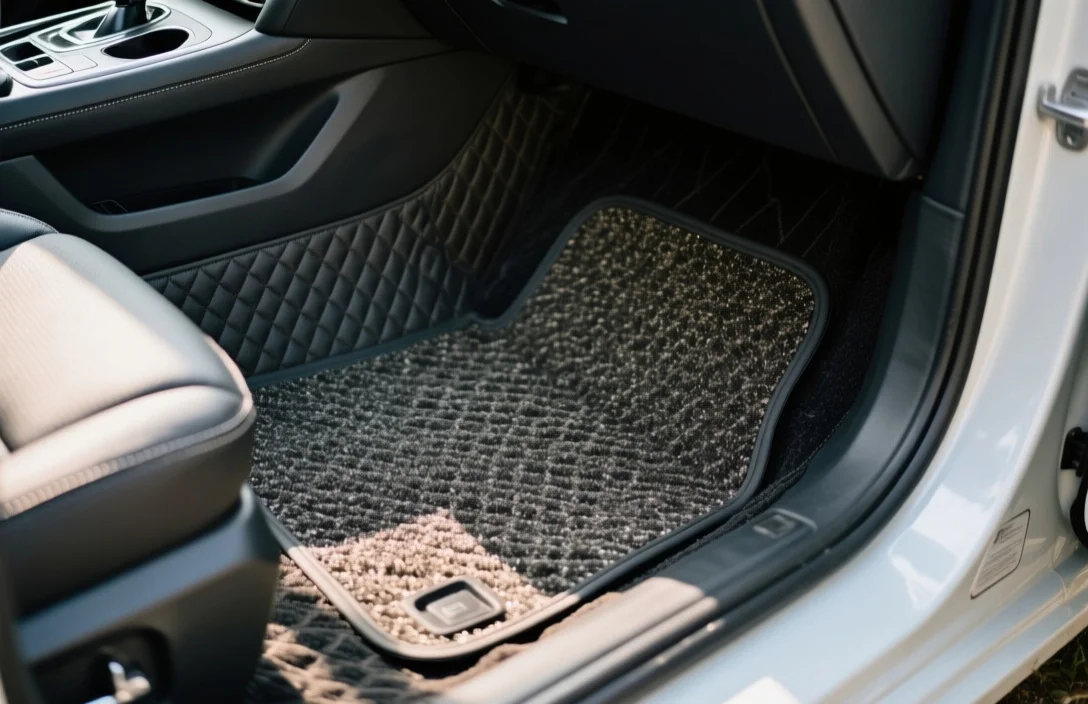
Keeping a car interior clean is nearly impossible without a barrier against mud, salt, and spilled drinks. Most factory carpets act like sponges, trapping moisture that leads to permanent stains and a lingering musty smell. Investing in high-quality waterproof car floor mats prevents this by sealing the floor and trapping liquids in a contained basin.
Waterproof car floor mats are protective liners made from non-porous materials like TPE or rubber that prevent liquids from reaching the vehicle carpet. The best options feature a “deep dish” design with edges at least 1.5 to 3 inches high to contain spills and slush.
Key Takeaways
- Prioritize TPE. This material is lighter than rubber and resists curling in extreme cold.
- Check edge height. Look for a minimum 2-inch lip to prevent liquids from overflowing.
- Verify laser-scanning. Only buy mats designed specifically for your year, make, and model.
- Avoid universal fits. Generic mats slide frequently and leave gaps where water leaks through.
- Inspect retention clips. Ensure the mats use factory-style anchors to prevent pedal interference.
- Match texture to use. Deep grooves are better for mud, while smooth surfaces are easier to wipe.
Waterproof Car Floor Mats Selection Criteria
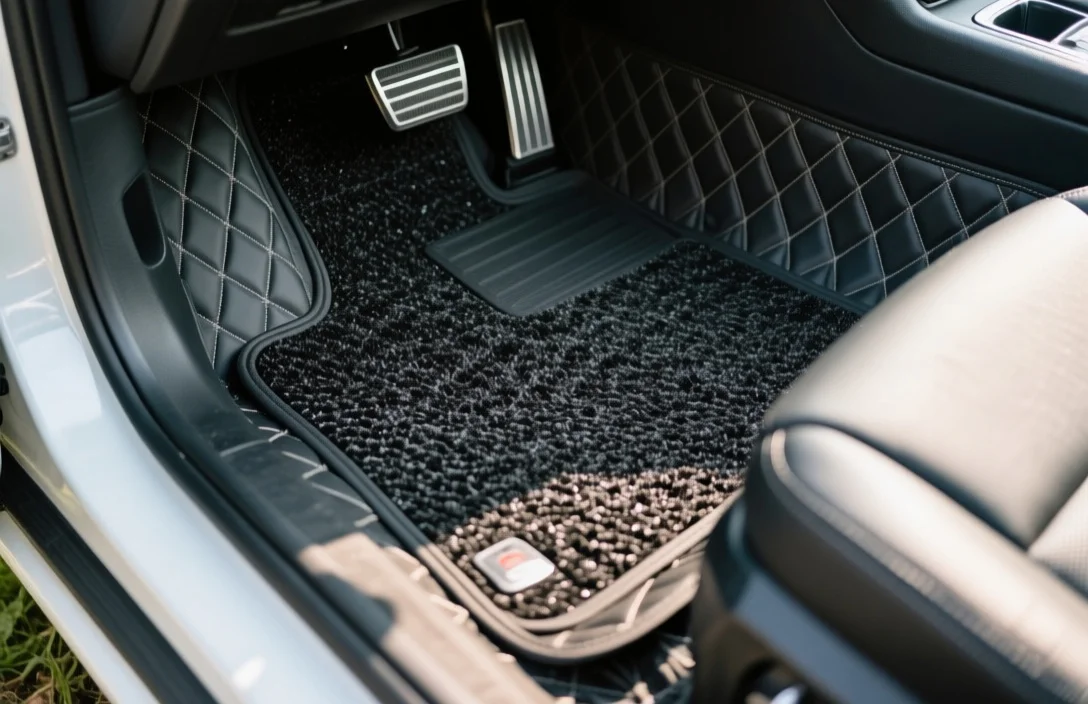
Material density and precision fit determine whether a mat actually protects your car or just sits on top of the dirt. A truly waterproof mat must be non-absorbent and fit tightly against the side walls of the footwell to stop liquids from seeping underneath.
The first priority is the “containment zone.” A flat mat is essentially useless for waterproof protection because liquid simply runs off the edge and onto the carpet. You need a raised perimeter that creates a tray, ensuring that a spilled coffee or melting snow stays on the mat.
When comparing options, use these specific benchmarks to judge quality:
| Criterion | Budget Option | Premium Option | Verdict |
|---|---|---|---|
| Material | Heavy Rubber | Laser-cut TPE | TPE is more durable/lighter |
| Fit | Universal/Trim-to-fit | Vehicle-Specific | Specific fit is mandatory |
| Edge Height | < 1 inch | 2 – 3 inches | Higher is better for slush |
| Weight | Very Heavy | Moderate | Lighter is easier to clean |
| Retention | Friction only | Locking clips | Locking clips are safer |
Stability is the second critical factor. A mat that slides forward can jam under the brake pedal, creating a serious safety hazard. Look for mats that utilize the existing floor hooks in your vehicle or have a high-friction “nibbed” underside.
Finally, consider the scent. Low-grade rubber mats often emit a strong chemical smell that persists for months. Higher-end TPE (Thermoplastic Elastomer) is generally odorless and does not off-gas in high temperatures.
Comparing Rubber vs. TPE Floor Mat Materials
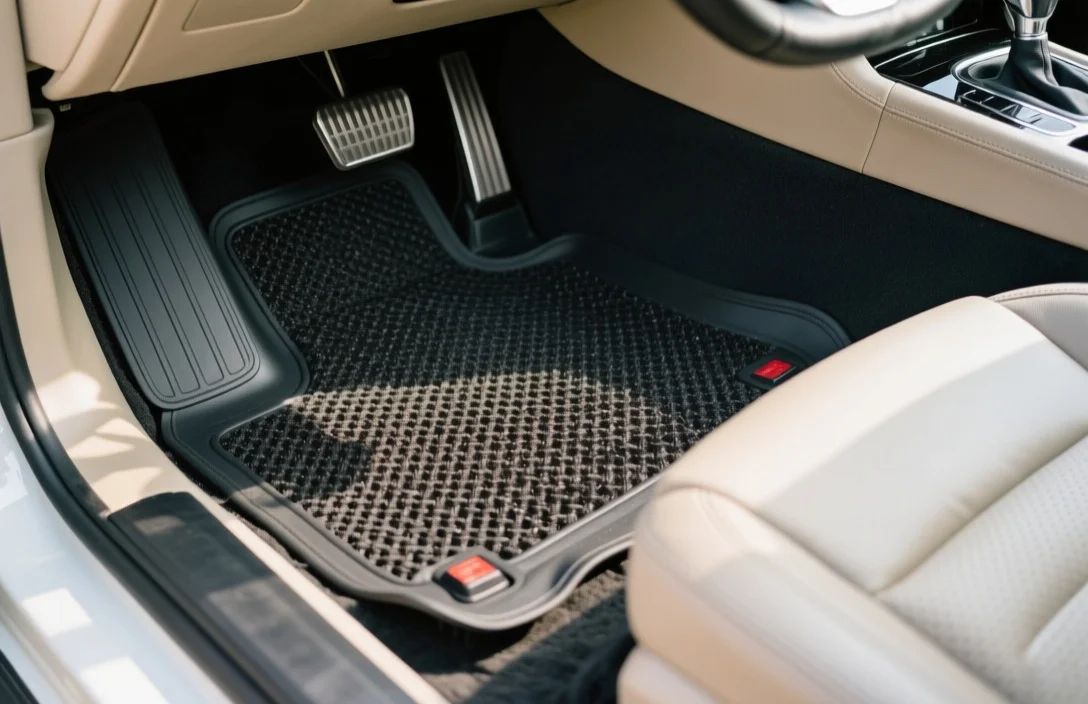
Rubber is the traditional choice for heavy-duty protection, but it has significant drawbacks in extreme climates. It is heavy, often smells like a tire shop, and can become stiff or brittle when temperatures drop below freezing.
TPE (Thermoplastic Elastomer) is a modern hybrid that combines the properties of plastic and rubber. It is significantly lighter than traditional rubber and maintains its flexibility from -40 to 150 degrees Fahrenheit. This makes it the superior choice for people living in regions with harsh winters.
For instance, if you live in the Midwest or Northeast, a rubber mat may curl at the edges during a January cold snap. A TPE mat stays flat, ensuring the waterproof seal remains intact against the vehicle floor.
The trade-offs between these materials are clear:
- Rubber is often cheaper and slightly more resistant to sharp punctures from heavy tools.
- TPE offers a more precise fit, weighs less, and is completely odorless.
- Rubber requires more effort to remove from the car due to its bulk.
- TPE is easier to spray down with a hose and dries almost instantly.
If you use your vehicle for professional construction or heavy hauling, the sheer mass of rubber can be an advantage. For daily commuting, families, and outdoor enthusiasts, TPE provides a cleaner, more precise experience.
Evaluating Edge Height for Liquid Containment
The height of the outer lip is the only thing preventing a “waterproof” mat from becoming a liability. If the edges are too low, liquid will simply flow over the side, soaking the carpet and potentially causing mold under the mat.
A lip height of 1 inch is barely sufficient for light rain. For true waterproof protection – especially if you deal with melting snow or muddy boots – you need a lip between 2 and 3 inches. This creates a basin that can hold a significant volume of liquid without it escaping.
In practice, imagine a 12-ounce soda spilling in the passenger footwell. A flat mat allows that liquid to spread instantly. A deep-dish mat captures the entire spill in one spot, allowing you to lift the mat and pour the liquid out without ever touching the carpet.
Consider these containment levels when shopping:
- Low Profile (0.5 – 1 inch): Best for dry climates or purely aesthetic upgrades.
- Mid Profile (1 – 2 inches): Sufficient for occasional rain and light dirt.
- High Profile (2+ inches): Essential for snow, mud, and pets.
Ensure the edge height is consistent around the entire perimeter. Some cheap mats have high sides in the back but dip low near the pedals, which is where most of the moisture actually accumulates.
Checking Fitment Accuracy for Specific Vehicle Models
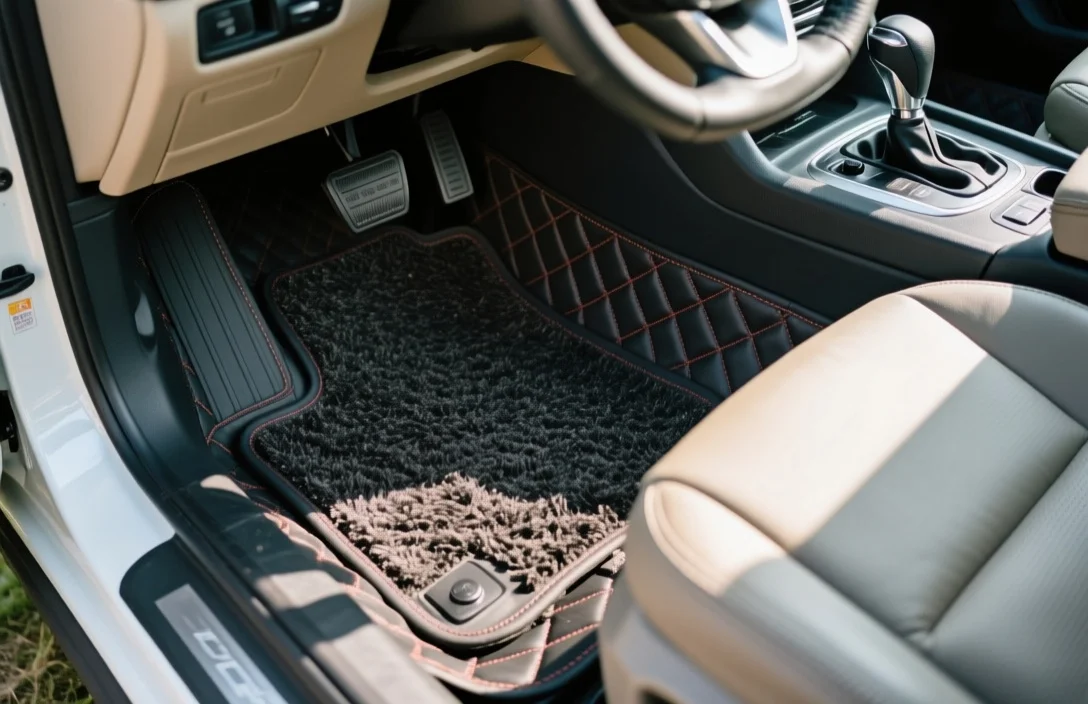
Universal mats are a compromise that usually results in gaps. Because every car floor has different contours, pedal placements, and anchor points, a “one size fits all” mat will almost always leave an open channel where water can leak through.
Laser-scanned mats are the gold standard. Manufacturers use 3D scanners to map the exact dimensions of the footwell to within a fraction of a millimeter. This ensures the mat hugs the corners and walls, creating a genuine waterproof seal.
For example, a universal mat might leave a 2-inch gap around the gas pedal. If you step in a puddle and then get in your car, that water drips directly into the gap and onto the floor. A vehicle-specific mat covers that area completely.
When verifying fitment, check for these three details:
- Pedal Clearance: The mat must not overlap the accelerator or brake pedals.
- Anchor Integration: It should lock into the factory holes to prevent shifting.
- Wall Contour: The edges should rise up to meet the side plastic of the interior.
If a product description says “Trim to Fit,” it is not a precision mat. Cutting a mat with scissors creates jagged edges and often ruins the containment lip, defeating the purpose of a waterproof barrier.
Measuring Durability Against Heavy Foot Traffic
Waterproof mats face constant abrasion from grit, sand, and shoe soles. Over time, this friction wears down the material, creating thin spots that can eventually crack or leak.
The most durable mats feature a reinforced “wear zone” – usually a thicker layer of material in the area where the heel of the driver’s shoe rests. Without this reinforcement, the mat will develop a hole in the driver’s side long before the passenger side shows any wear.
In a high-traffic scenario, such as a family car with three children, the mats are subjected to constant scraping. TPE tends to hold up better against this type of abrasion than cheap, recycled rubber, which can flake or peel over time.
To test durability before buying, look for these indicators:
- Material Thickness: A thickness of 3mm to 5mm is ideal for long-term use.
- Tread Pattern: Deep channels help move grit away from the surface, reducing direct abrasion.
- Warranty: Look for a limited lifetime warranty, which indicates the manufacturer trusts the material’s longevity.
Avoid mats that feel “rubbery” or soft to the touch. While they might feel comfortable, they typically wear through much faster than the stiffer, more resilient TPE blends.
Assessing Cleaning Requirements for Different Textures
The effectiveness of a waterproof mat is only as good as your ability to keep it clean. A mat filled with dried mud and salt is no longer providing a clean barrier; it is just holding filth inside your car.
Smooth-surface mats are the easiest to clean. A quick spray with a garden hose and a wipe with a microfiber cloth removes almost everything. However, they can be slippery when wet, which can be a nuisance when getting in and out of the vehicle.
Textured mats with deep grooves or “honeycomb” patterns are better at trapping debris. They keep the mud concentrated in the channels so the surface remains relatively clean. The downside is that these grooves can trap small pebbles or salt crystals that require a pressure washer to fully remove.
Compare these cleaning styles based on your lifestyle:
- The “Quick Wipe” User: Choose smooth TPE. Best for city dwellers who deal with spilled drinks and light rain.
- The “Pressure Washer” User: Choose deep-channel rubber or TPE. Best for hikers, hunters, or people in snow belts.
- The “Vacuum” User: Choose ribbed textures. These allow a shop vac to pull dirt out of the channels easily.
Regardless of the texture, avoid using harsh chemical solvents to clean your mats. Strong degreasers can break down the polymers in TPE and rubber, leading to premature cracking and loss of waterproof integrity.
FAQ
Are waterproof mats better than carpet mats?
Yes, for protection. Waterproof mats prevent liquids from soaking into the vehicle’s subfloor, which prevents mold and permanent odors. While carpet mats are softer, they act as sponges for spills and salt, making them nearly impossible to clean thoroughly once contaminated.
Do TPE mats smell like rubber?
No, TPE (Thermoplastic Elastomer) is generally odorless. Traditional rubber mats often have a strong chemical scent due to the vulcanization process. TPE is a cleaner material that does not off-gas, making it the better choice for people sensitive to smells.
Will custom-fit mats slide around?
Not if they are laser-scanned and use factory retention clips. Universal mats slide because they don’t match the floor’s contours. Custom-fit mats are designed to lock into the vehicle’s existing floor anchors, ensuring they stay put even during hard braking.
How often should I clean my waterproof mats?
You should remove and rinse them once every two weeks during winter or rainy seasons. Allowing salt and grime to sit on the mat can eventually degrade the material and lead to “salt creep,” where minerals migrate to the edges and stain the surrounding carpet.
Can I use waterproof mats in the summer?
Yes, but choose TPE over heavy rubber. Some low-quality rubber mats can get extremely hot and emit a strong smell in direct sunlight. TPE handles heat better and stays more flexible, providing consistent protection regardless of the season.
To protect your car’s value and air quality, stop using factory carpet mats during the wet season. Buy a set of laser-scanned TPE mats with at least a 2-inch edge height, and ensure they lock into your vehicle’s factory anchors for maximum safety.