


Changing your own oil saves money and gives you a direct look at your engine’s health. One wrong move – like a stripped drain plug or a spill on your driveway – turns a 30-minute job into a messy headache. The goal is to work clean, slow, and steady.
Draining engine oil safely requires the right tools and a stable vehicle. Warm the engine for 2-3 minutes to thin the oil, shut it off, and slide a drain pan under the plug. Loosen the bolt with a wrench and let the oil flow for 10-15 minutes. Always wear gloves, use jack stands, and recycle the waste oil at a certified center.
Key Takeaways
- Warm the engine for 2-3 minutes to thin the oil, but never drain it while scalding hot.
- Use jack stands – never rely on a hydraulic jack alone to support the car.
- Loosen the plug slowly to avoid stripping threads or splashing oil on your arms.
- Drain for 10-15 minutes to ensure the pan is completely empty.
- Replace the drain plug washer every oil change to prevent slow leaks.
- Recycle used oil at auto shops or municipal centers – never dump it.
Preparing the Vehicle and Pan

Park on level ground and run the engine for 2-3 minutes. This warms the oil for a faster flow without making it dangerous to touch. Turn off the engine and remove the oil fill cap under the hood – this breaks the vacuum and allows the oil to drain smoothly.
Slide a 5-quart (or larger) drain pan under the oil plug. Ensure the pan is wide enough to catch splashes and deep enough to hold the full capacity without overflowing. For low-clearance cars, a low-profile pan with a flexible spout is the best choice for precise positioning.
The Essential Tool Kit
A socket wrench and the correct socket size – usually 13mm, 14mm, or 15mm – are non-negotiable. I recommend a six-point socket over a 12-point; it grips the plug more securely and significantly reduces the risk of rounding off the bolt head.
Nitrile or latex gloves keep oil off your skin, and safety glasses protect your eyes from sudden splashes. Use a funnel to pour new oil without spills, and a torque wrench to tighten the drain plug to the manufacturer’s spec – typically 20-30 ft-lbs.
Finding the Plug and Filter
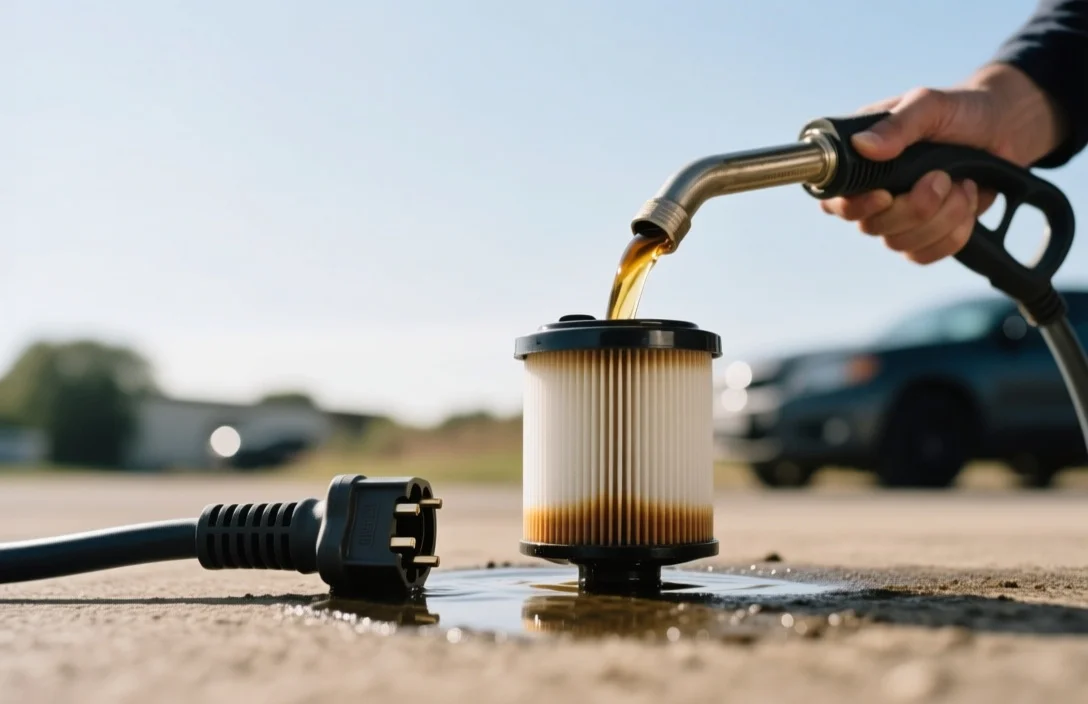
The drain plug sits at the lowest point of the oil pan, usually toward the rear of the engine. It is a single bolt with a flat or slightly tapered head. If it isn’t immediately visible, check your owner’s manual or look for the metal oil pan at the bottom of the engine block.
The oil filter is typically mounted on the side of the engine block as a small metal canister, often painted white or black. Note whether the filter screws on vertically or horizontally before removal to ensure you can position your pan to catch the internal oil.
Securing the Car with Jack Stands
Never work under a car supported only by a jack. Place the jack under the manufacturer-recommended lift point – usually a reinforced metal rail or crossmember near the wheel wells. Lift the car just enough to slide jack stands underneath, then lower the vehicle onto them.
Place jack stands on a solid, flat surface. If you are working on dirt or gravel, place a piece of plywood under each stand to prevent them from sinking. Shake the car slightly to double-check stability before crawling underneath.
The Draining Process

Loosen the drain plug with a socket wrench until it can be turned by hand. Angle the pan to catch the initial stream, then unscrew the plug the rest of the way. If the plug is stuck, do not force it – tap it gently with a rubber mallet to break the seal.
Let the oil drain for at least 10 minutes. If safe, tilting the car slightly helps evacuate the final remnants of oil. While the pan empties, remove the oil filter using a filter wrench – turn it counterclockwise until it breaks free, then let the trapped oil drip into the pan.
Oil Disposal and Recycling
Most auto parts stores, such as AutoZone, O’Reilly, and Advance Auto, accept used oil for free. Call ahead to confirm their limits, as many cap intake at 5 gallons per visit. Municipal recycling centers are another option, though some may charge a small fee.
Never dump oil on the ground, in the trash, or down a drain. Even small amounts contaminate water supplies. Store used oil in a clean, sealed container – the original oil bottle works best – and label it clearly.
Sealing the Pan
Most drain plugs use a crush washer – a thin metal ring that seals the plug against the oil pan. These washers flatten during the first tightening and lose their sealing ability. Replace the washer every oil change to prevent slow drips.
If your plug doesn’t use a washer, inspect the threads for damage. A stripped or cross-threaded plug will not seal and will lead to leaks. If the threads are compromised, replace the plug – most cost less than $10.
FAQ
How long should I let the oil drain?
Let it drain for 10-15 minutes. This allows the heavier sludge that settles at the bottom of the pan to flow out. Tilting the car slightly (if safely supported) helps empty the pan completely.
Can I reuse the drain plug washer?
No. Crush washers are designed to deform once to create a seal. Reusing them often leads to slow leaks that stain your driveway.
What if the drain plug is stripped?
If the plug spins freely without tightening, the threads are stripped. You will need a thread repair kit or a replacement oil pan. Do not drive the car until this is fixed, as you risk losing all engine oil.
Is it safe to drain oil when the engine is hot?
No. Hot oil causes severe burns. Warm the engine for 2-3 minutes to improve flow, but let it cool for at least 10 minutes before you reach under the car.
Where can I recycle used oil filters?
Most auto parts stores that take oil also take filters. Drain the filter completely by letting it sit upside down for 24 hours before transporting it. Check local laws, as some states require filters to be crushed before disposal.