
A car that fails to start after a jump start usually indicates a failed connection or a deeper electrical failure. While a dead battery is the most common culprit, a successful jump that results in no ignition often points to a faulty alternator, a blown main fuse, or a starter motor that has completely seized.
Why your car won’t start after a jump is typically due to poor contact between the jumper cables and battery terminals, a battery that can no longer hold a surface charge, or a non-functional alternator. If the engine cranks but won’t fire, the issue is likely fuel or spark related; if it remains silent, the electrical path is broken.
Key Takeaways
- Check connections. Ensure clamps are biting into clean metal, not sitting on top of corrosion.
- Test the alternator. A failing alternator will let the car die immediately after the donor vehicle disconnects.
- Inspect the battery. Batteries with internal cell failure cannot accept the current needed to turn the starter.
- Verify the starter. A loud clicking sound usually indicates a starter solenoid failure rather than a dead battery.
- Clean the terminals. Corrosion buildup creates resistance that blocks the jump start current from reaching the engine.
- Check the fuses. A blown main fuse can prevent electricity from flowing even with a fully charged battery.
Why Your Car Won’t Start After a Jump
Poor electrical contact is the most frequent reason a jump start fails. If the clamps are attached to the plastic casing of the terminal or are resting on a thick layer of white, powdery corrosion, the current cannot flow into the battery. The electricity takes the path of least resistance, and a layer of oxidation acts as an insulator, effectively blocking the jump.
Another common reason is a battery that has suffered an internal short or a collapsed cell. When a battery is completely “dead” – meaning it has dropped below 10 volts – it can sometimes act as a sponge, absorbing all the current from the donor car without passing enough along to the starter motor. In these cases, the donor car’s engine may struggle or bog down, but your car remains silent.
For some drivers, the issue is not the battery at all, but the starter motor. If the starter has a mechanical failure or a burnt-out winding, no amount of external voltage will make the engine turn. You might hear a single loud “clack” when you turn the key, which is the solenoid engaging, but the motor itself fails to rotate the crankshaft.
Finally, some modern vehicles have complex security systems or electronic control units (ECUs) that can glitch during a voltage spike. If the car was jumped with the wrong polarity or if there was a significant spark, the ECU might enter a protection mode. This prevents the fuel pump from priming or the ignition system from firing, leaving you with an engine that cranks perfectly but never actually starts.
Common Causes of Failed Jump Starts
Corroded battery terminals are a primary failure point. Lead-sulfate crystals build up over time, creating a physical barrier between the cable clamp and the battery post. Even if the clamp looks tight, the electricity cannot penetrate the corrosion, leaving the battery undercharged despite being connected to a running vehicle.
Incorrect cable sequence or poor grounding is another frequent mistake. If the negative cable is attached to a painted surface or a rusty bolt on the engine block, the circuit remains open. A proper ground needs a clean, bare metal connection to allow the current to flow back to the donor vehicle.
The donor vehicle might also be the problem. If the helper car has a small engine or is idling too low, it may not generate enough amperage to overcome the resistance of a severely depleted battery. In some cases, the donor battery is not strong enough to provide the “burst” of energy required to engage a heavy-duty starter motor.
Mechanical failures beyond the battery are often misdiagnosed as “jump start failures.” These include:
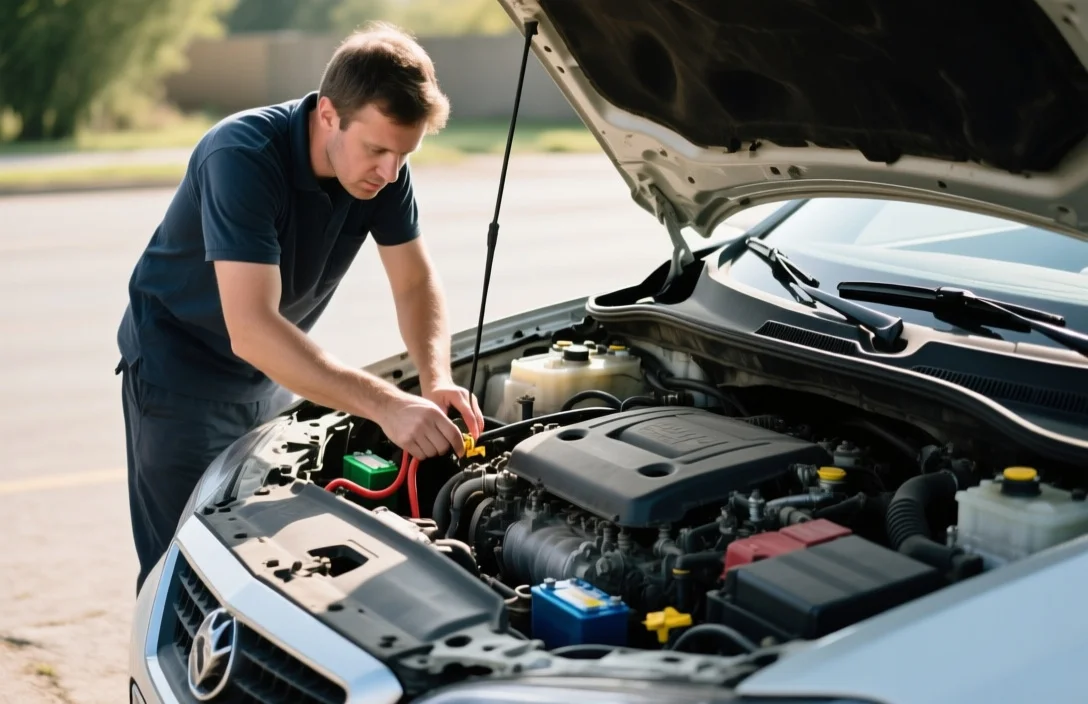
- Blown Main Fuse: A surge during the jump can pop the main fuse, cutting power to the entire ignition system.
- Faulty Starter Solenoid: The switch that engages the starter motor fails, meaning the power reaches the starter but cannot activate it.
- Fuel Pump Failure: The battery is fine, but the pump cannot send gas to the engine.
- Ignition Switch Failure: The key turn does not trigger the electrical signal to the starter.
Diagnosing Why Your Car Still Won’t Start
Start by listening to the sound the car makes when you turn the key. If you hear absolutely nothing, you have a total circuit break. This usually means a cable is loose, a fuse is blown, or the battery terminals are so corroded that no electricity is moving.
A rapid-fire clicking sound is a classic sign of low voltage. This happens when there is enough power to engage the starter solenoid, but not enough to keep it engaged while the motor turns. If this happens during a jump, your connections are likely poor, or the battery is so depleted that it is “dragging down” the donor car’s voltage.
If the engine cranks slowly (a “rur-rur-rur” sound) but won’t start, the electrical connection is working, but the volume of current is too low. This often happens when jumper cables are too thin or too long, causing a voltage drop over the distance of the wire. In this scenario, the engine is turning, but not fast enough to reach the required RPM for combustion.
When the engine cranks quickly and sounds normal but refuses to fire, stop trying to jump it. This indicates that the electrical system is functioning, and the problem lies with fuel delivery or the ignition system. Continuing to crank the engine in this state can overheat the starter motor or flood the cylinders with excess gasoline.
Battery Issues vs. Alternator Problems
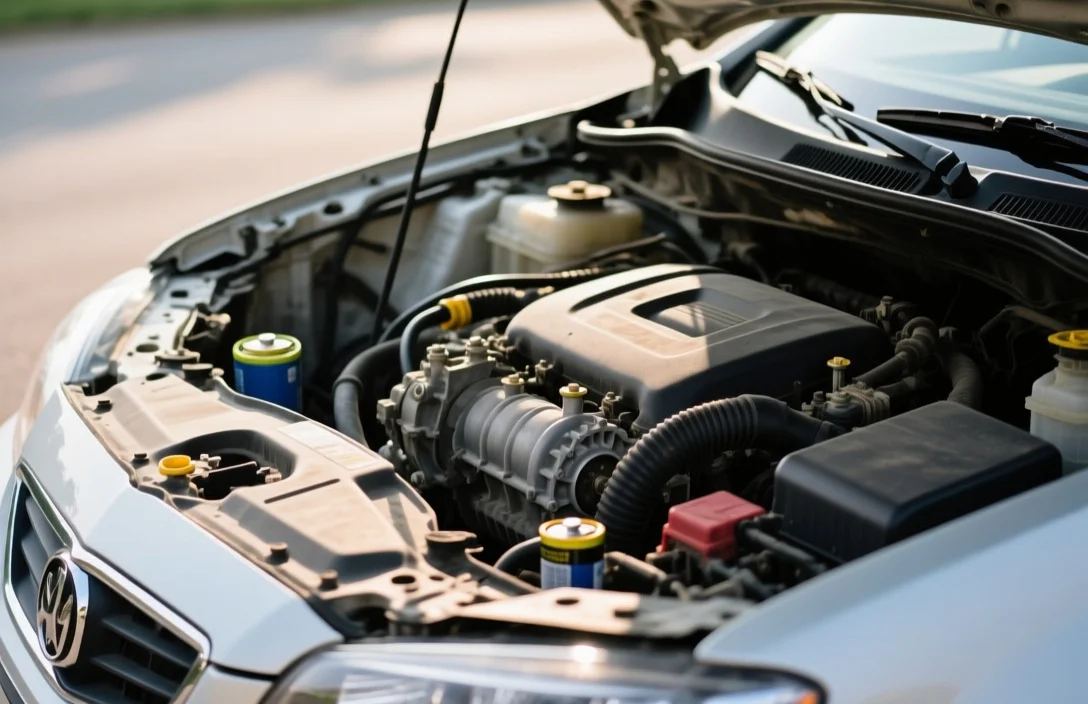
A dead battery is a storage problem, while a bad alternator is a charging problem. If your car starts after a jump but dies shortly after you remove the cables, the alternator is almost certainly the culprit. The alternator’s job is to provide electricity to the car and recharge the battery while the engine runs. If it fails, the car runs solely on the battery’s remaining reserve, which vanishes in minutes.
Battery failure is more likely if the car won’t start even with a jump, or if it starts but dies the next morning. A battery with a dead cell cannot hold a charge, regardless of how well the alternator is working. You can test this by using a multimeter; a healthy battery should read about 12.6 volts when the engine is off.
Comparing the two requires looking at the voltage while the engine is running. Use a multimeter on the battery terminals while the car is idling. A functioning alternator should push the voltage up to between 13.5 and 14.7 volts. If the voltage stays at 12V or drops lower while the engine is running, the alternator is not producing power.
| Component | Primary Symptom | Test Method | Typical Fix |
|---|---|---|---|
| Battery | No power, slow crank, won’t hold charge | Multimeter (Off: < 12.2V) | Replace Battery |
| Alternator | Dies shortly after jump, dim lights | Multimeter (Running: < 13.5V) | Replace Alternator |
| Starter | Single click, grinding noise, no crank | Voltage drop test at starter | Replace Starter Motor |
| Terminals | Intermittent power, visible white powder | Visual inspection / Wiggle test | Clean with wire brush |
Step-by-Step Troubleshooting Guide
Follow these steps in order to isolate the problem without wasting time on the wrong components.
- Inspect the clamps. Remove the jumper cables and look at the battery posts. If you see white or green powder, scrub the posts with a wire brush or a mixture of baking soda and water. Reattach the clamps, ensuring they bite into the metal.
- Check the ground. Ensure the negative (black) cable is attached to a solid, unpainted metal part of the engine block or a designated grounding lug. Do not attach it to a painted fender or a plastic cover.
- Increase the “soak” time. If the battery is completely flat, it needs time to accept a surface charge. Keep the donor car connected and running for 5 to 10 minutes before attempting to start your engine.
- Verify the donor vehicle. Ensure the helper car’s engine is running at a slightly higher RPM (around 1,500 to 2,000) to maximize the current being sent to your vehicle.
- Test the fuses. Open the fuse box under the hood and look for the “Main” or “ALT” fuse. If the metal link inside the plastic casing is broken, the car will not start regardless of the battery’s charge.
- Attempt a “Push Start” (Manual Transmission Only). If you have a manual car, put it in second gear, hold the clutch, and have someone push you to about 5 mph. Release the clutch quickly. If it starts, your starter motor is likely dead, but your battery and alternator may be fine.
When Professional Help is Necessary
Stop attempting to jump the car if you see smoke coming from the battery or cables. This is a sign of a severe short circuit or a battery that is overheating due to internal failure. Continuing to apply current to a damaged battery can lead to a rupture or an explosion of sulfuric acid.
Seek a tow if you hear a loud grinding or shrieking sound when trying to start. This usually indicates that the starter gear is jammed against the flywheel. Forcing the engine to turn in this state can strip the teeth off the flywheel, turning a simple starter replacement into a multi-thousand dollar engine teardown.
You should also call a professional if the car starts but the dashboard is lit up like a Christmas tree with warning lights (Oil, Brake, Battery, Engine). This suggests a systemic electrical failure or a blown ECU that cannot be fixed with a jumper cable.
Finally, if you have tried multiple donor cars and different sets of cables but still get no response, the issue is likely deep in the wiring harness or the ignition switch. A mechanic with a diagnostic scanner can check for “no-start” codes that reveal exactly where the electrical signal is being blocked.
Preventing Future Jump Start Failures
Clean your battery terminals every six months. Use a wire brush to remove oxidation and apply a thin layer of petroleum jelly or a dedicated terminal protector spray to prevent new corrosion from forming. This ensures that when you do need a jump, the connection is immediate and strong.
Invest in a portable lithium-ion jump starter. These compact power banks are more reliable than relying on another driver because they provide a steady, regulated burst of current. They eliminate the risk of “donor car” variables, such as a weak helper battery or poor grounding.
Avoid short trips that last less than 15 minutes. Your alternator needs time to replace the energy used during the initial start. If you constantly turn the car off before the battery is recharged, you will eventually suffer from “sulfation,” which permanently reduces the battery’s ability to hold a charge.
Check your battery’s age. Most automotive batteries last between 3 and 5 years. If your battery is approaching the 4-year mark, replace it proactively. A battery that has begun to degrade will often work fine in the summer but fail completely during the first cold snap of winter.
FAQ
Why does my car start with a jump but die as soon as the cables are removed?
This is the classic symptom of a failed alternator. The alternator is responsible for powering the car while the engine runs. If it is broken, the car relies entirely on the battery. Once the donor car’s power is gone, your battery is too weak to keep the spark plugs firing, and the engine stalls immediately.
Can a bad starter motor prevent a jump start from working?
Yes. A jump start only provides electrical power; it does not fix mechanical failures. If the starter motor is burnt out or the solenoid is stuck, the electrical current from the jump will reach the starter, but the motor will not be able to physically turn the engine. You will usually hear a single loud click instead of the engine cranking.
Do the jumper cables have to be a certain length or thickness?
Yes, cable gauge matters. Thin, cheap cables have high internal resistance, which causes voltage drop. If the cables are too thin, the electricity loses strength as it travels from the donor car to yours. By the time it reaches your starter, there may not be enough amperage to turn the engine, even if the donor car is running.
Is it possible to “fry” a car’s computer during a jump start?
Yes, though it is rare with modern vehicles. If the cables are connected in reverse polarity (positive to negative), it can send a surge of electricity through the ECU, blowing internal circuits. This will prevent the car from starting because the computer can no longer send the “start” signal to the ignition system.
How long should I leave the donor car connected before starting?
For a severely depleted battery, leave the donor car running and connected for 5 to 10 minutes. This allows the dead battery to accept a small “surface charge,” which reduces the load on the donor car and increases the likelihood that the starter will have enough current to turn the engine over on the first try.
If your car refuses to start after a jump, check your battery terminals for corrosion first. If the connections are clean and the engine still won’t turn, the most likely culprit is a dead starter or a failed alternator. Your next step should be to use a multimeter to check the battery voltage or call a mobile mechanic for a starter bench test.