
Pet hair clings to car floor mats like static to a balloon. A single drive with a shedding dog can leave a furry layer that vacuuming alone won’t budge. You don’t need expensive tools or professional detailing; a rubber squeegee, a stiff brush, and a few household items are enough.
Removing pet hair from car floor mats takes 5‑10 minutes per mat when you start with a rubber squeegee or damp brush, then vacuum. Begin with dry methods to loosen hair, work in 12‑inch squares, and finish with a crevice tool to catch edges. Rubber mats clean faster than carpeted ones, but both need a pre‑treatment to lift embedded fur.
Key Takeaways
- Dry first, vacuum last. Loosen hair with a rubber squeegee or damp brush before vacuuming to avoid clogging the hose.
- Work in sections. Divide each mat into 12‑inch squares and tackle one at a time for thorough removal.
- Rubber mats clean faster. Shake them out, hose them down, and scrub with a stiff brush – no vacuum needed.
- Carpeted mats need prep. Spritz with a 50/50 water‑vinegar mix to reduce static and help hair release.
- Prevent buildup. Use a rubber‑backed mat liner or a weekly fabric‑softener spray (1 tbsp in 1 cup water).
- Avoid lint rollers. They work for seats but are too small and wasteful for floor mats.
How to Remove Pet Hair From Car Floor Mats Fast
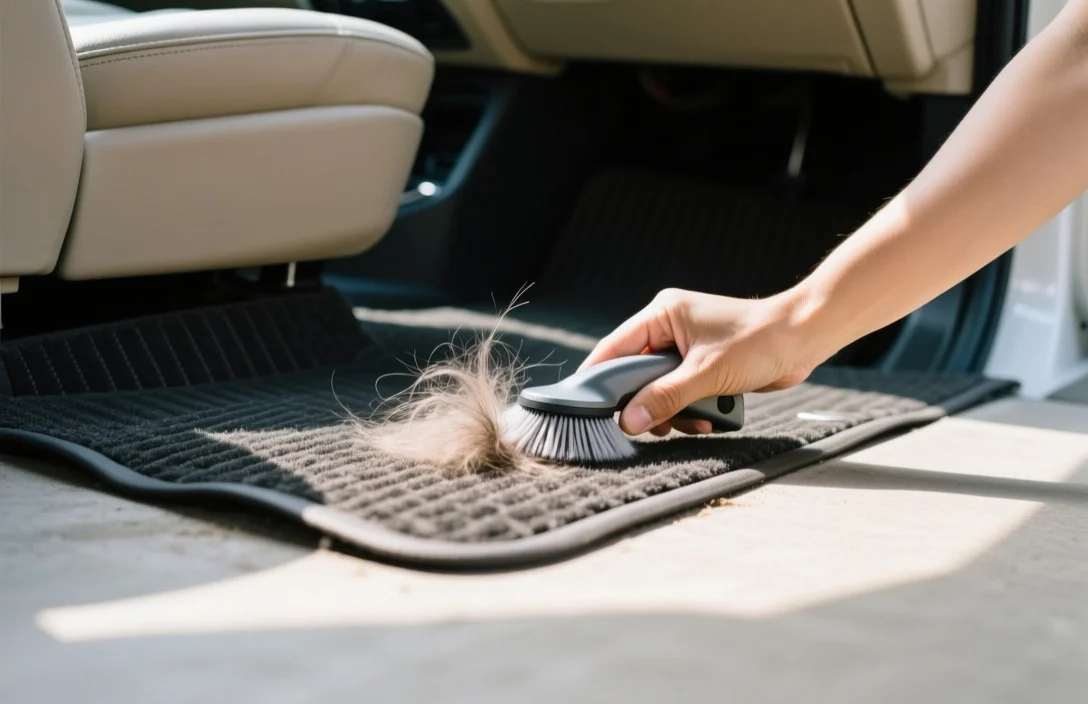
Grab a rubber squeegee, a stiff‑bristle brush, and your vacuum. Park in a shaded spot – direct sun dries mats quickly and makes hair stick harder. Remove the mats and shake them vigorously to dislodge loose fur. Lay carpeted mats on a flat surface; take rubber mats to a driveway or garage where you can hose them down.
Drag a rubber squeegee across carpeted mats in short, overlapping strokes; static clumps the hair into easy‑to‑pick wads. For rubber mats, sweep fur into piles with a stiff brush, then shake or hose it off. Finish by vacuuming carpeted mats with a crevice tool to catch edges and corners. If hair still clings, lightly dampen the mat with water or a 1:1 water‑vinegar mix to cut static, then repeat the squeegee or brush step.
Rubber Squeegee and Brush Methods for Carpet
A 6‑8 inch rubber squeegee creates static that rolls hair into clumps you can pick up by hand or vacuum. Work in 12‑inch sections, pressing firmly and dragging in one direction. Flip the squeegee and repeat perpendicularly to catch missed hair.
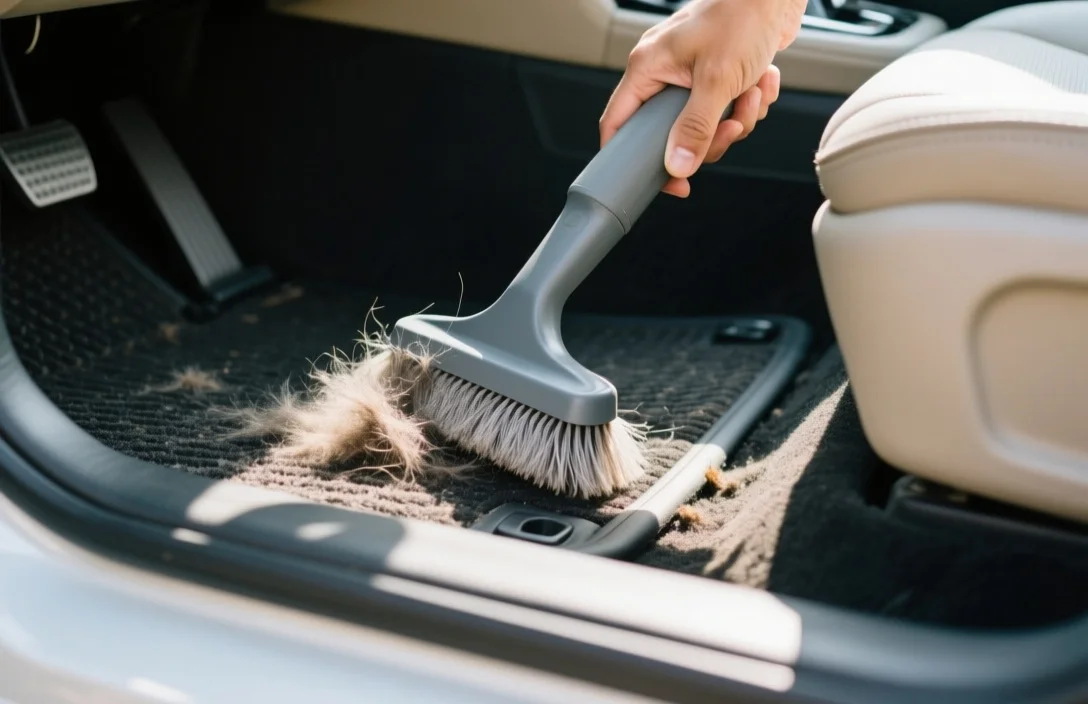
When the squeegee leaves stubborn strands, switch to a stiff‑bristle brush. A grooming brush or cheap hardware scrub brush outperforms soft‑bristle options. Brush in short, firm strokes while lifting the mat slightly to help hair release. If the mat is thick, a wire pet‑hair brush with hooked bristles grabs embedded fur. After brushing, vacuum the mat to pick up loosened hair. If static persists, mist the mat with water or a fabric‑softener spray (1 tbsp fabric softener in 1 cup water) before repeating.
Using Specialized Pet Hair Removal Brushes
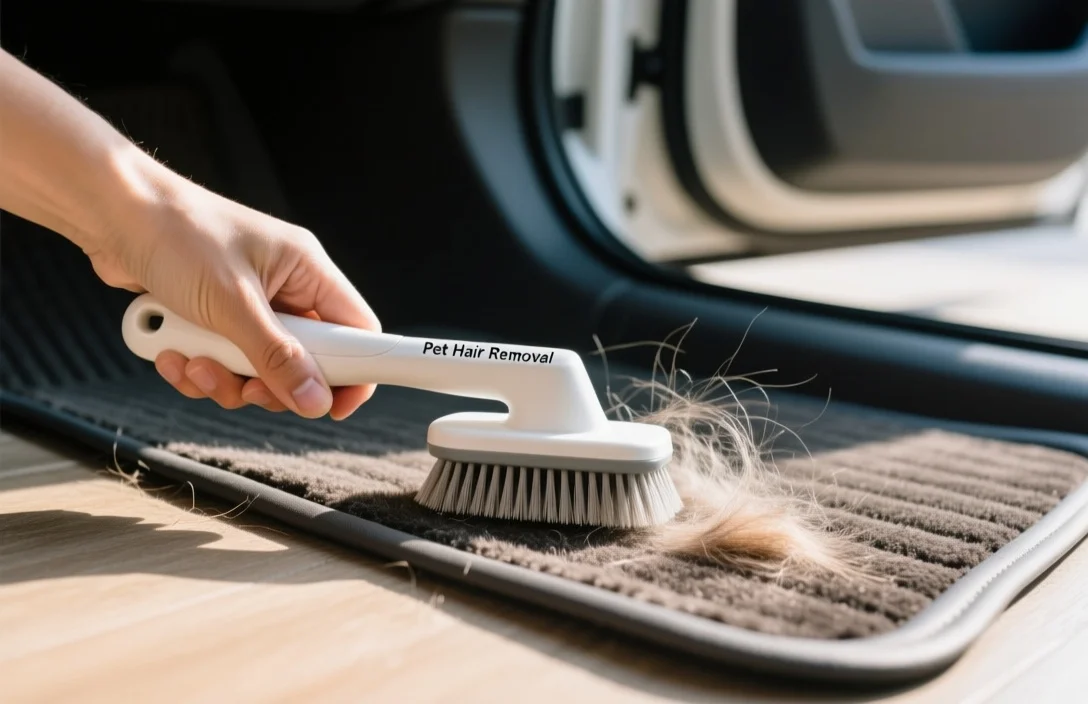
Wire‑bristle brushes with metal hooks (e.g., FurZapper or ChomChom) excel on thick carpeted mats. Drag them across the mat in short strokes, lifting occasionally to shake off collected hair. For rubber mats, a rubber‑bristle detailing brush lifts hair without scratching.
If you lack a specialized brush, wear a rubber dishwashing glove and run your hand over the mat; static clumps hair into wads. A damp kitchen sponge (not soaking wet) works similarly – drag it across the mat, then rinse the sponge. For small areas, wrap duct tape around your hand (sticky side out) and pat the mat; the tape grabs hair quickly.
Vacuuming Techniques for Embedded Fur
Vacuum after loosening hair with a squeegee or brush. Use a vacuum with strong suction and a motorized brush head; upright or canister models work best. Select the “hard floor” setting for rubber mats to avoid scattering hair, and the “carpet” setting for carpeted mats to give the brush time to agitate fibers.
Attach a crevice tool to reach edges and seams. Hold it at a 45‑degree angle and press firmly to lift hair from tight spots. Use the hose attachment to suction hair from the squeegee or brush before it falls back onto the mat. For stubborn patches, vacuum in one direction, then switch to perpendicular strokes. Empty the canister or replace the bag afterward – pet hair fills them quickly and reduces suction.
Cleaning Rubber Mats vs Carpeted Mats
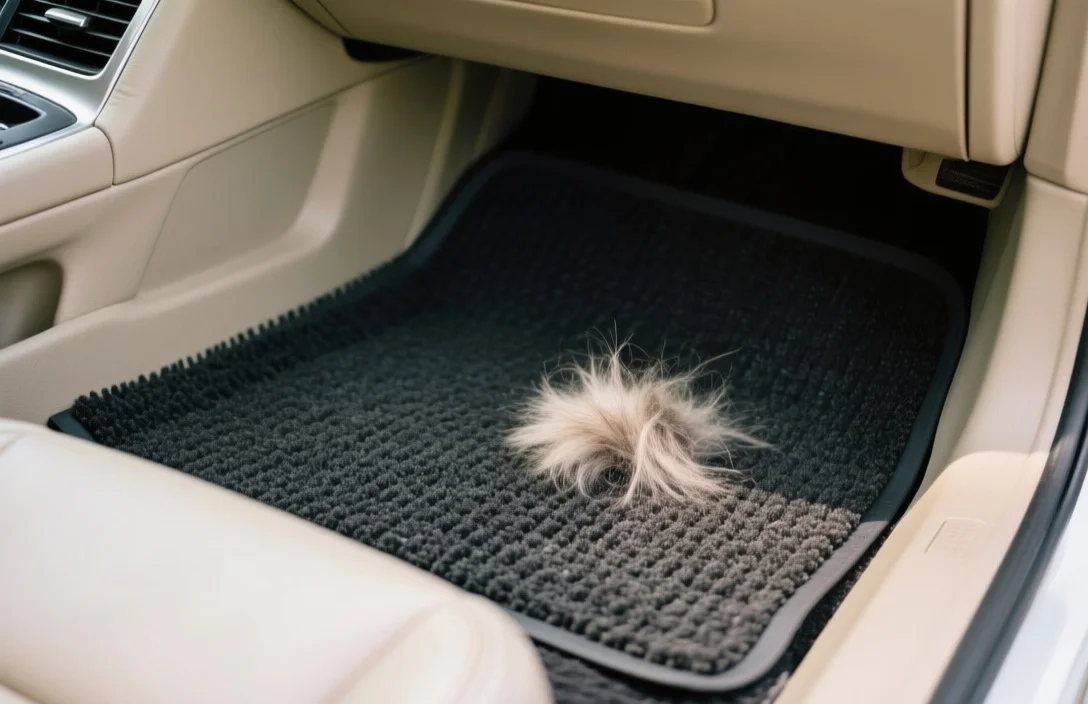
Rubber mats clean in minutes. Shake off loose hair, hose them with a pressure nozzle, or scrub with a stiff brush and soapy water. Air‑dry in the sun; UV light helps kill odors. For tough stains, apply a degreaser such as Simple Green or Dawn dish soap, avoiding harsh chemicals that can degrade rubber.
Carpeted mats require more prep. Vacuum both sides to remove surface fur, then spritz with a 50/50 water‑vinegar mix to reduce static. Use a rubber squeegee or brush to lift embedded hair. For deep cleaning, run a carpet cleaner with a pet‑hair attachment or spot‑treat stains with a 1:1 baking‑soda‑water paste. Let the mat dry completely before reinstalling – damp mats trap odors and attract more hair.
Preventing Future Pet Hair Buildup
Reduce static and trap fur before it reaches the mats. Spray carpeted mats weekly with a fabric‑softener solution (1 tbsp fabric softener in 1 cup water); the coating makes hair slide off. Wipe rubber mats with a dryer sheet after cleaning to repel hair. Cover carpeted floors with a rubber‑backed mat liner (e.g., WeatherTech or Husky Liners) to catch fur before it embeds.
Brush your pet before each ride. A quick pass with a slicker brush or rubber grooming glove removes up to 50 % of loose fur. Keep a lint roller or sticky tape in the glove compartment for touch‑ups between cleanings. For heavy shedders, cover seats with a towel or pet hammock; wash these covers weekly in hot water to remove embedded fur and dander.
Pet hair doesn’t stand a chance when you loosen it first, then vacuum. Start with a rubber squeegee or brush, work in small sections, and finish with a crevice tool to catch edges. For rubber mats, a hose and stiff brush are all you need. Prevent future buildup with a weekly fabric‑softener spray or a rubber‑backed mat liner. Next time your car looks like a fur farm, grab a squeegee and tackle it in 10 minutes – no detailing appointment required.
FAQ
How often should I clean pet hair from car mats?
Clean carpeted mats every 1‑2 weeks if your pet rides daily, or monthly for occasional trips. Rubber mats can go longer – clean them when visible hair appears or after muddy rides. A quick vacuum or shake‑out after each drive keeps buildup manageable.
Can I use a lint roller on car floor mats?
Lint rollers work for small areas like seats or door panels but are too small and wasteful for floor mats. A rubber squeegee or brush covers more surface area faster and lifts embedded hair better. Save the lint roller for touch‑ups between deep cleanings.
What’s the best vacuum for pet hair in cars?
A handheld vacuum with strong suction and a motorized brush head (e.g., Black+Decker Dustbuster or Dyson V7) works best. Choose models with a crevice tool and a washable filter – pet hair clogs filters quickly. For deep cleaning, use a shop vac with a hose attachment.
Will baking soda remove pet hair from car mats?
Baking soda neutralizes odors but doesn’t remove hair. Sprinkle it on carpeted mats after vacuuming, let it sit for 15 minutes, then vacuum again. For hair removal, use a rubber squeegee or brush first, then vacuum.
How do I get pet hair out of car vents?
Use a foam paintbrush or makeup brush to loosen hair from vents, then vacuum with a crevice tool. For stubborn hair, wrap duct tape (sticky side out) around the brush and dab the vents. A can of compressed air can also blow hair out of tight spots.