
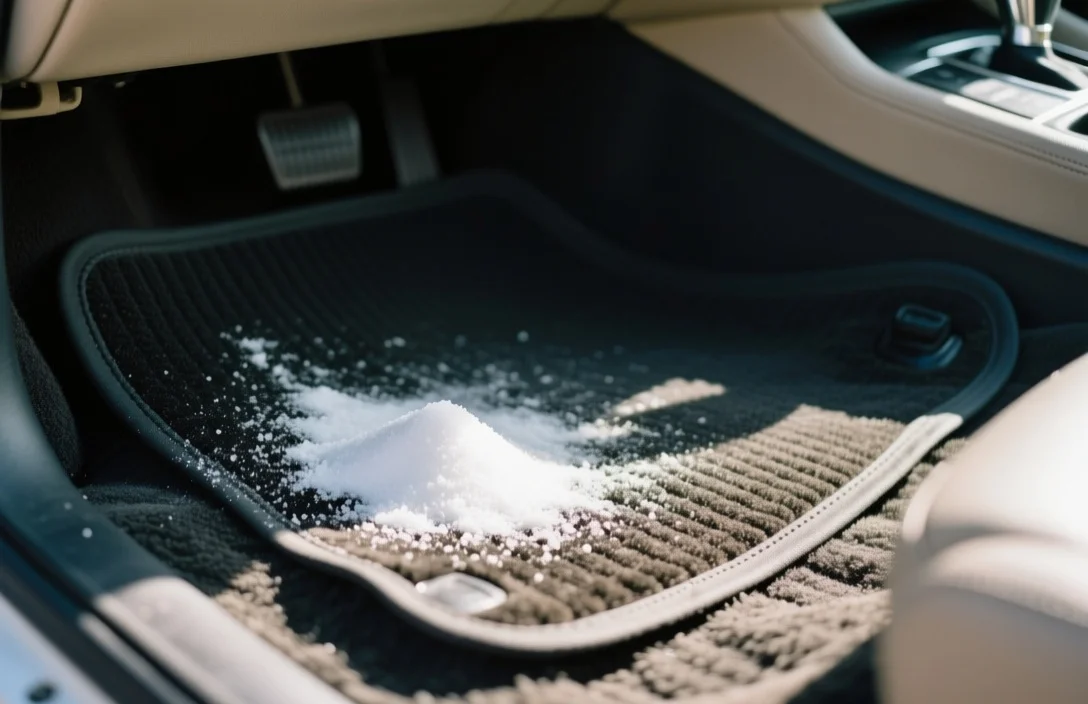
White salt stains on car mats turn winter drives into an eyesore. Those crusty deposits aren’t just ugly – they eat away at fibers and rubber, shortening your mats’ life. You don’t need a detailing shop to fix this. With a few household items and 30 minutes, you can lift the stains and protect your mats for the next snowstorm.
Salt stains dissolve best when you combine warm water, an acid (like vinegar or lemon juice), and a little scrubbing. Rubber mats need a stiff brush; carpeted mats respond better to a soft-bristle tool and a vinegar rinse. After cleaning, a quick dry in the sun or with a fan prevents mold, and a silicone spray or rubber conditioner keeps new stains from sticking.
Key Takeaways
- Vinegar works fastest. Mix 1 part white vinegar with 2 parts warm water to dissolve salt without damaging fibers.
- Rubber vs. carpet needs different tools. Use a stiff brush for rubber; a soft-bristle brush or microfiber cloth for carpet.
- Dry completely. Hang mats in sunlight or use a fan for 2 hours to stop mold before reinstalling.
- Prevent future stains. Apply a silicone spray to rubber mats or a fabric protector to carpeted ones after cleaning.
- Stubborn buildup needs automotive cleaners. Products like Chemical Guys InnerClean or Meguiar’s All-Purpose Cleaner cut through thick salt crusts.
- Check for damage. If fibers are frayed or rubber is cracked, replace the mat – deep stains may have already weakened it.
Dissolving Salt with White Vinegar
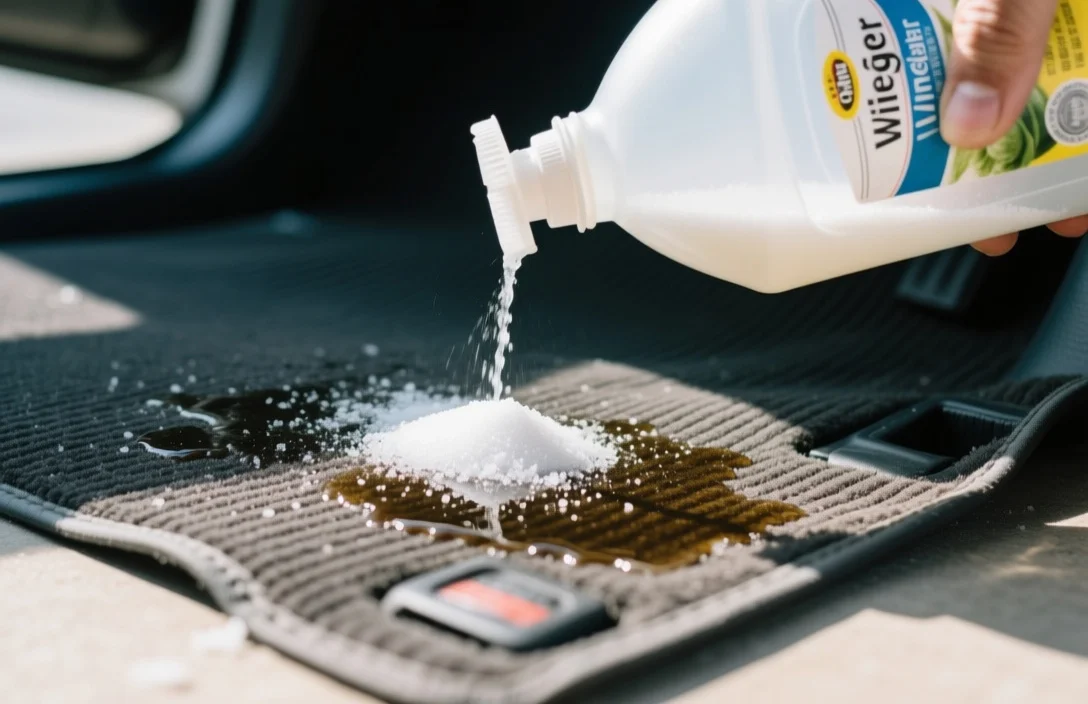
White vinegar breaks down salt crystals on contact. Mix 1 cup white vinegar and 2 cups warm water in a spray bottle. Lay the mats on a driveway or garage floor, spray until damp, and let the solution sit for 5 minutes. Scrub with a stiff brush for rubber mats or a soft-bristle brush for carpeted ones, focusing on the white crusts. Rinse with a garden hose or damp microfiber cloth, then blot dry with a towel.
For extra-stubborn stains, mix 1 tablespoon baking soda and 1 tablespoon vinegar into a paste. Apply it to the stain, let it fizz for 2 minutes, then scrub and rinse. My advice: avoid undiluted vinegar on carpet, as it can bleach fibers over time. If the mat smells like vinegar after drying, a light spray of fabric refresher neutralizes the odor.
The Best Tools for Carpeted Mats
Carpeted mats trap salt deep in the fibers; you need tools that lift the residue without fraying the fabric. A soft-bristle brush (like a horsehair shoe brush) or a microfiber cloth works best for gentle agitation. For thick pile, a carpet cleaner with an upholstery attachment is the most efficient choice – it sprays solution and vacuums it up in one pass. Never use wire brushes or steel wool, as they tear fibers and leave tiny metal fragments that rust later.
If you don’t have a carpet cleaner, a handheld steam cleaner loosens salt without harsh scrubbing. Fill it with equal parts water and vinegar, hold it 2 inches above the mat, and move slowly to avoid oversaturating the backing. Blot with a dry towel immediately after steaming. For spot cleaning, a toothbrush gets into the tight seams where salt hides.
Scrubbing Rubber Mats Clean
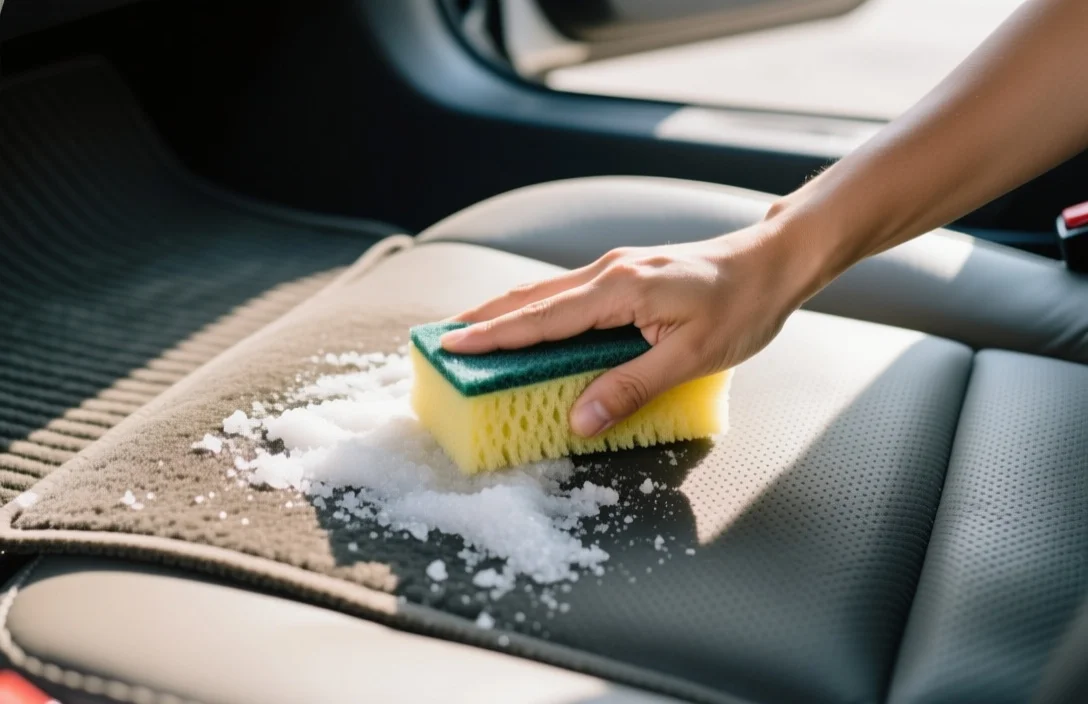
Rubber mats collect salt on the surface and in textured grooves. Shake them out first to remove loose debris, then hose them down with warm water. Mix 1 gallon of warm water with 1/4 cup dish soap – Dawn is my go-to for cutting through grease and salt – and scrub with a stiff-bristle or deck brush. Use an old toothbrush to dig out packed salt from deep grooves. Rinse thoroughly; leftover soap residue attracts dirt and makes mats slippery.
Apply a rubber conditioner like 303 Aerospace Protectant for a professional finish. Spray it on a microfiber cloth and wipe the mats evenly. This creates a barrier that repels water and salt, making future cleanups easier. If the mats are cracked or the texture is worn smooth, replace them – deep salt damage weakens rubber over time.
Using Professional Salt Removers
Chemical Guys InnerClean or Meguiar’s All-Purpose Cleaner work when vinegar and soap fail. InnerClean is safe for both rubber and carpet; spray it on, let it sit for 3 minutes, then scrub and rinse. Meguiar’s All-Purpose Cleaner requires a 1:4 dilution with water for carpeted mats. For thick salt layers, use a pressure washer on a low setting (500-800 PSI) to blast away debris before applying any cleaner.
Test any new cleaner on a hidden corner first to ensure it doesn’t discolor the material. If the stain persists after one treatment, repeat the process – don’t scrub harder, or you’ll damage the mat. For heavily soiled mats, a self-service car wash with a foam brush and high-pressure rinse is the fastest option.
Drying to Prevent Mold
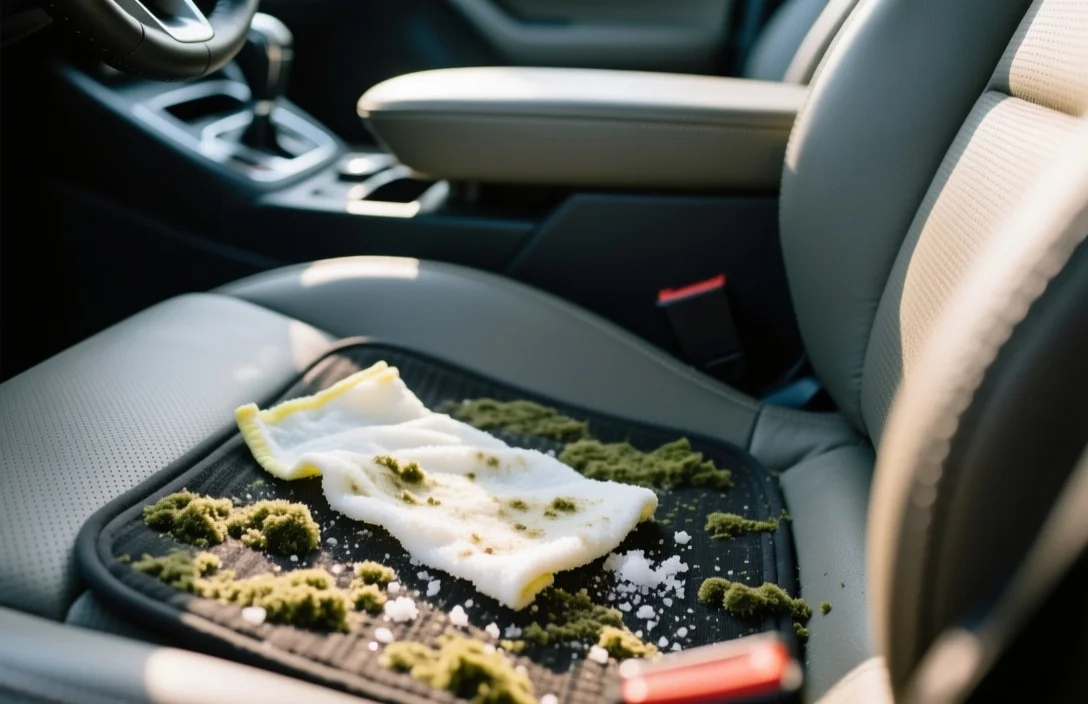
Wet mats breed mold and mildew within 24 hours. Shake off excess water and blot with a towel. Hang rubber mats on a clothesline or over a railing in direct sunlight for 1-2 hours. Carpeted mats should be laid flat on a clean surface in the sun or dried with a fan. Never put damp mats back in the car; moisture trapped under the mat can rust the floorboards.
Use a wet/dry vacuum to remove the bulk of the water before air drying. For carpeted mats, flip them over halfway through the process to ensure the backing dries completely. If you smell mustiness after drying, sprinkle baking soda on the mat, let it sit for 15 minutes, then vacuum it up. If the smell lingers, mold is starting – clean and dry the mats again immediately.
Preventing Future Salt Buildup
Apply a protective spray after the mats are clean and dry. For rubber, a silicone-based spray like Armor All Extreme Shield repels salt and keeps the rubber flexible. For carpet, a fabric protector like Scotchgard blocks stains. Reapply these protectors every 2-3 months or after a deep cleaning.
Use all-weather floor liners under your mats for a second layer of defense. If you drive in heavy snow, rinse your mats with plain water every 2 weeks to stop salt from bonding to the material. I keep a small brush and a spray bottle of vinegar solution in my trunk for quick touch-ups between deep cleans. Check the floorboards under the mats periodically for rust, as salt eats through paint and metal over time.
FAQ
Can I use bleach to remove salt stains from car mats?
No. Bleach weakens rubber and bleaches carpet fibers. It also leaves a strong odor and can damage your car’s interior if it seeps through the mats. Stick to vinegar, dish soap, or automotive cleaners.
How often should I clean salt stains from car mats?
Clean them every 2-4 weeks during winter, or whenever you see white crusts forming. Salt builds up quickly in snowy climates; the longer it sits, the harder it is to remove.
Will a pressure washer damage my car mats?
It can if the pressure is too high. Keep the PSI below 800 and hold the nozzle at least 12 inches away from the mat. Rubber mats handle pressure washing better than carpeted ones – always test a small area first.
Why do salt stains keep coming back after cleaning?
Salt is hygroscopic, meaning it absorbs moisture from the air and reactivates old stains. If you don’t dry the mats completely or apply a protective spray, new salt will cling to leftover residue.
Can I put car mats in the washing machine?
Only rubber mats with no backing. Carpeted mats and rubber mats with fabric or foam backing will fall apart in the washer. If washing rubber mats, use cold water and a gentle cycle, then air dry – never use a dryer.