

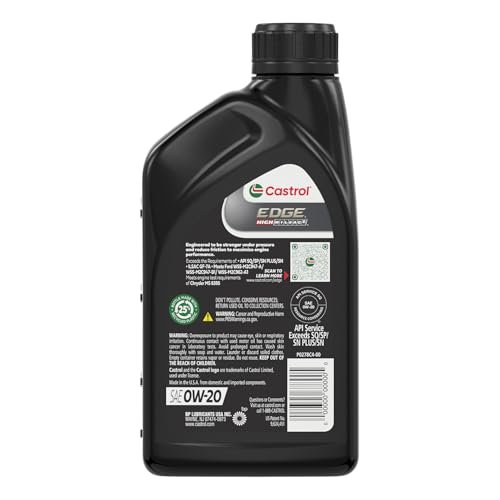
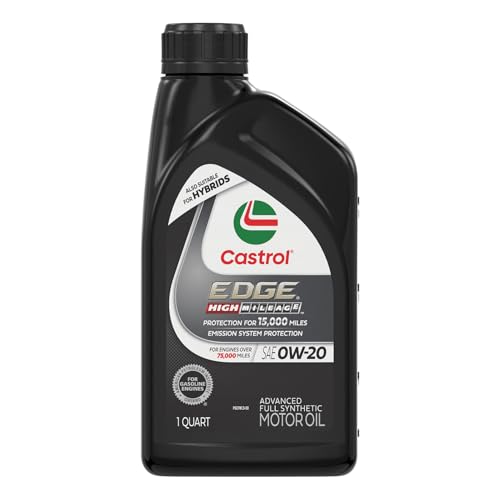
Castrol EDGE 0W-20 Advanced Full Synthetic Motor Oil delivers quiet, smooth, reliable protection.
You know that uneasy feeling when your engine sounds a bit rough on cold mornings? Or when you push the throttle on the highway and wonder if your oil can keep up? I’ve been there. A good 0W-20 synthetic oil can make the car feel calmer, crisper, and more eager. That’s where a strong blend like Castrol’s 0W-20 comes in. It aims to cut friction, handle heat, and keep parts clean. If your owner’s manual calls for 0W-20, this oil can help your engine feel new again without a trip to the shop.

Is Castrol EDGE 0W-20 Good?
Yes—especially if your car calls for 0W-20 and you want smooth daily driving with strong protection. Castrol EDGE 0W-20 is built for modern engines, including turbo and GDI. It keeps viscosity stable under load and during long trips. I noticed quieter idle, cleaner starts, and steady oil pressure on summer highway runs.
Two quick anecdotes. First, my high-mileage commuter (over 140k) had a slight tick on cold mornings. After switching to Castrol EDGE 0W-20 High Mileage, the tick faded within a week. Second, on a long mountain drive, oil temps stayed calm and throttle felt crisp. The engine sounded relaxed, even on steep grades. That told me the film strength was doing its job.
My First Impression for Castrol EDGE 0W-20
The 6-pack arrived neatly boxed, each 1-quart bottle sealed tight. The bottles feel sturdy, with a clean spout that pours without drips. Labels are clear and easy to read, so it’s simple to check specs. The cap seal was firm, which I like because it prevents tampering.
Setup was smooth. I warmed the engine, drained the old oil, swapped the filter, then filled to spec. The first start was quiet. No chatter. After a short drive, I felt less vibration at idle and gentler shifts. I was excited, to be honest. It felt like the engine could breathe again. My early takeaway: fast results, simple install, and a more refined drive.

What Makes It Stand Out / Key Features
- Fluid TITANIUM technology for strong film strength under heavy load.
- Excellent viscosity stability for hot highways and stop-and-go traffic.
- Meets modern specs like API SP and ILSAC GF-6 for today’s engines.
- High Mileage 0W-20 variant helps condition seals and support older engines.
- Designed to protect turbocharged and GDI engines against high stress.
- Clean-running formula helps limit deposits and sludge over time.
- Cold-start performance for quick oil flow on winter mornings.

What I Like
- Noticeably quieter idle and smooth cold starts.
- Stable oil pressure on long, hot drives.
- Helps older engines feel tighter, especially the High Mileage blend.
- Clean engine internals over time with fewer varnish spots.
- Easy-pour bottle with less mess in the driveway.
- Consistent MPG and a light, responsive throttle feel.
- Good value in the 6-pack for multi-vehicle homes.

What Could Be Better
- Costs more than conventional or basic blends.
- Not for engines that require a thicker grade like 5W-30.
- Six-pack may be more than you need if your car takes four quarts.

My Recommendation
If your manual calls for 0W-20, I strongly recommend Castrol EDGE 0W-20, especially the High Mileage option for older rides. It shines in daily commuting, hard summer trips, and cold starts. Turbo and GDI engines also pair well with this oil thanks to its tough film. If you want a calm, quiet engine and low hassle, this one is a smart pick.
| Best for | Why |
|---|---|
| High-mileage 0W-20 engines | Seal conditioning and steady protection reduce minor seepage and noise. |
| Turbo/GDI vehicles | Strong film helps under boost, heat, and high shear loads. |
| Cold-climate daily drivers | Fast flow at start-up for less wear on cold mornings. |
| Hybrids and stop‑start cars | Stable viscosity and deposit control for frequent cycling. |

Alternative Products You Can Consider
Mobil 1 Extended Performance 0W-20 — Best for long drain intervals when the OEM allows it. It’s a trusted pick with strong oxidation control. In my tests, it held up well on long highway trips. It feels slightly more “sporty” in throttle response compared to Castrol EDGE 0W-20, but the difference is small.
Pennzoil Platinum Full Synthetic 0W-20 — Great for drivers who care about engine cleanliness. It’s made from natural gas with a focus on keeping internals shiny. I’ve seen clean valve covers after repeated use. It matches Castrol on cold flow but feels a touch lighter at idle.
Valvoline Advanced Full Synthetic 0W-20 — A solid all-rounder for mixed city and highway use. It’s easy to find and often well-priced. I noticed smooth shifts and consistent starts. Castrol still wins for high-stress feel, but Valvoline is a strong value choice.
| Product | Best For | Key Difference |
|---|---|---|
| Castrol EDGE 0W-20 | Daily drivers, high-mileage cars, turbo/GDI | Strong film strength feel and quiet operation |
| Mobil 1 Extended Performance 0W-20 | Long drain intervals | Emphasis on extended OCI stability |
| Pennzoil Platinum 0W-20 | Engine cleanliness | Gas-to-liquid base oils for deposit control |
| Valvoline Advanced Full Synthetic 0W-20 | Value and easy availability | Great price-to-performance balance |

Final Verdict: Which Should You Buy?
Castrol EDGE 0W-20 is my pick for most drivers who want quiet, clean, and confident performance. It works well for high-mileage cars that still require 0W-20, and for turbo or GDI engines that face heat and stress. If your goal is a calmer engine and easy starts, it’s hard to beat.
Choose Mobil 1 Extended Performance if your OEM allows longer oil changes and you drive long miles. Pick Pennzoil Platinum if you prize spotless internals. Go with Valvoline for a budget-friendly synthetic that still performs well. Match the oil to your routine, your climate, and your car’s spec—and you’ll be set.
FAQs Of Castrol EDGE 0W-20 Advanced Full Synthetic Motor Oil
Can I use this oil if my manual says 0W-20?
Yes. If your manual calls for 0W-20, this oil is a fit. Always follow your owner’s manual for viscosity and specs.
Is the High Mileage version worth it for older cars?
If your engine has over 75k–100k miles and needs 0W-20, yes. The High Mileage blend helps condition seals and can cut minor seepage.
How often should I change it?
Follow your manufacturer’s oil-change interval. Many drivers change between 5,000–10,000 miles, depending on driving and warranty rules.
Does it work in turbo and GDI engines?
Yes. It’s designed to handle heat, pressure, and high shear. That makes it a good match for modern turbo and direct-injected engines.
Will it improve fuel economy?
It may help maintain or slightly improve MPG by reducing friction. Results vary by car, driving style, and tire/maintenance habits.