
Use a tread depth gauge or a coin. Replace tires at or before 2/32 inch.
If you want a safe, quiet, and sure-footed ride, tread depth is the first check. In this guide, I show how to check tire tread depth the right way. You will learn pro methods, what the numbers mean, and when to replace. I have measured thousands of tires in the shop and on the road. Stick with me and you will know exactly how to check tire tread depth with confidence.

Why tread depth matters and how to check tire tread depth
Tread gives water, slush, and snow a place to go. More tread means better grip and shorter stops. Less tread raises the risk of hydroplaning and blowouts.
Most states set 2/32 inch as the legal minimum. Safety experts advise more tread for wet and winter roads. You should learn how to check tire tread depth so you can act before grip drops.

The tools you need to check tire tread depth at home
You can check your tires with simple tools. These are easy to keep in your glovebox.
- Tread depth gauge A simple, low-cost tool. It reads in 32nds of an inch or millimeters.
- Coins A quarter and a penny work well in a pinch.
- Flashlight Helps you see inside grooves.
- Chalk or notes Record readings for each tire and wheel position.
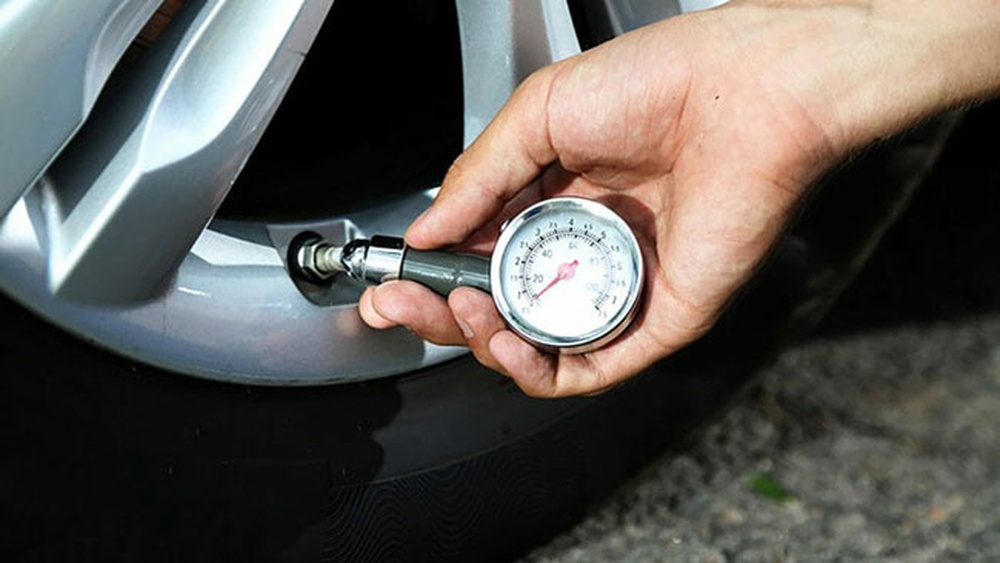
- Tire pressure gauge Low pressure wears tread faster and unevenly.
I carry a pocket gauge in my door panel. It costs less than a latte and removes all guesswork.

How to check tire tread depth with coins (penny and quarter tests)
You can get a quick read in seconds. Use a coin if you do not have a gauge.
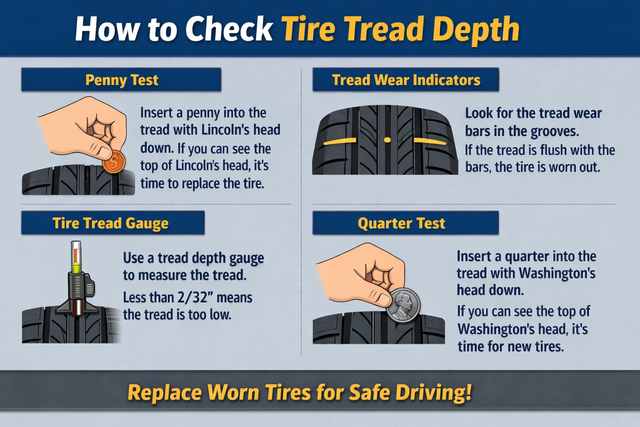
- Penny test Place a penny head-first into a main groove. If you can see all of Lincoln’s head, tread is at or below 2/32 inch. Plan to replace now.
- Quarter test Place a quarter head-first into a groove. If you see the top of Washington’s head, tread is near or below 4/32 inch. Wet stopping may be weak.
- Winter check Many winter tire makers suggest at least 5/32 inch for snow. Use a gauge for accuracy here.
These coin tests are fast. I use them during gas stops on road trips.

Step-by-step: how to check tire tread depth with a gauge
A gauge gives a precise number. Follow these steps for best results.
- Park on level ground. Set the wheel straight. Use the parking brake.
- Insert the probe into a main tread groove. Push the base flush to the tread blocks.
- Take three readings across the tire. Inner edge, center, and outer edge.
- Repeat at three spots around the tire. Top, front, and rear.
- Write down the lowest number. That number leads your decision.
- Convert if needed. 2/32 inch is about 1.6 mm. 4/32 inch is about 3.2 mm. 5/32 inch is about 4 mm.
Tip from the bay floor: if numbers vary by more than 2/32 across one tread, get an alignment check.

Where to measure and how to get consistent results
Not all grooves are equal. Some are decorative and shallow.
- Use main circumferential grooves These are the deepest channels that run around the tire.
- Avoid sipes and stone ejectors These are small cuts or raised ridges. They do not show depth.
- Skip the wear bars for the measurement Use them to confirm. If a bar is flush with the tread, you are at 2/32 inch.
Measure each tire. Fronts and rears wear at different rates. On all-wheel drive cars, even one low tire can stress the drivetrain.

Interpreting results: how to check tire tread depth against safety limits
Use these benchmarks to make decisions.
- 6/32 inch or more Healthy tread for most daily driving.
- 5/32 inch Minimum for snow. Below this, winter grip drops fast.
- 4/32 inch Start planning to replace, especially for wet roads. Hydroplaning risk grows.
- 3/32 inch Very near the end. Stopping distances rise.
- 2/32 inch Legal minimum in most states. Replace now.
Industry tests show wet braking distance can increase by over 80% as tires wear from new to 2/32 inch. You will feel longer stops and less control in rain well before the legal limit.

Common tread wear patterns and what they mean
Reading wear patterns helps you fix the root cause. It also saves money.
- Center wear Overinflation. Set pressure to the door-jamb label, not the sidewall.
- Edge wear Underinflation or aggressive cornering. Check pressure monthly.
- Inner or outer shoulder wear Alignment or worn suspension parts. Get an alignment.
- Cupping or scalloping Worn shocks or struts. Replace dampers and rebalance tires.
- Feathering Toe misalignment. Needs alignment and a suspension check.
- One tire worn more than others Sticking brake caliper or worn bushing. Inspect brakes and hubs.
I once traced rapid inner wear to a weak rear control arm bushing. A $60 part saved a full set of tires.

Seasonal and driving condition thresholds
Your safe threshold depends on where and how you drive.
- Mostly dry highways You can run to 4/32 inch, but watch rain.
- Frequent heavy rain Replace near 4/32 inch to cut hydroplaning risk.
- Snow or slush Replace at 5/32 inch. Block edges and sipes need depth to bite.
- Off-road or gravel More depth resists punctures and improves traction.
- Performance driving More tread means more heat capacity and grip.
If you tow or carry heavy loads, deeper tread helps control and cooling.
Maintenance habits that protect tread depth
Small habits make big gains in tire life and safety.
- Check pressure monthly and before long trips Tires can lose about 1 psi per month.
- Rotate every 5,000–7,500 miles Follow your owner’s manual pattern.
- Get an alignment yearly or after impacts Potholes and curbs can knock it out.
- Balance with each rotation Smooth rolling reduces cupping and vibration.
- Inspect after temperature swings Cold snaps drop pressure. Heat raises it.
- Replace tires by set or axle Keep grip balanced side to side.
I log tread readings on my phone per tire. Trends jump out fast that way.
Legal and industry standards you should know
Most U.S. states enforce 2/32 inch as the legal minimum. The U.S. DOT and tire industry groups support that floor. Safety bodies urge earlier replacement for rain and winter.
Many tires have wear bars at 2/32 inch. Once flush, the tire is legally worn out. Fleet programs often replace at 4/32 inch for safety and uptime.
Always check local laws. Some regions have stricter winter rules.
Mistakes to avoid when you learn how to check tire tread depth
- Measuring on raised features Measure only in the main grooves.
- Taking one reading per tire Take several and use the lowest.
- Ignoring the spare Check its tread and its age.
- Forgetting tire age Rubber hardens over time. Many makers suggest replacement around six years, even with tread left.
- Trusting a visual guess Numbers beat eyeballing every time.
I once “eyeballed” a set at 4/32 inch. The gauge read 2/32 inch at the inner edge. That car left with new tires the same day.
How to check tire tread depth during a quick fuel stop
You can do a fast check without tools.
- Turn the wheel out. Shine a phone light into the grooves.
- Use a penny or quarter from your cup holder.
- Compare all four tires. Note the lowest.
- If any tire fails the coin test, slow down in rain and plan service.
This two-minute habit can prevent a scary hydroplane on the drive home.
Frequently Asked Questions of how to check tire tread depth
How often should I check tread depth?
Check monthly and before long trips. Also check after hitting a pothole, curb, or debris.
Is 3/32 inch safe for daily driving?
It is near the end of life. Plan replacement soon, especially if you drive in rain.
Do I need a special gauge to learn how to check tire tread depth?
A simple mechanical gauge is cheap and accurate. A coin works in a pinch, but a gauge is best.
Are tire wear bars reliable?
Yes, they mark 2/32 inch. If the bar is flush with the tread, the tire is legally worn out.
Does tire age matter if tread looks good?
Yes. Rubber hardens with time. Many brands advise replacement around six years, even with usable tread.
Can uneven tread cause noise or vibration?
Yes. Cupping, feathering, and flat spots create noise and shake. Balancing and alignment can help if the tire is not too far gone.
What is the best way to record how to check tire tread depth results?
Write down inner, center, and outer numbers for each tire. Track them over time to spot trends early.
Conclusion
You now know how to check tire tread depth with a coin, a gauge, and a sharp eye. Measure in several spots on each tire, log the lowest number, and act before safety fades. Use 4/32 inch as a wet-road warning and 5/32 inch for snow.
Make tread checks part of your monthly routine. Keep a gauge in your car. If your readings are low, book a tire inspection this week. Want more hands-on tips like this? Subscribe for upcoming guides, or drop your questions in the comments.