
Rotate tires on schedule, keep pressure right, align, balance, and fix suspension.
You came here to learn how to prevent uneven tire wear, and that is exactly what you will get. I have spent years in bays and on test roads, watching small habits save big money. In this guide, I share clear steps, proven checks, and pro tips so you can keep your tires safe, quiet, and wearing even.
Why uneven tire wear happens
Uneven tire wear is a symptom. The root cause is almost always a mismatch between how the tire is loaded and how it rolls. That mismatch may come from setup, use, or both.
Key causes I see most often:
- Wrong tire pressure. Low pressure scrubs the shoulders. High pressure wears the center.
- Poor alignment. Too much toe or camber chews one edge fast.
- Worn shocks or struts. The tire bounces and cups on the tread.
- Bad balance. The wheel shakes and creates patchy wear.
- No rotation. Front and rear do different jobs and wear at different rates.
- Hard driving. Sharp turns, high speed, and panic stops stress edges.
- Heavy loads or towing. Extra weight distorts the contact patch.
- Bent or worn parts. Ball joints, tie rods, and bushings shift angles under load.
A quick note on physics. Tires lose about 1 psi for every 10°F drop in air temp. That small change can tilt wear in a few weeks. If you want to know how to prevent uneven tire wear, start by dialing in these basics.

How to read tire wear patterns
Reading tread like a map helps you act before it is too late. This is how I explain it to new techs.
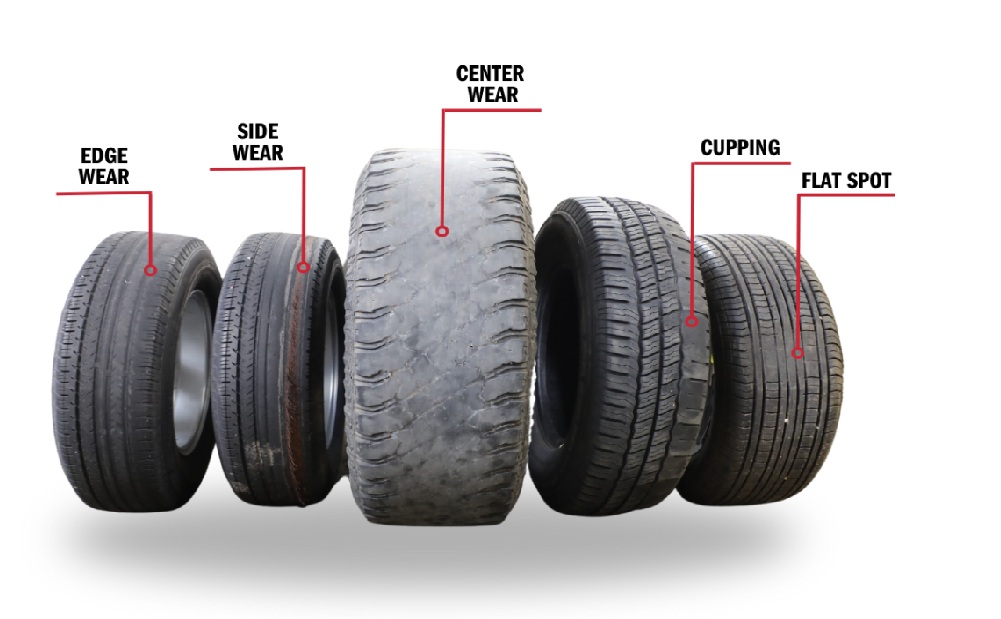
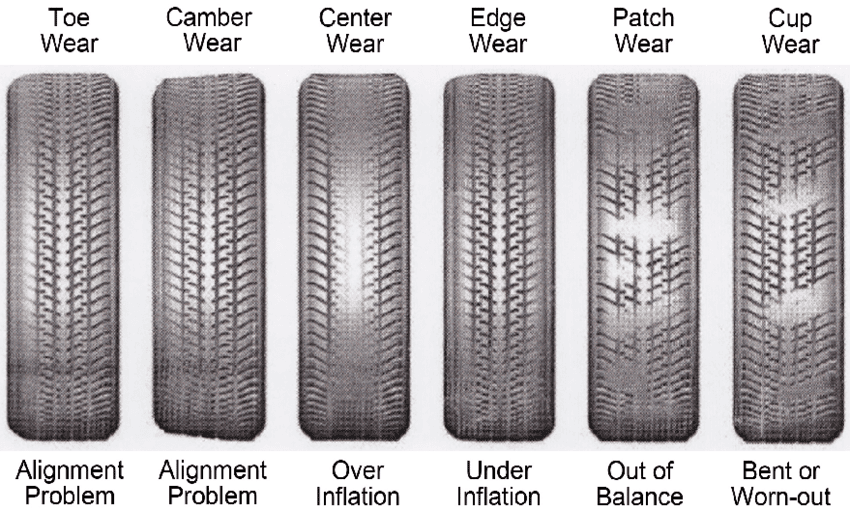
- Both edges worn, center fine. Underinflation. Add air to the door placard spec.
- Center worn, edges fine. Overinflation. Bleed down to spec.
- Inside edge worn. Excess negative camber or toe-out. Check alignment and bushings.
- Outside edge worn. Cornering hard, underinflation, or positive camber. Check pressure and alignment.
- Feathered tread (smooth one way, sharp the other). Toe error. Set toe on an alignment rack.
- Cupping or scallops. Worn shocks or struts. Replace dampers and then balance.
- One tire wearing fast. Bent part, seized caliper, or camber on that corner. Inspect the corner fully.
- Rear tires wearing like saw teeth. Toe or thrust angle issue. Do a four-wheel alignment.
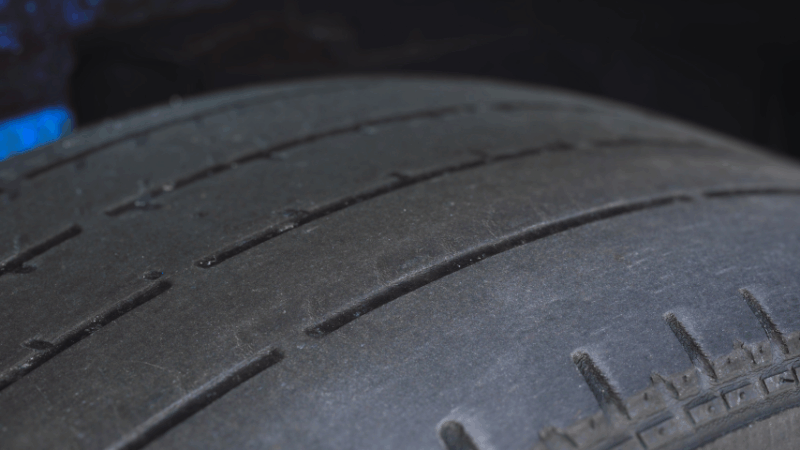
Do a finger test. Lightly sweep your hand across the tread. If it feels like a tiny ramp one way and a ledge the other, think toe. If it feels like hills and valleys, think shocks.
How to prevent uneven tire wear with simple checks
Small, steady checks beat big, rare fixes. Here is a routine that works in the real world.
Weekly
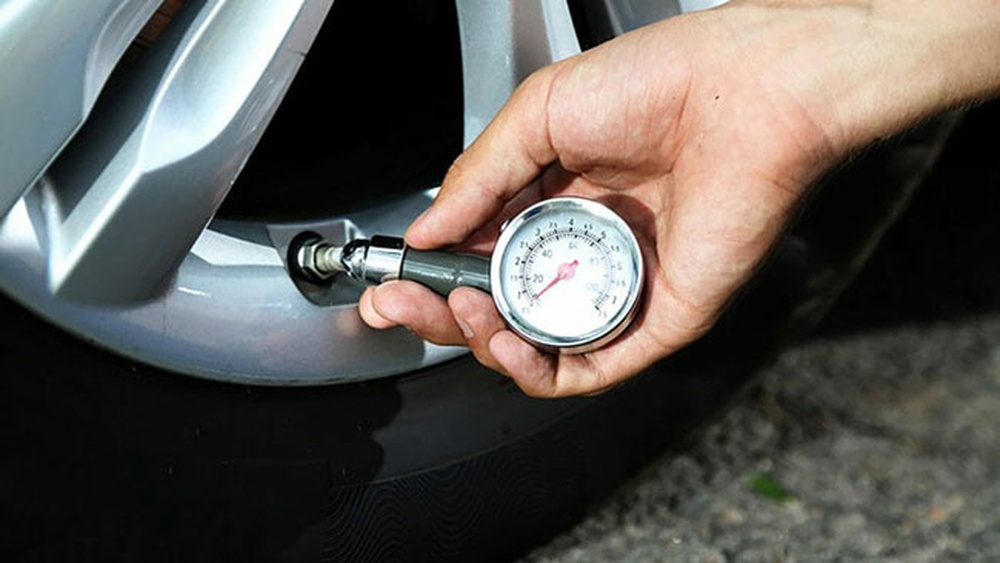
- Check cold pressure with a trusted gauge.
- Look for cuts, nails, or bulges.
- Eyeball tread for edge wear or cupping.
Monthly
- Measure tread depth at inner, middle, and outer spots on each tire.
- Log readings in your phone. Patterns jump out fast when tracked.
Every 6 months or 6,000–7,500 miles
- Rotate tires front to rear. Use the pattern your car maker suggests.
- Ask for a balance check if you feel any shake.
After any curb, pothole, or new suspension work
- Book an alignment check. It is cheap insurance.
I use this plan on my own SUV. It is simple, fast, and it works. If you want a sure path for how to prevent uneven tire wear, this cadence is your best friend.

Tire pressure done right
The right pressure is the cheapest way to stop uneven wear.
- Use the door placard, not the sidewall. The placard shows the car’s spec, hot or cold. Check it cold.
- Measure in the morning before the sun hits the tires.
- Adjust for load. If you carry people or tow, follow the higher load spec on the placard.
- Use a digital gauge you trust. Replace it if it disagrees with the shop’s master gauge by more than 2 psi.
- Mind the seasons. Pressure drops as temps fall. Recheck when the weather swings.
- TPMS is a guardrail, not a guide. Many systems warn only when pressure is very low. Do not wait for a light.
- Nitrogen can slow pressure loss, but it will not fix bad habits. Air is fine when you check often.
Should I run higher pressure for better mpg?
A small bump can help mileage, but it can cause center wear and harsh ride. Stick to the placard unless your maker gives a tow or load setting.
How often should I check pressure if I want to know how to prevent uneven tire wear?
Check weekly. It takes one minute and keeps the contact patch even.

Alignment, rotation, and balance
These three services do most of the heavy lifting for how to prevent uneven tire wear.
Alignment
- What it is. Setting camber, toe, and caster so wheels track true.
- When to do it. Yearly, or after new tires, a hard hit, or if the wheel does not center.
- Signs you need it. Edge wear, pull, off-center wheel, or a drift on flat roads.
Rotation
- Why it matters. Fronts brake and steer. Rears follow. They wear at different rates.
- When to rotate. Every 6,000–7,500 miles, or per the owner’s manual.
- Patterns. Front-wheel drive often uses rearward cross. Rear-wheel drive often uses forward cross. Staggered setups may be front-to-back only or not rotatable.
Balance
- Static vs dynamic. Dynamic balance fixes side-to-side wobble and is what you want.
- When to balance. With new tires, at rotation if you feel shake, or after a weight falls off.
Costs vary by region, but an annual alignment often costs less than one tank of gas. That cost is tiny next to a set of tires. If you ask me how to prevent uneven tire wear on a budget, I say rotate on time and align once a year.
Do I need road-force balancing?
If you have a vibration no one can kill, road-force can help. It measures tire stiffness and matches it to the wheel.

Suspension and steering health
Tires obey the parts that hold them. Worn parts force bad angles and bad angles chew rubber.
What to inspect
- Shocks and struts. Look for leaks, dents, or bounce after a bump. If the car keeps bobbing, they are done.
- Ball joints and tie rods. Feel for play. Any clunk or free play needs care now.
- Control arm bushings. Cracks or tears let the wheel shift under load.
- Wheel bearings. A hum that gets louder with speed can be a bearing.
- Springs. A sag on one side changes camber and toe.
A rule of thumb I use: If tires show cupping, I inspect and often replace dampers before mounting new rubber. It is false economy to mount fresh tires on a worn suspension. If you are asking how to prevent uneven tire wear long term, start with tight, healthy steering and suspension.
Driving habits that keep wear even
Your right foot and your hands shape tire life more than you think.
- Slow for potholes and speed bumps. Hit them square and at low speed.
- Avoid curb rubs. They bend wheels and shift toe.
- Brake in a straight line. Enter turns slower and exit smooth.
- Do not launch hard at every light. Gentle starts save edges and fuel.
- Keep speeds sane. Heat climbs with speed, and heat speeds wear.
I learned this the hard way on a test loop. One week of late braking and hot laps took 2/32 inch off the outside shoulders. The next week, same tires, smooth laps, and wear dropped by half. Your habits are a tool for how to prevent uneven tire wear every day.
Loads, towing, and seasonal changes
Weight and weather change how rubber meets the road.
- Heavy loads. Add air if the placard lists a load setting. Spread weight across the cabin or bed.
- Towing. Raise rear pressure per spec and re-check after 15 minutes of highway speed.
- Roof racks and cargo boxes. More drag means more throttle. That extra heat can speed wear.
- Seasonal tires. Winter tires are softer. Rotate them sooner and watch for feathering when temps warm.
- Lifted or lowered cars. Any ride height change needs a fresh alignment. Camber kits may be needed.
If your life includes towing or gear, how to prevent uneven tire wear starts with planning. Set pressures before the trip. Recheck at your first stop.
A 12-month plan for how to prevent uneven tire wear
Here is a simple calendar I give friends and clients.
Every month
- Check and set cold pressure.
- Log tread depth across each tire.
Every 6 months
- Rotate tires.
- Inspect for nails and sidewall damage.
- Balance if you feel any shake.
Every 12 months
- Four-wheel alignment.
- Full suspension and steering check.
After events
- After a pothole hit, curb kiss, or new parts, book an alignment.
- After a road trip, check pressure and tread.
What to keep in your trunk
- Digital tire gauge.
- Plug kit and small compressor.
- Torque wrench for lug nuts, set to spec.
Follow this plan and you will master how to prevent uneven tire wear without stress. It fits busy life and needs no fancy tools.
Frequently Asked Questions of how to prevent uneven tire wear
How often should I rotate my tires?
Every 6,000–7,500 miles works for most cars. Follow your owner’s manual if it lists a different range.
Does overinflation really cause center wear?
Yes. Too much pressure crowns the tread and lifts the edges off the road. That makes the center do all the work.
Will an alignment fix a pull to one side?
If the pull is from toe or camber, yes. If a brake caliper sticks or a tire is damaged, you need to fix that first.
Can I prevent uneven tire wear with TPMS alone?
No. TPMS warns late and only for low pressure. Use a gauge weekly for best results.
Do I need to balance tires at every rotation?
Not always. If you feel a shake or see patchy wear, ask for a balance when you rotate.
Conclusion
Even tire wear is not luck. It is a simple set of habits done on time. Set pressure right, rotate on schedule, align once a year, and keep suspension tight. Drive smooth and plan for loads and seasons. That is how to prevent uneven tire wear and save money mile after mile.
Put this plan on your calendar today. If you want more tips on how to prevent uneven tire wear, subscribe for updates or drop a comment with your setup and driving style. I am happy to help you dial it in.