
Braking should feel smooth and consistent, but when your rotors lose their flat surface, the experience becomes erratic. A warped brake rotor creates an uneven contact point for the brake pads, which leads to dangerous vibrations and a noticeable increase in stopping distance. Ignoring these symptoms often results in faster wear on your brake pads and calipers, turning a simple maintenance task into a costly overhaul.
Warped brake rotors typically manifest as a pulsating brake pedal, a shaking steering wheel during deceleration, or high-pitched squealing. These symptoms occur because the brake pads are hitting “high spots” on the rotor surface, which can increase your stopping distance by 15-25% and reduce overall braking power when the system gets hot.
Key Takeaways
- Steering wheel vibration. A shaking wheel during braking usually indicates front rotor warping.
- Pedal pulsation. Feeling a rhythmic “thumping” in your foot suggests the rotor surface is uneven.
- Increased stopping distance. Warped rotors can increase the distance needed to stop by 15-25%.
- Audible squealing. High-pitched noises often signal uneven pad contact or worn-out friction material.
- Visual heat spots. Blue or dark discolorations on the rotor surface indicate severe overheating.
- Resurfacing vs. Replacement. Rotors can be machined if they have enough thickness, otherwise they must be replaced.
Signs of Warped Brake Rotors You Should Notice
A vibrating steering wheel or a pulsating pedal are the most immediate indicators that your rotors are no longer flat. When a rotor warps, it develops high and low spots on the disc surface. As the rotor spins, the brake pads grip these uneven areas, creating a rhythmic push-back that travels through the hydraulic lines to your foot and through the steering linkage to your hands.
You might also notice that your vehicle pulls to one side when you apply the brakes. This happens when one rotor is more deformed than the other, causing the car to brake unevenly. In severe cases, you may smell burning rubber or metallic odors, which suggests the brakes are struggling to create consistent friction and are overheating.
Performance degradation often starts subtly. You may first notice that the brakes feel “soft” or that you have to press the pedal harder than usual to achieve the same stopping power. If you feel a grinding sensation or hear a metallic scraping sound, the warping may have progressed to the point where the pads are no longer making full contact with the disc.
Steering Wheel Vibration and Car Shaking While Braking
Vibration in the steering wheel is a classic sign of warped front rotors. Because the front brakes handle the majority of a vehicle’s stopping force, any irregularity in the front discs is amplified through the steering rack. This shaking typically becomes more pronounced as your speed increases, peaking during moderate braking and often disappearing once the car comes to a complete stop.
This vibration is not just an annoyance; it can lead to a potential loss of control during emergency stops. When the steering wheel shakes, it disrupts the driver’s ability to make precise steering corrections. This is especially dangerous on wet or icy roads where traction is already limited.
In some vehicles, the vibration might be felt in the seat or the entire chassis rather than just the steering wheel. This usually points to warped rear rotors. While rear brakes provide less stopping power than the front, they are still critical for vehicle stability and preventing the rear end from fishtailing during a hard stop.
Pulsating Brake Pedals and High Pitched Squealing
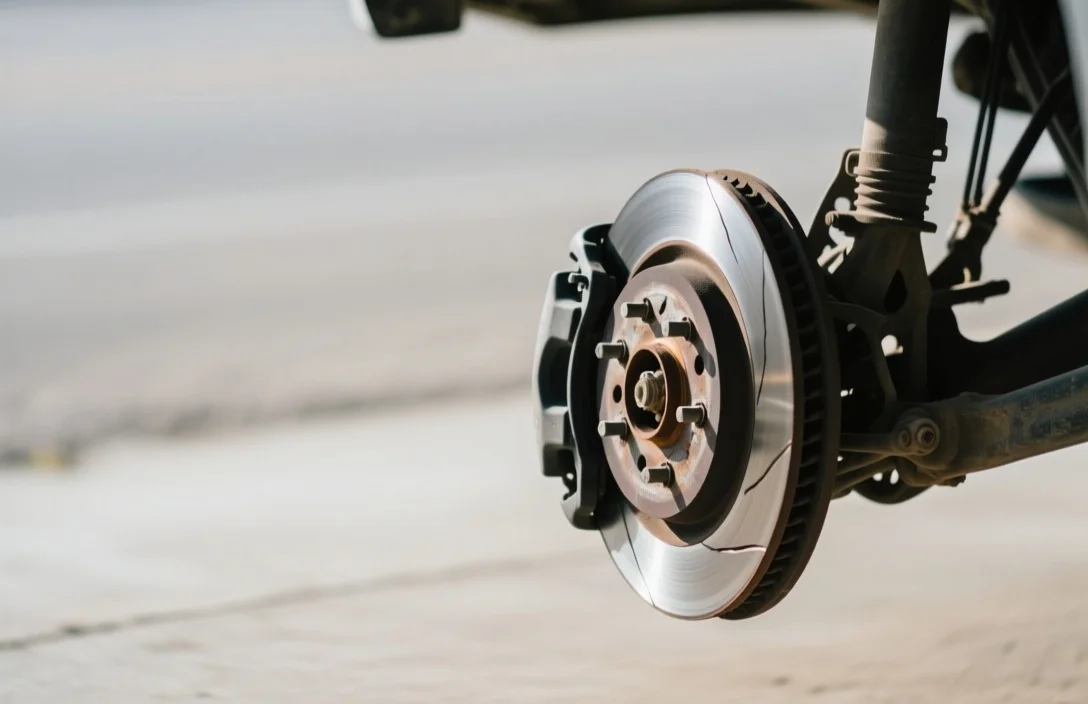
A pulsating brake pedal feels like a heartbeat or a rapid thumping under your foot when you slow down. This occurs because the brake caliper is pushing the pads against a surface that is no longer perfectly circular. The pads are essentially “jumping” over the high spots of the warped metal, which pushes the brake fluid back through the lines and creates that rhythmic pulse.
Squealing is often associated with rotor issues, though it can also signal worn brake pads. When rotors are warped, the pads do not sit flush against the surface. This creates gaps where the pads can vibrate at high frequencies, producing that characteristic high-pitched scream.
If the squealing is accompanied by a grinding sound, it often means the friction material on the pads has completely worn away. At this stage, the metal backing plate of the pad is rubbing directly against the warped rotor, which will destroy the rotor surface very quickly.
Visual Indicators Like Blue Spots and Surface Grooves
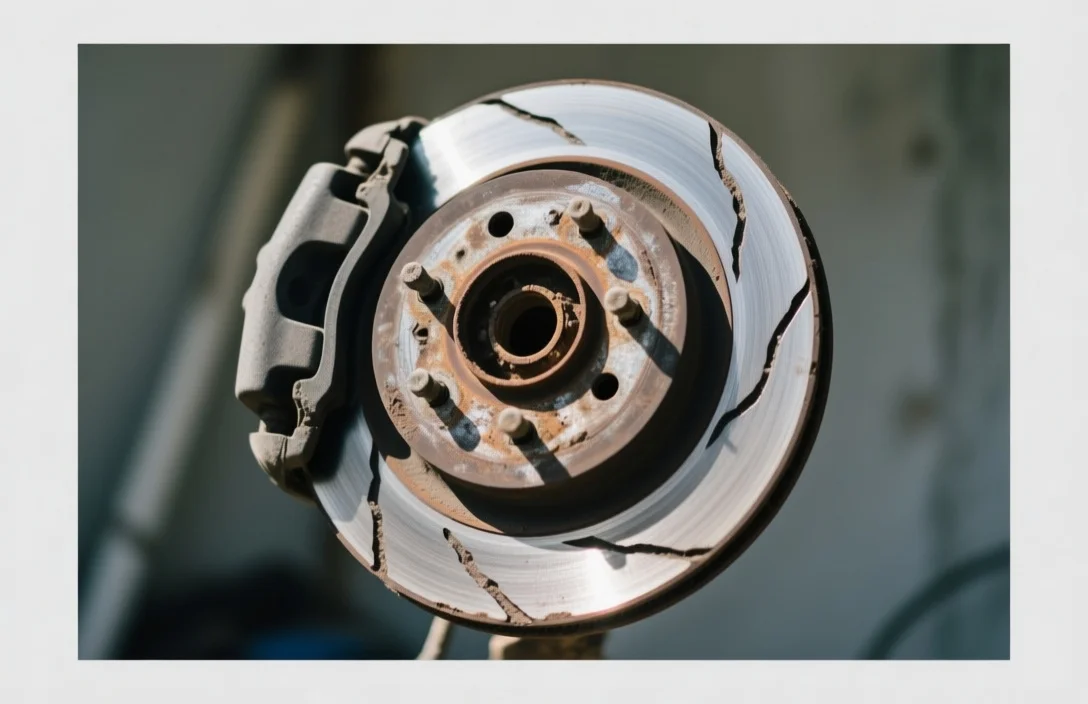
Blue spots on a brake rotor are a clear sign of “heat checking” or extreme overheating. When the iron in the rotor reaches a critical temperature, the metal can actually change color, leaving behind dark blue or purple patches. These spots are areas where the metal has been stressed and is most likely to warp or crack.
Surface grooves, or “scoring,” look like deep circular scratches or rings around the rotor face. While not always a sign of warping, deep grooves prevent the brake pads from making full contact. This reduces the effective surface area for friction, which forces the brakes to work harder and generate more heat, further accelerating the warping process.
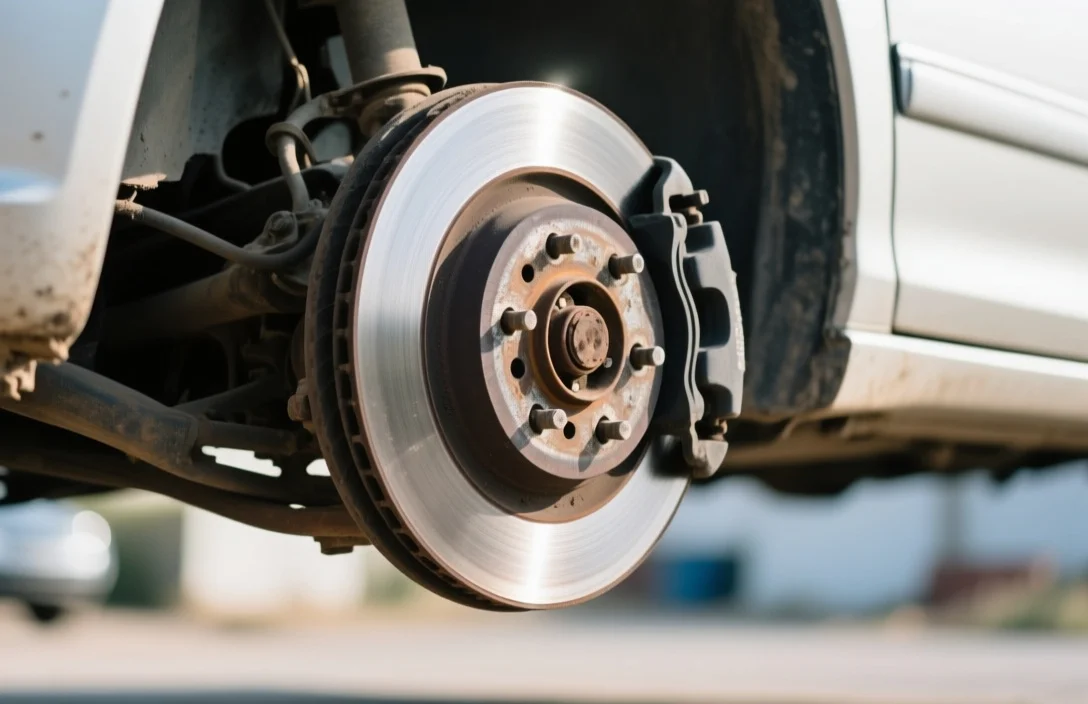
A healthy rotor should look shiny and smooth with a uniform appearance. If you see a “lip” forming around the outer edge of the rotor or significant rust pitting on the surface, the rotors are likely past their prime. Use a flashlight to inspect the disc surface; any visible waving or unevenness in the metal thickness is a definitive sign of deformation.
Hard Braking and Heat Cycle Causes of Warping
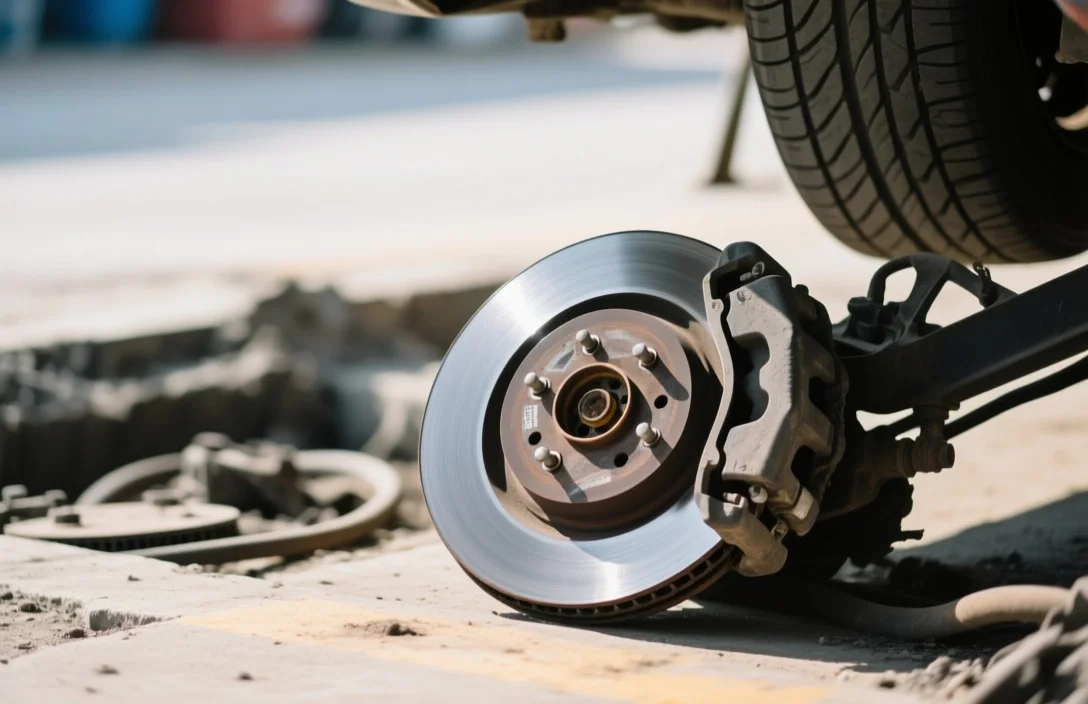
Excessive heat is the primary driver of rotor warping. When you slam on the brakes from high speeds or ride the brakes during a long downhill descent without downshifting, the rotors generate immense thermal energy. If the metal cannot dissipate this heat fast enough, it can deform.
The most damaging scenario is a “thermal shock” cycle. This happens when a scorching hot rotor is suddenly cooled by a cold liquid. For example, driving through a deep puddle or hitting a heavy rainstorm immediately after a period of hard braking can cause the metal to contract too quickly, leading to a warp.
Improper installation is another common cause. If the wheel lugs are tightened unevenly or over-torqued with an impact wrench, it can put uneven pressure on the rotor hat. Over time, as the rotors heat up and cool down during normal driving, this initial stress causes the disc to pull out of alignment.
Resurfacing and Replacing Warped Brake Rotors
Resurfacing, also known as “machining” or “turning,” involves using a lathe to shave a thin layer of metal off the rotor to make the surface flat again. This is a cost-effective solution if the rotors are thick enough to handle the material loss. However, machining removes a layer of the metal that helps dissipate heat, meaning a resurfaced rotor may warp again sooner than a new one.
Replacement is necessary when the rotors are too thin to be machined or if the warping is severe. Most modern cars have a “minimum thickness” stamped on the rotor; if the metal is below this threshold, the rotor is unsafe and must be replaced.
The cost of these services varies based on parts and labor.
| Service | Cost Range (Estimated) | Best For |
|---|---|---|
| Rotor Resurfacing | $50 – $100 per rotor | Mild pulsation, thick rotors |
| New Rotors (per axle) | $240 – $485 | Severe warping, thin rotors |
| Labor for Replacement | $175 – $250 | Professional installation |
| Rotors & Pads (per axle) | $250 – $500 | Full brake refresh |
| Caliper Replacement | $110 – $145 extra | Seized or leaking calipers |
When replacing rotors, it is highly recommended to install new brake pads at the same time. Putting old pads, which have already molded to the shape of the warped rotor, onto a new flat rotor will lead to poor performance and premature wear on the new parts.
How to Prevent Brake Rotors From Warping
Avoid “riding” the brakes on long descents. Instead of holding the brake pedal down for miles, use your transmission to downshift into a lower gear. This employs engine braking to slow the vehicle, which keeps the rotors cool and prevents the heat buildup that leads to warping.
Practice gentle braking habits in stop-and-go traffic. Avoid slamming on the brakes at the last second, which creates sudden spikes in temperature. Giving yourself more space to slow down gradually distributes the heat more evenly across the rotor surface.
Proper wheel maintenance also plays a role. Ensure your wheels are torqued to the manufacturer’s specifications using a torque wrench rather than an impact gun. This prevents the uneven clamping force that can stress the rotor hat and lead to deformation over time.
Additionally, be mindful of road conditions. While you cannot avoid the rain, try to avoid driving through deep standing water immediately after a period of heavy braking. If you must drive in wet conditions, avoid sudden, hard stops that could cause extreme temperature swings in the metal.
FAQ
Can you drive with warped brake rotors?
You can drive with them, but it is not recommended because it increases your stopping distance by 15-25%. The vibrations can also cause premature wear on your steering components and brake pads. If the vibration is severe, it can distract you or lead to a loss of control during an emergency stop.
How do I know if my rotors are warped or if it’s my pads?
Warped rotors typically cause pulsation and vibration that increases with speed. Worn brake pads usually cause squealing, grinding noises, or a “spongy” feeling in the pedal. If the steering wheel shakes specifically when you hit the brakes, the rotors are the most likely culprit.
Will resurfacing my rotors fix the problem permanently?
Resurfacing is often a temporary fix. While it restores a flat surface, it removes material from the rotor, making it thinner. Thinner rotors cannot dissipate heat as effectively as thick ones, which means they are more prone to warping again in the future.
Why do only my front brakes feel like they are warping?
Front brakes do the vast majority of the work to stop a car, meaning they generate significantly more heat than the rear brakes. Because they are subject to higher thermal stress, the front rotors are far more likely to warp or develop heat spots than the rear ones.
How long does it take to replace warped rotors?
A professional mechanic can typically replace rotors and pads on one axle in 2 to 4 hours. The process involves removing the wheels, calipers, and old rotors, then installing new parts and bleeding the brakes if necessary.
If your steering wheel shakes or your pedal pulses, stop guessing and have a technician measure your rotor thickness. Replacing them now is significantly cheaper than replacing a seized caliper or a damaged steering rack later.