

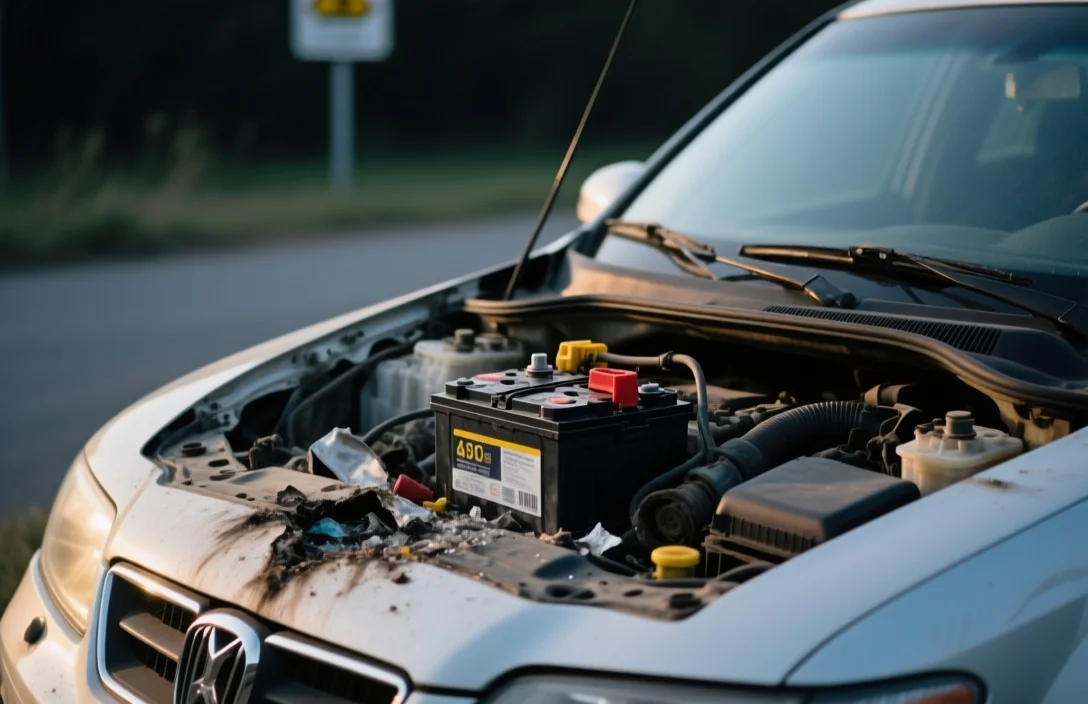
A car that starts fine one evening but won’t turn over the next morning has a power leak. Even a small current – just 50 milliamps – can drain a healthy battery in 24 hours. Most overnight failures stem from parasitic drains, a failing alternator, or a battery that has reached the end of its chemical life.
A car battery dies overnight when a parasitic drain, faulty alternator, or internal battery failure pulls more current than the battery can supply. Common culprits include interior lights left on, aftermarket electronics, corroded terminals, or a battery that no longer holds a full charge. A typical 60-amp-hour battery can lose 5-10% of its charge overnight from a 50-100 milliamp drain, which is often enough to leave you stranded by morning.
Key Takeaways
- Parasitic drains are the leading cause of overnight death – small, constant currents add up.
- Interior lights in the glove box, trunk, or dome often stay on due to faulty switches.
- Aftermarket electronics like GPS, dash cams, and stereos can draw power while the ignition is off.
- Alternator output below 13.8 volts means the battery isn’t being replenished during your drive.
- Corroded terminals create resistance that prevents a full charge and causes voltage drops.
- Internal battery shorts kill capacity – replace any battery older than 3-5 years.
Hunting for Parasitic Drains
A parasitic drain is any current flowing after you turn off the ignition. Modern cars require a tiny trickle – usually 20-50 milliamps – to maintain clocks, security systems, and computer memory. Anything above 80 milliamps is a red flag. While a 100-milliamp drain might take 25 days to empty a 60-amp-hour battery, overnight failures usually indicate a draw of 200 milliamps or more.
To confirm a drain, use a multimeter set to 10A DC. Disconnect the negative battery terminal, connect the meter in series between the terminal and the battery post, and read the current. If the reading exceeds 80 milliamps, pull fuses one by one; the moment the reading drops, you have found the problematic circuit.
Finding Stuck Interior Lights and Sensors
Interior lights are the easiest drains to spot. Open every door, the trunk, and the glove box – if any light stays on, the switch is broken. Glove box lights are notorious because they are hidden from view. Even a dim dome light can flatten a battery in 8-12 hours.
Trunk lights frequently fail when plunger-style switches get stuck or misaligned. Test this by manually pressing the switch – if the light stays on when the trunk is closed, the switch needs cleaning or replacement. In newer vehicles, check for ambient lighting or footwell LEDs that may stay on due to software glitches.
Isolating Aftermarket Electronics
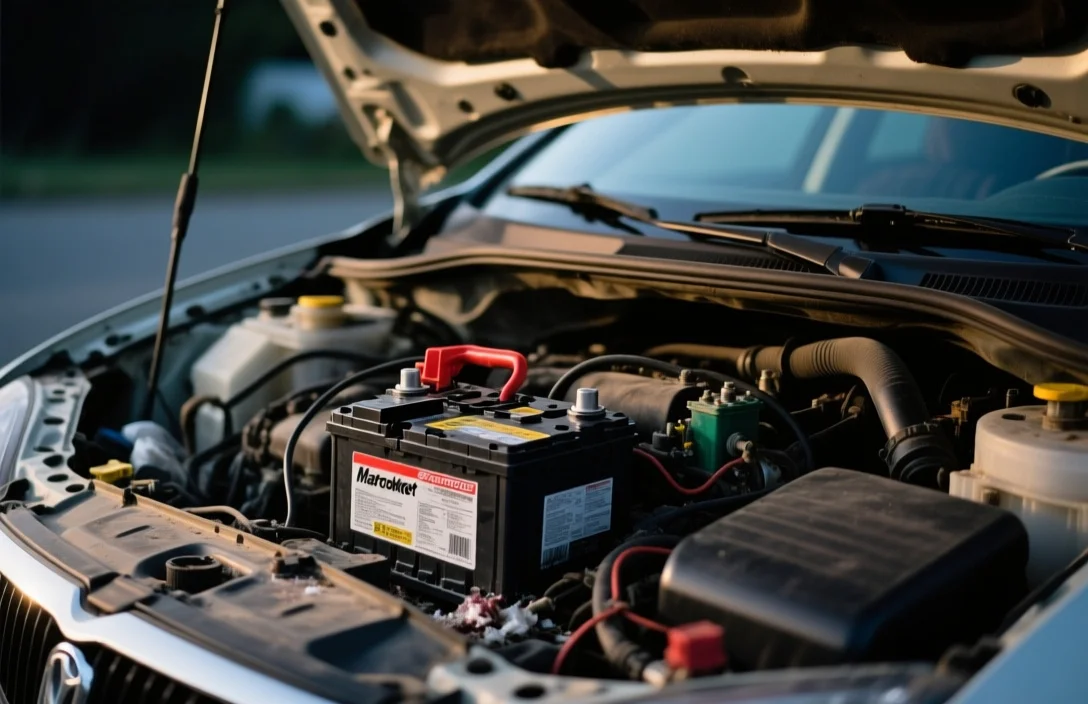
GPS trackers, dash cams, stereos, and remote starters often draw power regardless of the ignition state. A dash cam in “parking mode” can pull 300-500 milliamps, which is enough to kill a battery overnight. Remote starters and alarm systems are even more aggressive, sometimes drawing 1 amp or more.
Unplug each aftermarket device one at a time and re-test the parasitic drain with a multimeter. If the current drops, the device is the culprit. For stereos, check if a constant 12V memory wire is improperly connected to a permanent power source. GPS trackers and dash cams should be wired to a switched power source or equipped with a low-voltage cutoff.
Testing Alternator and Charging Output
A failing alternator can mimic an overnight drain by leaving the battery undercharged. If the alternator output is below 13.8 volts while the engine is running, the battery never reaches a full state of charge. Over time, this leaves the battery with so little reserve that it cannot survive a standard overnight sit.
Measure the voltage across the battery terminals with the engine running using a multimeter – it should read between 13.8 and 14.5 volts. Anything below 13.8 indicates a failing alternator or voltage regulator. Inspect the alternator belt for cracks or slack; a loose belt will slip, preventing the alternator from spinning fast enough to generate full power.
Cleaning Corroded Terminals and Cables
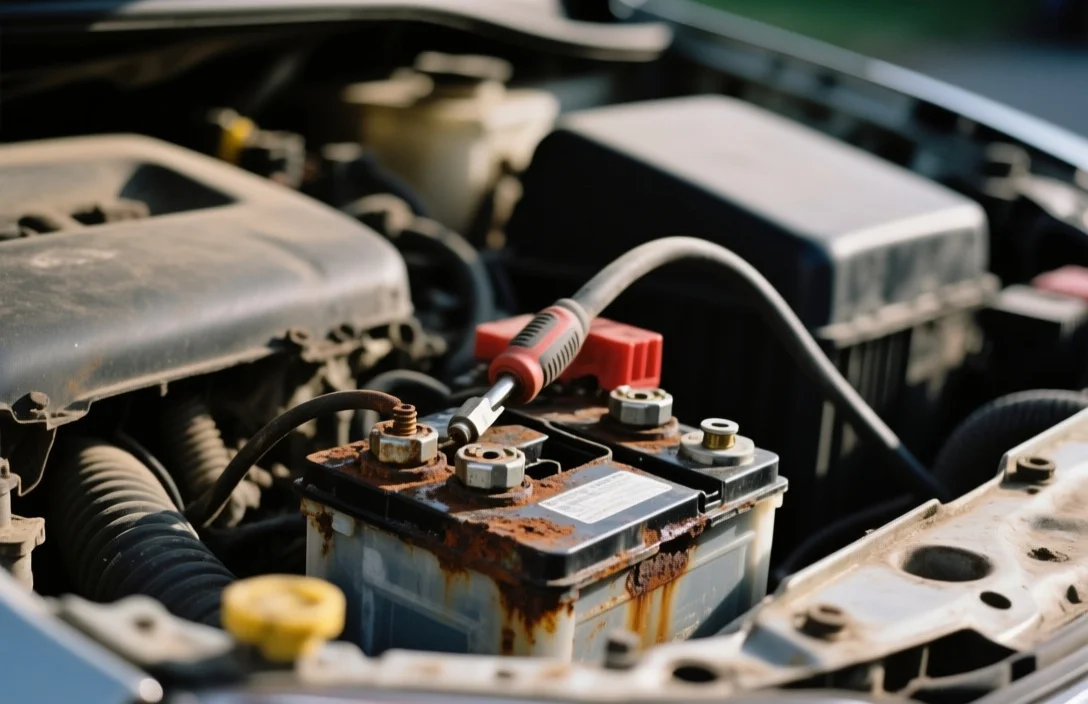
Corroded terminals create electrical resistance, which prevents the battery from charging fully and causes significant voltage drops. Even a light dusting of corrosion can reduce charging efficiency by 20-30%. Look for white, green, or blue powdery buildup caused by battery acid and moisture.
Clean terminals with a wire brush and a mixture of baking soda and water. Apply a thin layer of dielectric grease afterward to seal out moisture. Inspect the battery cables for frayed insulation or exposed wires. Loose connections are just as damaging as corrosion – ensure all terminals are tight and cannot be moved by hand.
Detecting Internal Battery Shorts
An internal short circuit prevents a battery from holding a charge even if a voltmeter shows a healthy surface voltage. This happens when internal plates touch, creating a direct path for current to bypass the cell. This “self-discharge” can kill a battery in a single night.
Use a load tester to find shorts. A healthy battery must hold at least 9.6 volts under load for 15 seconds. If it drops below 9.6, a cell is weak or shorted. I also look for batteries that get hot during charging – that heat is a sign of internal resistance caused by a short. If the battery is older than 3-5 years, stop testing and replace it.
When to Replace Your Battery
Battery capacity degrades naturally over time. After five years, most batteries hold only 60-80% of their original charge. If your car struggles to start in cold weather or dies overnight despite no detectable parasitic drains, the battery is chemically exhausted.
Match the original battery’s group size and choose a replacement with the same or higher cold-cranking amps (CCA). After installation, fully charge the new battery and verify it with a load tester. If the car still dies overnight with a brand-new battery, return to the parasitic drain and alternator tests – a new battery often reveals underlying electrical faults that a dying battery was masking.
Overnight battery failure is almost always a solvable problem. Start with the simplest checks – interior lights, aftermarket gear, and terminal corrosion – before moving to the alternator and load tests. If you find a parasitic drain, track it down by pulling fuses. If the battery is old, replace it. Most of these fixes take less than an hour.
Frequently Asked Questions
How can I tell if a parasitic drain is causing my battery to die overnight?
Measure the current flowing after the ignition is off with a multimeter set to 10 A DC. If the reading exceeds about 80 mA, a parasitic drain is likely. Pull fuses one at a time to isolate the circuit responsible.
Why do interior lights sometimes stay on and drain the battery?
Faulty switches or stuck plunger mechanisms can keep glove‑box, trunk, or dome lights illuminated even when the doors are closed. A dim light can flatten a battery in as little as 8–12 hours, making it a common overnight culprit.
Can aftermarket devices like dash cams really drain a battery in one night?
Yes; many dash cams draw 300–500 mA in parking mode, which is enough to deplete a healthy battery over several hours. Remote starters or alarm systems can pull even more, sometimes over 1 A, leading to a dead battery by morning.
How do I know if my alternator is failing and contributing to overnight battery loss?
Check the charging voltage with the engine running; it should read between 13.8 V and 14.5 V. Anything below 13.8 V indicates the alternator or voltage regulator isn’t fully recharging the battery, leaving it vulnerable to overnight drains.
When should I replace the battery instead of fixing a drain?
If the battery is older than three to five years, its capacity may have dropped to 60‑80 % of original, making it unable to hold a charge even without a drain. A load test showing less than 9.6 V under load also signals that replacement is the appropriate solution.