

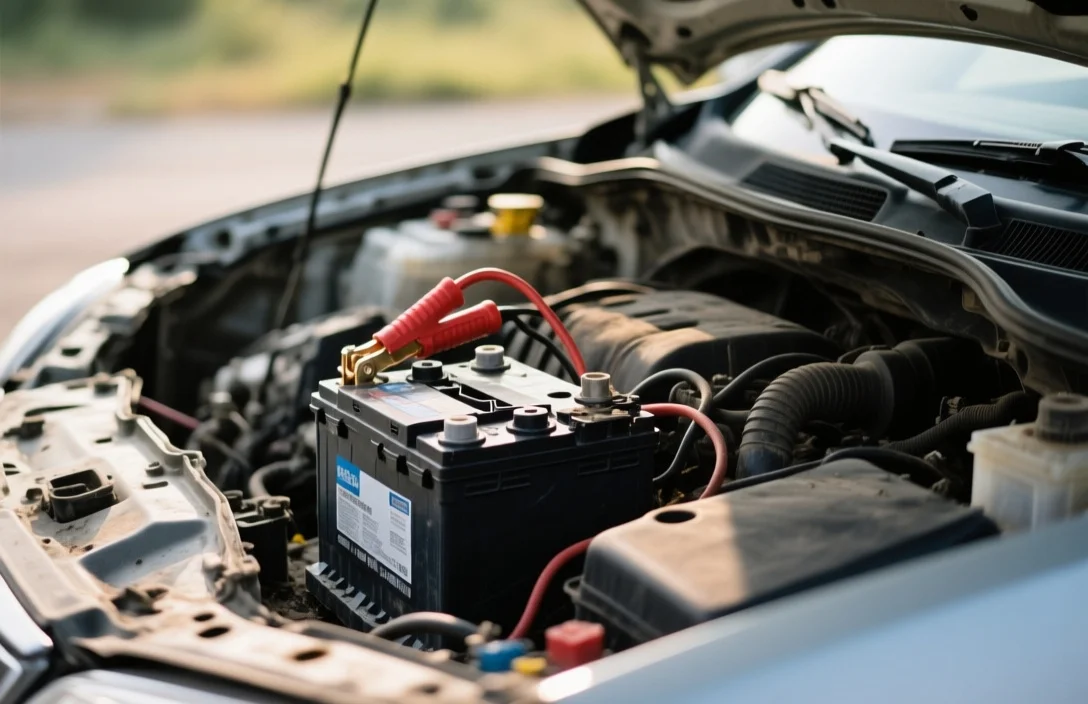
A car battery that dies shortly after a jump start usually indicates that the charging system is no longer replenishing the energy the engine uses to run. While a jump start provides the initial surge of electricity needed to turn the starter motor, it does not fix the underlying reason why the battery was empty in the first place. If the alternator is failing or the battery has an internal short, the car will run as long as the engine is turning, but it will not hold a charge once the ignition is turned off.
Your car battery keeps dying after a jump start when the alternator fails to produce 13.5 to 14.5 volts while the engine is running, or when a parasitic draw exceeds 50 milliamps. In these cases, the battery cannot store the energy provided by the jump or the alternator, leading to a dead battery again within minutes or hours.
Key Takeaways
- Alternator failure. A bad alternator prevents the battery from recharging while you drive, leaving you stranded once the engine stops.
- Battery age. Lead-acid batteries typically last 3 to 5 years before internal chemical degradation prevents them from holding a charge.
- Parasitic draw. Electrical leaks from malfunctioning modules or interior lights can drain a full battery in less than 24 hours.
- Terminal corrosion. White or blue powdery buildup on battery posts creates resistance that blocks current from reaching the battery cells.
- Short drive times. Trips shorter than 15 minutes often do not provide enough time for the alternator to replace the energy used during startup.
- Voltage testing. A multimeter reading below 12.6 volts on a resting battery suggests it is discharged or nearing the end of its life.
Why Does My Car Battery Keep Dying After Jump Start?
A jump start only provides a temporary bridge of power to get the engine turning. Once the engine is running, the alternator takes over the job of powering the electrical systems and recharging the battery. If the battery dies again immediately after you turn the key off, the battery is likely unable to hold a charge. If the car dies while you are actually driving, the alternator is almost certainly the culprit.
The relationship between the battery and the alternator is a cycle of storage and replenishment. The battery starts the car, and the alternator refills the battery. When this cycle breaks, you enter a loop of needing jump starts. This happens because the energy required to start a combustion engine is massive, and if the battery is sitting at 10 or 11 volts instead of the required 12.6 volts, the starter motor cannot engage.
Many drivers mistake a bad alternator for a bad battery because the symptoms are identical at the moment of startup. However, the key difference is what happens during the drive. A healthy alternator can keep a car running even if the battery is completely dead, provided the initial start was successful. If the engine stalls or the dashboard lights flicker and dim while you are cruising at 40 mph, your charging system is failing.
There are three primary categories of failure that lead to this cycle. The first is a charging failure (alternator), the second is a storage failure (battery cells), and the third is an external drain (parasitic load). Identifying which one is occurring prevents you from wasting money on a new battery when the alternator is actually the part that needs replacement.
Faulty Alternator Symptoms That Prevent Battery Charging
An alternator is a generator that converts mechanical energy from the engine into electrical energy. When the internal voltage regulator or the diode bridge fails, the alternator stops sending current back into the battery. This means the car is running entirely on the remaining “reserve” power in the battery. Once that reserve hits a critical low, the ignition system can no longer spark, and the engine dies.
Warning signs of a failing alternator often appear on the dashboard before the car completely dies. The most obvious is the battery warning light, which ironically signals a charging system failure rather than just a dead battery. You might also notice “brown-outs” where the headlights dim or the radio cuts out when you accelerate or decelerate.
In some cases, the alternator fails mechanically. The belt that drives the alternator can slip or snap, meaning the generator isn’t spinning at all. If you hear a high-pitched squealing sound coming from the engine bay upon startup, the belt is likely loose. Without a tight belt, the alternator cannot produce the 13.5 to 14.5 volts necessary to keep the battery topped off.
Other symptoms include electronic glitches that seem random. Power windows may move slower than usual, or the interior dome lights may flicker. Because the car’s computer (ECU) requires a steady voltage to operate, a failing alternator can cause the engine to idle roughly or trigger a “Check Engine” light due to low system voltage.
Parasitic Power Drain From Interior Lights or Electronics
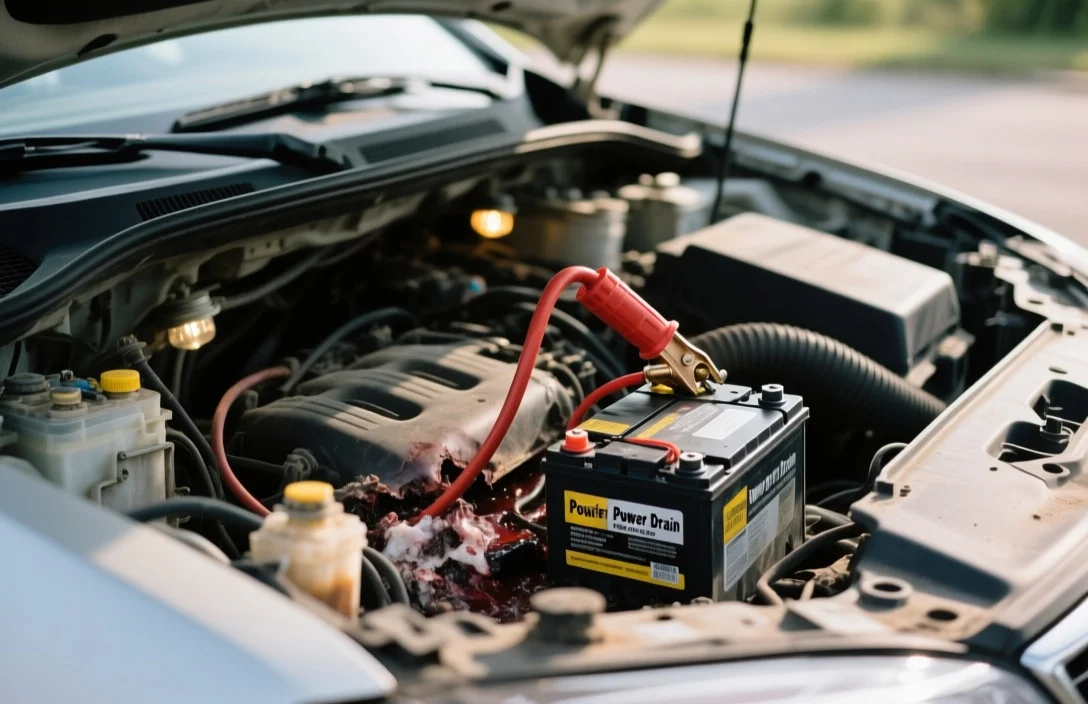
A parasitic draw occurs when an electrical component continues to pull power from the battery after the ignition is turned off. While all cars have a small amount of draw to maintain clock settings and ECU memory, a “parasitic” drain is an abnormal leak that empties the battery faster than it can be recharged.
Common culprits are simple, such as a glove box light or a trunk light that stays on when the door is closed. More complex draws come from aftermarket accessories. A poorly installed remote start system, a high-powered audio amplifier, or a dashcam wired directly to the battery can pull several amps per hour. If a module draws 1 amp continuously, a standard battery can be drained to a non-starting level in a few days.
Modern cars also suffer from “module wake-up” issues. This happens when a computer module, such as the Body Control Module (BCM), fails to enter “sleep mode” after the car is locked. This keeps the vehicle’s internal network active, consuming power. For example, a faulty door latch sensor might tell the car the door is still open, preventing the electronics from powering down.
To identify a draw, you must use a multimeter in “amp” mode. By connecting the meter in series between the negative battery terminal and the battery post, you can see exactly how many milliamps are flowing. A healthy vehicle typically shows a draw of 20 to 50 milliamps. Anything over 100 milliamps is a sign of a parasitic leak that will eventually kill your battery regardless of how many times you jump it.
Battery Age and Internal Cell Failure
Lead-acid batteries have a finite chemical lifespan. Inside the plastic case, there are typically six cells, each providing about 2.1 volts. Over time, the lead plates inside these cells degrade through a process called sulfation. Sulfur crystals build up on the plates, reducing the surface area available for the chemical reaction that creates electricity.
When a battery reaches the end of its life, it may still show 12 volts on a meter, but it lacks “capacity.” Capacity is the battery’s ability to deliver the high amperage (Cold Cranking Amps or CCA) needed to turn the engine. A battery with internal cell failure can be jumped and will start the car, but it cannot store the charge provided by the alternator. It is like trying to fill a bucket with a hole in the bottom.
Temperature extremes accelerate this failure. Intense summer heat evaporates the electrolyte fluid inside the cells, leading to internal corrosion. Conversely, extreme cold slows the chemical reaction, making a weak battery even less capable of producing power. If your battery is more than 4 years old, it is the most likely cause of your recurring dead battery issues.
Internal shorts can also occur. If a piece of lead debris bridges the gap between plates in one of the cells, that cell “drops.” A battery with one dead cell will only produce about 10.5 volts. Since the car requires roughly 12 volts to engage the starter, a battery with a dead cell will never start the car on its own, no matter how long it has been running or charging.
Corroded Battery Terminals and Loose Cable Connections
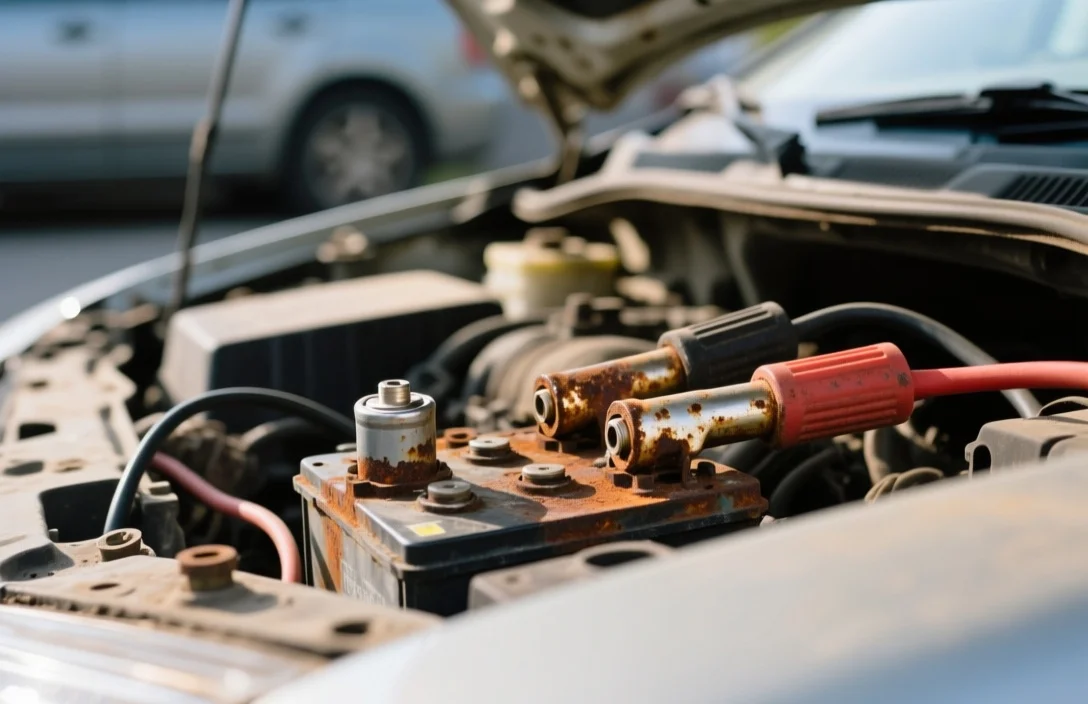
Electricity requires a clean, low-resistance path to flow. Battery terminals are made of lead, and the cables are usually copper. Over time, a chemical reaction between the lead and the air creates lead sulfate crystals, which appear as a white, ashy, or bluish powder on the terminals. This corrosion acts as an insulator.
Corrosion creates a “bottleneck” for electricity. You might have a perfectly healthy battery and a strong alternator, but if the terminals are corroded, the current cannot physically reach the battery cells to charge them. This explains why a car might start with a jump (because the jump cables are clamped directly to the metal posts, bypassing the corrosion) but dies later because the alternator’s charge couldn’t get through the crusty terminals.
Loose connections are equally problematic. If the terminal clamp can be moved by hand, it is too loose. A loose connection creates intermittent contact. While you are driving, the vibration of the engine can cause the connection to break for fractions of a second. This disrupts the charging circuit, meaning the battery isn’t receiving a steady stream of power.
Cleaning terminals is a straightforward fix. Using a mixture of baking soda and water with a wire brush removes the oxidation and restores the metal-to-metal contact. Once cleaned, applying a thin layer of petroleum jelly or a dedicated terminal protector spray prevents oxygen and moisture from restarting the corrosion process.
Short Trips That Prevent the Battery From Charging
Starting an engine is the most energy-intensive event a battery performs. The starter motor draws hundreds of amps in a few seconds, which creates a significant “dip” in the battery’s state of charge. Under normal conditions, the alternator refills this energy within 15 to 30 minutes of driving.
If your daily commute consists of 5-minute trips to the store or school, the alternator never has enough time to replace the energy used during the start. Over several days, the battery enters a state of “chronic undercharge.” The voltage drops lower and lower with every trip until the battery can no longer provide enough current to start the engine.
This is especially common in winter. Cold weather increases the energy required to turn over the engine because the oil is thicker and the battery chemicals are sluggish. A short trip in January is much harder on a battery than a short trip in July. If you only drive short distances, the battery spends more time discharging than charging.
To counteract this, you can use a “trickle charger” or “battery maintainer.” These devices plug into a wall outlet and keep the battery at 100% charge while the car is parked. If you cannot change your driving habits, a 20-minute drive on the highway once a week is usually enough to recover the lost voltage and prevent the need for a jump start.
How to Test Your Battery and Alternator
Testing your charging system requires a digital multimeter, which is available at any auto parts store for under 20 dollars. The goal is to check the voltage at two different stages: when the engine is off (resting voltage) and when the engine is running (charging voltage).
First, set the multimeter to 20V DC. With the engine off, touch the red probe to the positive terminal and the black probe to the negative terminal. A fully charged battery should read 12.6V. If it reads 12.2V, it is about 50% charged. If it reads below 12.0V, it is significantly discharged. If it reads 10.5V, you likely have a dead cell and need a new battery.
Next, start the engine and check the voltage again. This tests the alternator. You should see the voltage jump to between 13.5V and 14.7V. If the reading stays at 12V or begins to drop while the engine is running, the alternator is not charging the battery. This is the definitive sign that the alternator has failed and the car is running on battery reserves.
For a more detailed analysis, you can perform a “load test.” This involves turning on the headlights, the heater fan, and the rear defroster all at once while checking the voltage. If the voltage drops below 13V under this heavy load, the alternator is weak and may fail completely soon.
| Component | Healthy Reading (Engine Off) | Healthy Reading (Engine On) | Warning Sign |
|---|---|---|---|
| Battery | 12.6V | N/A | Below 12.2V (Undercharged) |
| Alternator | N/A | 13.5V – 14.7V | Below 13.0V (Failing) |
| Dead Cell | ~10.5V | Fluctuating | Cannot hold charge after jump |
| Parasitic Draw | < 50mA | N/A | > 100mA (Electrical leak) |
FAQ
How long should I drive after a jump start to charge the battery?
You should drive for at least 30 to 60 minutes at highway speeds. Idling in a driveway is not enough, as alternators produce less current at low RPMs. High-speed driving ensures the alternator operates at maximum efficiency to replenish the battery’s reserve capacity.
Can a bad spark plug cause a battery to die?
No, a bad spark plug will cause engine misfires or poor fuel economy, but it cannot drain a battery. Battery drain is caused by electrical faults, while spark plugs are part of the combustion process. If your car won’t start, look at the battery, alternator, or starter motor first.
Does a new battery always fix the problem?
No. If the alternator is faulty, a new battery will work for a few days but will eventually die because it isn’t being recharged. Always test the alternator voltage (13.5V – 14.7V) before buying a new battery to ensure you are fixing the root cause.
Why does my car start fine in the morning but die after I park for an hour?
This is a classic sign of internal cell failure or a parasitic draw. The battery may have enough surface charge to start once, but it cannot maintain that charge. A parasitic draw can also empty a battery quickly once the alternator stops providing power.
Is it safe to keep jump-starting my car?
Frequent jump-starting is risky for your electronics. Modern cars have sensitive ECUs that can be damaged by voltage spikes during a jump. Additionally, repeatedly draining a lead-acid battery to zero permanently damages the plates, shortening the battery’s total lifespan.
If your car continues to die after a jump start, the most likely culprit is a failed alternator or a battery that can no longer hold a charge. Your next step should be to use a multimeter to check if your alternator is producing at least 13.5 volts while the engine is running.